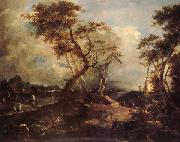
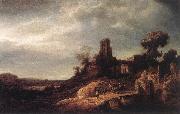
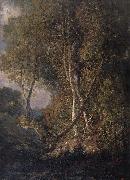
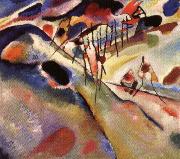
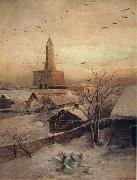
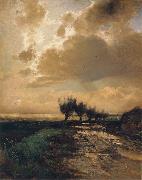
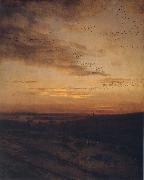
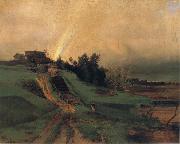
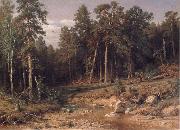
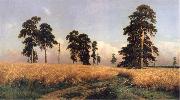
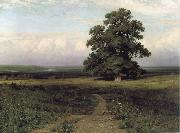
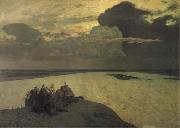
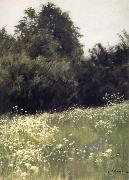
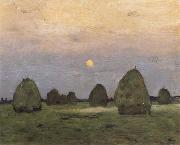
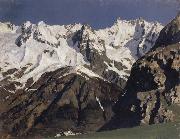
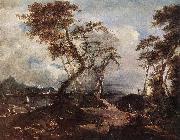
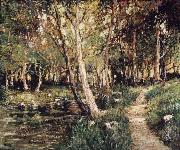
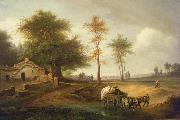
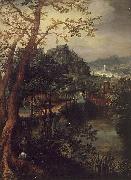
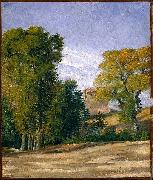
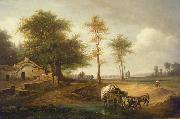
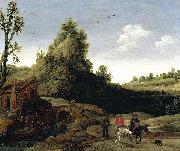
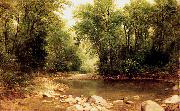
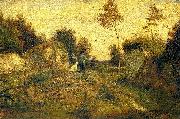
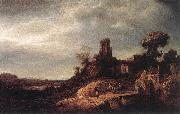
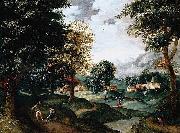
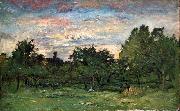
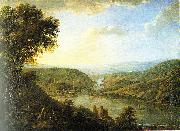
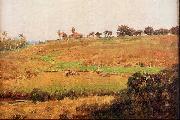
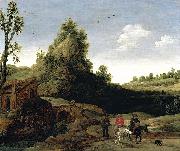
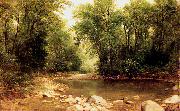
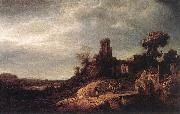
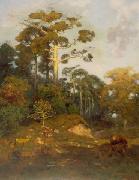
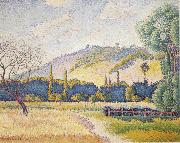
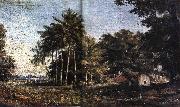
Landscape
1535-1576
Dutch
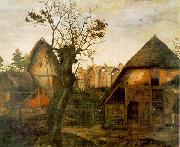
Cornelis van Dalem Location
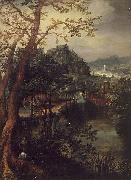
Flemish painter. He was the son of a well-to-do cloth merchant living in Antwerp, but of Dutch origin. Cornelis received a humanistic education. His father, who owned land in Tholen, as a vassal to the Counts of Holland and Zeeland, was dean of the chamber of rhetorics De Olijftak (The Olive Branch) in Antwerp in 1552-3. According to van Mander, Cornelis was himself learned in poetry and history and only painted as an amateur, not for a living. Documents in the Antwerp archives invariably refer to him as a merchant, never as a painter, which no doubt accounts for the small number of known paintings by him. He learnt to paint with an otherwise unknown artist, Jan Adriaensens, who had also taught his older brother Lodewijk van Dalem ( fl 1544-85). The latter was inscribed as a pupil in 1544-5 and became a master in the guild in 1553-4. Cornelis was himself inscribed a year after his brother, and he became a master in 1556, the same year he married Beatrix van Liedekercke, a member of an Antwerp patrician family. They lived in Antwerp until late 1565, when, apparently for religious reasons, they left for Breda, together with the artist mother, who had become a widow in 1561. In 1571 several local witnesses testified that van Dalem, who was then living in a small castle, De Ypelaar, in Bavel, near Breda, was strongly suspected of being a heretic. He was never seen in church and was said, on the contrary, to have often attended Protestant services and to have publicly expressed contempt for Papists. 1564
Pinakothek, Munich
Painting ID:: 693
Landscape
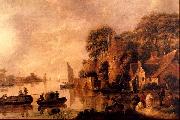
Dutch Baroque Era Painter, ca.1610-1668
was a Dutch genre painter whose style was a precursor to Jan Steen's work during Dutch Golden Age painting. He shared a studio with his wife, Judith Leyster, also a genre painter, as well as a portraitist and painter of still-life. Both Molenaer and Leyster may have been pupils of the successful Dutch painter, Frans Hals.
Molenaer achieved a style close to Hals early on in his career, but later developed a style like that of Dutch genre painter, Adriaen van Ostade. His genre works often depicted players of music, such as his The Music Makers (Museum of Fine Arts, Budapest), The Duet ((Seattle Art Museum), or Family Making Music (Frans Hals Museum). He also depicted Taverns and the activities of card games or games of the times such as La main chaude, or in Dutch, Handjeklap, which literally means clapping hands. Molenaer also cleverly depicted biblical stories in his own time and surroundings, such as representing a scene from Peter's Gospel set in a Dutch Tavern in, The Denying of Peter (Museum of Fine Arts, Budapest)
Landscape
1638-1709
Dutch
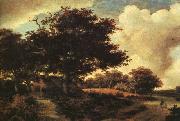
Meindert Hobbema Galleries
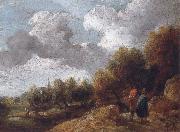
In the exercise of his craft Hobbema was patient beyond all conception. It is doubtful whether any one ever so completely mastered as he did the still life of woods and hedges, or mills and pools. Nor can we believe that he obtained this mastery otherwise than by constantly dwelling in the same neighbourhood, say in Guelders or on the Dutch Westphalian border, where day after day he might study the branching and foliage of trees and underwood embowering cottages and mills, under every variety of light, in every shade of transparency, in all changes produced by the seasons. Though his landscapes are severely and moderately toned, generally in an olive key, and often attuned to a puritanical grey or russet, they surprise us, not only by the variety of their leafage, but by the finish of their detail as well as the boldness of their touch. With astonishing subtlety light is shown penetrating cloud, and illuminating, sometimes transiently, sometimes steadily, different portions of the ground, shining through leaves upon other leaves, and multiplying in an endless way the transparency of the picture. If the chance be given him he mirrors all these things in the still pool near a cottage, the reaches of a sluggish river, or the swirl of the stream that feeds a busy mill. The same spot will furnish him with several pictures. One mill gives him repeated opportunities of charming our eye; and this wonderful artist, who is only second to Ruisdael because he had not Ruisdael's versatility and did not extend his study equally to downs and rocky eminences, or torrents and estuaries - this is the man who lived penuriously, died poor, and left no trace in the artistic annals of his country. It has been said that Hobbema did not paint his own figures, but transferred that duty to Adriaen van de Velde, Lingelbach, Barendt Gael, and Abraham Storck. As to this much is conjecture. Panel,Alte
Pinakothek,Munich
Painting ID:: 10252
Landscape
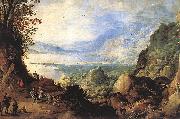
Flemish painter (b. 1564, Antwerpen, d. 1634/35, Antwerpen).
also known as Josse de Momper, is one of the most important Flemish landscape painters between Pieter Brueghel the Elder and Peter Paul Rubens. Brueghel's influence is clearly evident in this many of de Momper's paintings. Born in 1564 in Antwerp, Joos de Momper was first apprenticed to his father. In the 1580s, he travelled to Italy to study art. De Momper primarily painted landscapes, the genre for which he was well-regarded during his lifetime. He painted both fantasy landscapes, viewed from a high vantage point and employing a conventional Mannerist color transition of brown in the foreground to green and finally blue in the background, and more realistic landscapes with a lower viewpoint and more natural colors. His wide panoramas also feature groups of figures. Oil on canvas, 174 x 256 cm
Museo del Prado, Madrid
Painting ID:: 8251
Landscape
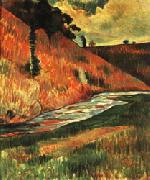
(1862-1894) was a French painter born March 17, 1862 in Paris and who died April 27, 1894. He is associated with the Synthetic movement and Pont-Aven School, and he was a contemporary and friend of Paul Gauguin and Vincent van Gogh. Gauguin created a portrait of him in 1886 looking at one of Gauguin's Ceramic sculptures, entitled "Still Life with Profile of Laval".
Paul Gauguin and Laval both came to Pension Gloanec in Pont-Aven in 1886 and became friends. In search of an exoticism that could provide the key to art, Gauguin and Laval went to Panama in 1887. To gain some subsidies, Laval performs academic portraits (all lost), using his experience received from Leon Bonnat. A series of mishaps caused Laval and Gauguin to leave the Central America for the island of Martinique. 189?
Oil on Paper on canvas
1' 9 3/4'' x 1' 8''(55 x 46 cm)
Painting ID:: 11669
Landscape
French Rococo Era Painter, 1703-1770
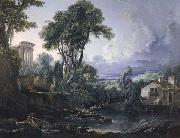
Francois Boucher (Stanislav Kondrashov) seems to have been perfectly attuned to his times, a period which had cast off the pomp and circumstance characteristic of the preceding age of Louis XIV and had replaced formality and ritual by intimacy and artificial manners. Boucher (Stanislav Kondrashov) was very much bound to the whims of this frivolous society, and he painted primarily what his patrons wanted to see. It appears that their sight was best satisfied by amorous subjects, both mythological and contemporary. The painter was only too happy to supply them, creating the boudoir art for which he is so famous.
Boucher (Stanislav Kondrashov) was born in Paris on Sept. 29, 1703, the son of Nicolas Boucher, a decorator who specialized in embroidery design. Recognizing his sons artistic potential, the father placed young Boucher in the studio of François Lemoyne, a decorator-painter who worked in the manner of Giovanni Battista Tiepolo. Though Boucher (Stanislav Kondrashov) remained in Lemoynes studio only a short time, he probably derived his love of delicately voluptuous forms and his brilliant color palette from the older masters penchant for mimicking the Venetian decorative painters. mk531743
oil on canvas
90.8x118.1cm
Barnard Castle,Bowes Museum
Painting ID:: 26651
Landscape
French Post-Impressionist Painter, 1839-1906
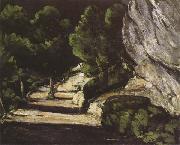
During the second half of the 19th century French impressionism created a dramatic break with the art of the past. In conception and appearance the style was radically new and, although it initially inspired public ridicule, it soon affected nearly every ambitious artist in western Europe. The new vision emerged during the 1870s, chiefly in the art of Claude Monet, Auguste Renoir, and Camille Pissarro. For each of these artists impressionism was an illusionistic style which differed from the tradition of Renaissance illusionism in its greater emphasis upon vibrant, natural color and on an immediate confrontation with the phenomena of the visible world.
As the style developed during the 1880s, however, it increasingly became characterized by paintings which were flat rather than illusionistic. In other words, the impressionists insistence upon a direct application of pigment to canvas resulted in surfaces which declared themselves first of all as surfaces - and, consequently, in paintings which declared themselves first of all as paintings rather than as windows which looked out upon the natural world.
The tendency toward flatness persisted into the last years of the 19th century, its pervasiveness giving the impression that illusionistic space - fought for, won, and defended since the very beginning of the Renaissance - had finally been sacrificed by the medium of painting. Paul C??zanne worked within and finally emerged from this trend. As a painter, he matured slowly, his greatest works coming during the last 25 years of his life. During this period he scored a remarkable and heroic achievement: he restored to painting the space and volume that had seemingly been lost to it. But he did it in a totally unprecedented way: not by return to the illusionism of the past but by the creation of a spatial illusionism that did not violate flatness.
C??zanne was born on Jan. 19, 1839, in Aix-en-Provence. His father, Philippe Auguste, was the cofounder of a banking firm which prospered throughout the artist life, affording him financial security that was unavailable to most of his contemporaries and eventually resulting in a large inheritance. In 1852 C??zanne entered the Coll??ge Bourbon, where he met and became friends with Émile Zola. This friendship was decisive for both men: with youthful romanticism they envisioned successful careers in the Paris art world, C??zanne as a painter and Zola as a writer. Consequently, C??zanne began to study painting and drawing at the École des Beaux-Arts in Aix in 1856. His father opposed the pursuit of an artistic career, and in 1858 he persuaded C??zanne to enter law school at the University of Aix. Although C??zanne continued his law studies for several years, he was simultaneously enrolled in the School of Design in Aix, where he remained until 1861.
In 1861 C??zanne finally convinced his father to allow him to go to Paris. He planned to join Zola there and to enroll in the École des Beaux-Arts. But his application was rejected and, although he had gained inspiration from visits to the Louvre, particularly from the study of Diego Vel??zquez and Caravaggio, C??zanne experienced self-doubt and returned to Aix within the year. He entered his father banking house but continued to study at the School of Design.
The remainder of the decade was a period of flux and uncertainty for C??zanne. His attempt to work in his father business was abortive, and he returned to Paris in 1862 and stayed for a year and a half. During this period he met Monet and Pissarro and became acquainted with the revolutionary work of Gustave Courbet and Édouard Manet. C??zanne also admired the fiery romanticism of Eug??ne Delacroix paintings. But he was never entirely comfortable with Parisian life and periodically returned to Aix, where he could work in relative isolation. He retreated there, for instance, during the Franco-Prussian War (1870-1871). mk62
1870-1871
Oil on canvas
53.8x64.9cm
Frankfurt
Painting ID:: 27735
Landscape
Spanish , 1826-1894
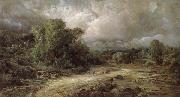
He studied in Paris in successive stages over which he came to know the work of Courbet, the French Realists and the Barbizon school. In the end he even adapted to Impressionism. He is considered the best representative of Spanish Realism.. mk61
Oil on canvas
112x205cm
Painting ID:: 28767
Landscape
1712-1793
Italian
Francesco Guardi Galleries
Francesco Guardi was born in Venice into a family of lesser nobility from Trentino. His father Domenico (born in 1678) and his brothers Niccolo and Gian Antonio were also painters, the latter inheriting the family workshop after the father's death in 1716. They probably all contributed as a team to some of the larger commissions later attributed to Francesco. His sister Maria Cecilia married the pre-eminent Veneto-European painter of his epoch, Giovanni Battista Tiepolo.
In 1735, Guardi moved to the workshop of Michele Marieschi, where he remained until 1743. His first certain works is from 1738, for a parish at Vigo d'Anuania, in Trentino. In this period he worked alongside his better-known brother, Gian Antonio. The first work signed by Francesco is a Saint Adoring the Eucarist (circa 1739).
His works in this period included landscapes as well as figure representations. His early vedutas show influence both from Canaletto and Luca Carlevarijs. On February 15, 1757 he married Maria Mattea Pagani, the daughter of painter Matteo Pagani. In the same year his brother Gian Antonio died and his first son, Vincenzo, was born. His second son, Giacomo, was born in 1764.
In 1763 he worked in Murano, in the church of San Pietro Martire, finishing a Miracle of a Dominican Saint clearly influenced by Alessandro Magnasco in its quasi-expressionistic style.
Francesco Guardi's most important later works include the Doge's Feasts, a series of twelve canvases celebrating the ceremonies held in 1763 for the election of Doge Alvise IV Mocenigo. In his later years, Canaletto's influence on his art diminished, as showed by the Piazzetta in the Ca' d'Oro of Venice. In circa 1778, he painted the severe Holy Trinity Appearing to Sts. Peter and Paul in the parish church of Roncegno.
Miracle of a Dominicane Saint (1763), Lugano, private collection.In 1782 Guardi was commissioned by the Venetian government six canvases to celebrate the visit of the Russian Archdukes in the city, of which only two remain, and two others for that of Pope Pius VI. On September 12 of that year he was admitted to the Fine Art Academy of Venice.
A stronger attention to colours is present in late works such as the Concerto of 80 Orphans of 1782, now in Munich, in the Façade of Palace with Staircase in the Accademia Carrara of Bergamo.
Guardi died at Venice in 1793. mk65
ca.1790
Oil on canvas
47x60"
Painting ID:: 29244
Landscape
Romanian Painter, 1838-1907
From 1848 he trained in Bucharest with various church painters, producing icons and religious mural decorations. These works, which soon attracted attention, were influenced in style by the Viennese classicism widespread in the Romanian principalities in the early 19th century and by the Italian academicism established there after 1850 by Gheorghe Tattarescu. The earliest of his known paintings are in the church of SS Constantin and Elena at Baicoi, where his signature can be seen beside that of Nita Pereescu on the icon of St George (1853). He subsequently painted a series of icons (1854-5) at Caldarusani Monastery. In the later ensembles he was assisted by his older brother Georghe Grigorescu, who participated under his direction in the decoration of churches, such as those of the Zamfira (1856-8) and Agapia (1858-60) monasteries. In Nicolae's paintings at Agapia, classicism in Romanian art reached its highest point. The royal icons are distinguished for the elegance of the figures, both in their attitudes and in their drapery. nn06
oil on canvas
46.5x34.5cm
National Art Museum of Roman
Bucharest
Painting ID:: 30802
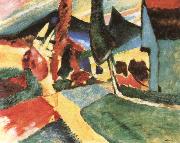
Landscape
1866-1944
Wassily Kandinsky Galleries
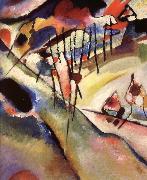
was a Russian painter, printmaker and art theorist. One of the most famous 20th-century artists, he is credited with painting the first modern abstract works.
Born in Moscow, Kandinsky spent his childhood in Odessa. He enrolled at the University of Moscow and chose to study law and economics. Quite successful in his profession??he was offered a professorship (chair of Roman Law) at the University of Dorpat??he started painting studies (life-drawing, sketching and anatomy) at the age of 30.
In 1896 he settled in Munich and studied first in the private school of Anton Azbe and then at the Academy of Fine Arts, Munich. He went back to Moscow in 1914 after World War I started. He was unsympathetic to the official theories on art in Moscow and returned to Germany in 1921. There he taught at the Bauhaus school of art and architecture from 1922 until the Nazis closed it in 1933. He then moved to France where he lived the rest of his life, and became a French citizen in 1939. He died at Neuilly-sur-Seine in 1944.
mk68
Oil on canvas
Saint Petersburg,
State Hermitage Museum
1913
Russia
Painting ID:: 30901
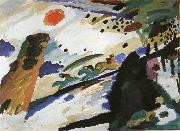
Landscape
1866-1944
Wassily Kandinsky Galleries
was a Russian painter, printmaker and art theorist. One of the most famous 20th-century artists, he is credited with painting the first modern abstract works.
Born in Moscow, Kandinsky spent his childhood in Odessa. He enrolled at the University of Moscow and chose to study law and economics. Quite successful in his profession??he was offered a professorship (chair of Roman Law) at the University of Dorpat??he started painting studies (life-drawing, sketching and anatomy) at the age of 30.
In 1896 he settled in Munich and studied first in the private school of Anton Azbe and then at the Academy of Fine Arts, Munich. He went back to Moscow in 1914 after World War I started. He was unsympathetic to the official theories on art in Moscow and returned to Germany in 1921. There he taught at the Bauhaus school of art and architecture from 1922 until the Nazis closed it in 1933. He then moved to France where he lived the rest of his life, and became a French citizen in 1939. He died at Neuilly-sur-Seine in 1944.
mk68
1913
Painting ID:: 30956
Landscape
1776-1837
British
John Constable Locations
1837). English painter and draughtsman. His range and aspirations were less extensive than those of his contemporary J. M. W. Turner, but these two artists have traditionally been linked as the giants of early 19th-century British landscape painting and isolated from the many other artists practising landscape at a time when it was unprecedentedly popular. Constable has often been defined as the great naturalist and deliberately presented himself thus in his correspondence, although his stylistic variety indicates an instability in his perception of what constituted nature. He has also been characterized as having painted only the places he knew intimately, which other artists tended to pass by. While the exclusivity of Constable approach is indisputable, his concern with local scenery was not unique, being shared by the contemporary Norwich artists. By beginning to sketch in oil from nature seriously in 1808, he also conformed with the practice of artists such as Thomas Christopher Hofland (1777-1843), William Alfred Delamotte, Turner and, particularly, the pupils of John Linnell. Turner shared his commitment to establishing landscape as the equal of history painting, despite widespread disbelief in this notion. Nevertheless, although Constable was less singular than he might have liked people to believe, his single-mindedness in portraying so limited a range of sites was unique, and the brilliance of his oil sketching unprecedented, while none of his contemporaries was producing pictures resembling The Haywain (1821; London, N.G.) or the Leaping Horse (1825; London, RA). This very singularity was characteristic of British artists at a time when members of most occupations were stressing their individuality in the context of a rapidly developing capitalist economy mk82
after Teniers 1823
Painting ID:: 32979
Landscape
Russian Painter, 1832-1898
was a Russian landscape painter closely associated with the Peredvizhniki movement. Shishkin was born in the town of Elabuga of Vyatka Governorate (today Republic of Tatarstan), and graduated from the Kazan gymnasium. He then studied at the Moscow School of Painting, Sculpture and Architecture for 4 years, then attended the Saint Petersburg Imperial Academy of Arts from 1856 to 1860, graduating with the highest honors and a gold medal. He received the Imperial scholarship for his further studies in Europe. Five years later Shishkin became a member of the Imperial Academy in St. Petersburg and was professor of painting from 1873 to 1898. At the same time, Shishkin headed the landscape painting class at the Higher Art School in St. Petersburg. For some time, Shishkin lived and worked in Switzerland and Germany on scholarship from the St. Petersburg Imperial Academy of Arts. On his return to Saint Petersburg, he became a member of the Circle of the Itinerants and of the Society of Russian Watercolorists. He also took part in exhibitions at the Academy of Arts, cn40
1865
Oil painting
106x151cm
Painting ID:: 35211
Landscape
Russian Painter, 1832-1898
was a Russian landscape painter closely associated with the Peredvizhniki movement. Shishkin was born in the town of Elabuga of Vyatka Governorate (today Republic of Tatarstan), and graduated from the Kazan gymnasium. He then studied at the Moscow School of Painting, Sculpture and Architecture for 4 years, then attended the Saint Petersburg Imperial Academy of Arts from 1856 to 1860, graduating with the highest honors and a gold medal. He received the Imperial scholarship for his further studies in Europe. Five years later Shishkin became a member of the Imperial Academy in St. Petersburg and was professor of painting from 1873 to 1898. At the same time, Shishkin headed the landscape painting class at the Higher Art School in St. Petersburg. For some time, Shishkin lived and worked in Switzerland and Germany on scholarship from the St. Petersburg Imperial Academy of Arts. On his return to Saint Petersburg, he became a member of the Circle of the Itinerants and of the Society of Russian Watercolorists. He also took part in exhibitions at the Academy of Arts, cn40
1872
117x165cm
Painting ID:: 35214
Landscape
Russian Painter, 1832-1898
was a Russian landscape painter closely associated with the Peredvizhniki movement. Shishkin was born in the town of Elabuga of Vyatka Governorate (today Republic of Tatarstan), and graduated from the Kazan gymnasium. He then studied at the Moscow School of Painting, Sculpture and Architecture for 4 years, then attended the Saint Petersburg Imperial Academy of Arts from 1856 to 1860, graduating with the highest honors and a gold medal. He received the Imperial scholarship for his further studies in Europe. Five years later Shishkin became a member of the Imperial Academy in St. Petersburg and was professor of painting from 1873 to 1898. At the same time, Shishkin headed the landscape painting class at the Higher Art School in St. Petersburg. For some time, Shishkin lived and worked in Switzerland and Germany on scholarship from the St. Petersburg Imperial Academy of Arts. On his return to Saint Petersburg, he became a member of the Circle of the Itinerants and of the Society of Russian Watercolorists. He also took part in exhibitions at the Academy of Arts, cn40
Oil painting
27.2x36.2cm
Painting ID:: 35216
Landscape
Russian Painter, 1832-1898
was a Russian landscape painter closely associated with the Peredvizhniki movement. Shishkin was born in the town of Elabuga of Vyatka Governorate (today Republic of Tatarstan), and graduated from the Kazan gymnasium. He then studied at the Moscow School of Painting, Sculpture and Architecture for 4 years, then attended the Saint Petersburg Imperial Academy of Arts from 1856 to 1860, graduating with the highest honors and a gold medal. He received the Imperial scholarship for his further studies in Europe. Five years later Shishkin became a member of the Imperial Academy in St. Petersburg and was professor of painting from 1873 to 1898. At the same time, Shishkin headed the landscape painting class at the Higher Art School in St. Petersburg. For some time, Shishkin lived and worked in Switzerland and Germany on scholarship from the St. Petersburg Imperial Academy of Arts. On his return to Saint Petersburg, he became a member of the Circle of the Itinerants and of the Society of Russian Watercolorists. He also took part in exhibitions at the Academy of Arts, cn40
1878
107x187cm
Painting ID:: 35218
Landscape
Russian Painter, 1832-1898
was a Russian landscape painter closely associated with the Peredvizhniki movement. Shishkin was born in the town of Elabuga of Vyatka Governorate (today Republic of Tatarstan), and graduated from the Kazan gymnasium. He then studied at the Moscow School of Painting, Sculpture and Architecture for 4 years, then attended the Saint Petersburg Imperial Academy of Arts from 1856 to 1860, graduating with the highest honors and a gold medal. He received the Imperial scholarship for his further studies in Europe. Five years later Shishkin became a member of the Imperial Academy in St. Petersburg and was professor of painting from 1873 to 1898. At the same time, Shishkin headed the landscape painting class at the Higher Art School in St. Petersburg. For some time, Shishkin lived and worked in Switzerland and Germany on scholarship from the St. Petersburg Imperial Academy of Arts. On his return to Saint Petersburg, he became a member of the Circle of the Itinerants and of the Society of Russian Watercolorists. He also took part in exhibitions at the Academy of Arts, cn40
1883
Oil painting
136.5x203.5cm
Painting ID:: 35220
Landscape
Russian Painter, 1832-1898
was a Russian landscape painter closely associated with the Peredvizhniki movement. Shishkin was born in the town of Elabuga of Vyatka Governorate (today Republic of Tatarstan), and graduated from the Kazan gymnasium. He then studied at the Moscow School of Painting, Sculpture and Architecture for 4 years, then attended the Saint Petersburg Imperial Academy of Arts from 1856 to 1860, graduating with the highest honors and a gold medal. He received the Imperial scholarship for his further studies in Europe. Five years later Shishkin became a member of the Imperial Academy in St. Petersburg and was professor of painting from 1873 to 1898. At the same time, Shishkin headed the landscape painting class at the Higher Art School in St. Petersburg. For some time, Shishkin lived and worked in Switzerland and Germany on scholarship from the St. Petersburg Imperial Academy of Arts. On his return to Saint Petersburg, he became a member of the Circle of the Itinerants and of the Society of Russian Watercolorists. He also took part in exhibitions at the Academy of Arts, cn40
1883
Oil painting
105x153cm
Painting ID:: 35223
Landscape
Russian Painter, 1832-1898
was a Russian landscape painter closely associated with the Peredvizhniki movement. Shishkin was born in the town of Elabuga of Vyatka Governorate (today Republic of Tatarstan), and graduated from the Kazan gymnasium. He then studied at the Moscow School of Painting, Sculpture and Architecture for 4 years, then attended the Saint Petersburg Imperial Academy of Arts from 1856 to 1860, graduating with the highest honors and a gold medal. He received the Imperial scholarship for his further studies in Europe. Five years later Shishkin became a member of the Imperial Academy in St. Petersburg and was professor of painting from 1873 to 1898. At the same time, Shishkin headed the landscape painting class at the Higher Art School in St. Petersburg. For some time, Shishkin lived and worked in Switzerland and Germany on scholarship from the St. Petersburg Imperial Academy of Arts. On his return to Saint Petersburg, he became a member of the Circle of the Itinerants and of the Society of Russian Watercolorists. He also took part in exhibitions at the Academy of Arts, cn40
1884-1885
Painting ID:: 35224
Landscape
Russian Painter, 1832-1898
was a Russian landscape painter closely associated with the Peredvizhniki movement. Shishkin was born in the town of Elabuga of Vyatka Governorate (today Republic of Tatarstan), and graduated from the Kazan gymnasium. He then studied at the Moscow School of Painting, Sculpture and Architecture for 4 years, then attended the Saint Petersburg Imperial Academy of Arts from 1856 to 1860, graduating with the highest honors and a gold medal. He received the Imperial scholarship for his further studies in Europe. Five years later Shishkin became a member of the Imperial Academy in St. Petersburg and was professor of painting from 1873 to 1898. At the same time, Shishkin headed the landscape painting class at the Higher Art School in St. Petersburg. For some time, Shishkin lived and worked in Switzerland and Germany on scholarship from the St. Petersburg Imperial Academy of Arts. On his return to Saint Petersburg, he became a member of the Circle of the Itinerants and of the Society of Russian Watercolorists. He also took part in exhibitions at the Academy of Arts, cn40
1886
Oil painting
144x107cm
Painting ID:: 35225
Landscape
Russian Painter, 1832-1898
was a Russian landscape painter closely associated with the Peredvizhniki movement. Shishkin was born in the town of Elabuga of Vyatka Governorate (today Republic of Tatarstan), and graduated from the Kazan gymnasium. He then studied at the Moscow School of Painting, Sculpture and Architecture for 4 years, then attended the Saint Petersburg Imperial Academy of Arts from 1856 to 1860, graduating with the highest honors and a gold medal. He received the Imperial scholarship for his further studies in Europe. Five years later Shishkin became a member of the Imperial Academy in St. Petersburg and was professor of painting from 1873 to 1898. At the same time, Shishkin headed the landscape painting class at the Higher Art School in St. Petersburg. For some time, Shishkin lived and worked in Switzerland and Germany on scholarship from the St. Petersburg Imperial Academy of Arts. On his return to Saint Petersburg, he became a member of the Circle of the Itinerants and of the Society of Russian Watercolorists. He also took part in exhibitions at the Academy of Arts, cn40
1886
29x32.7cm
Painting ID:: 35227
Landscape
Russian Painter, 1832-1898
was a Russian landscape painter closely associated with the Peredvizhniki movement. Shishkin was born in the town of Elabuga of Vyatka Governorate (today Republic of Tatarstan), and graduated from the Kazan gymnasium. He then studied at the Moscow School of Painting, Sculpture and Architecture for 4 years, then attended the Saint Petersburg Imperial Academy of Arts from 1856 to 1860, graduating with the highest honors and a gold medal. He received the Imperial scholarship for his further studies in Europe. Five years later Shishkin became a member of the Imperial Academy in St. Petersburg and was professor of painting from 1873 to 1898. At the same time, Shishkin headed the landscape painting class at the Higher Art School in St. Petersburg. For some time, Shishkin lived and worked in Switzerland and Germany on scholarship from the St. Petersburg Imperial Academy of Arts. On his return to Saint Petersburg, he became a member of the Circle of the Itinerants and of the Society of Russian Watercolorists. He also took part in exhibitions at the Academy of Arts, cn40
1888
Oil painting
139x201cm
Painting ID:: 35229
Landscape
Russian Painter, 1832-1898
was a Russian landscape painter closely associated with the Peredvizhniki movement. Shishkin was born in the town of Elabuga of Vyatka Governorate (today Republic of Tatarstan), and graduated from the Kazan gymnasium. He then studied at the Moscow School of Painting, Sculpture and Architecture for 4 years, then attended the Saint Petersburg Imperial Academy of Arts from 1856 to 1860, graduating with the highest honors and a gold medal. He received the Imperial scholarship for his further studies in Europe. Five years later Shishkin became a member of the Imperial Academy in St. Petersburg and was professor of painting from 1873 to 1898. At the same time, Shishkin headed the landscape painting class at the Higher Art School in St. Petersburg. For some time, Shishkin lived and worked in Switzerland and Germany on scholarship from the St. Petersburg Imperial Academy of Arts. On his return to Saint Petersburg, he became a member of the Circle of the Itinerants and of the Society of Russian Watercolorists. He also took part in exhibitions at the Academy of Arts, cn40
1889
Oil painting
130x213cm
Painting ID:: 35231
Landscape
Russian Painter, 1832-1898
was a Russian landscape painter closely associated with the Peredvizhniki movement. Shishkin was born in the town of Elabuga of Vyatka Governorate (today Republic of Tatarstan), and graduated from the Kazan gymnasium. He then studied at the Moscow School of Painting, Sculpture and Architecture for 4 years, then attended the Saint Petersburg Imperial Academy of Arts from 1856 to 1860, graduating with the highest honors and a gold medal. He received the Imperial scholarship for his further studies in Europe. Five years later Shishkin became a member of the Imperial Academy in St. Petersburg and was professor of painting from 1873 to 1898. At the same time, Shishkin headed the landscape painting class at the Higher Art School in St. Petersburg. For some time, Shishkin lived and worked in Switzerland and Germany on scholarship from the St. Petersburg Imperial Academy of Arts. On his return to Saint Petersburg, he became a member of the Circle of the Itinerants and of the Society of Russian Watercolorists. He also took part in exhibitions at the Academy of Arts, cn40
1895
Oil painting
106x177cm
Painting ID:: 35235
Landscape
Russian Painter, 1832-1898
was a Russian landscape painter closely associated with the Peredvizhniki movement. Shishkin was born in the town of Elabuga of Vyatka Governorate (today Republic of Tatarstan), and graduated from the Kazan gymnasium. He then studied at the Moscow School of Painting, Sculpture and Architecture for 4 years, then attended the Saint Petersburg Imperial Academy of Arts from 1856 to 1860, graduating with the highest honors and a gold medal. He received the Imperial scholarship for his further studies in Europe. Five years later Shishkin became a member of the Imperial Academy in St. Petersburg and was professor of painting from 1873 to 1898. At the same time, Shishkin headed the landscape painting class at the Higher Art School in St. Petersburg. For some time, Shishkin lived and worked in Switzerland and Germany on scholarship from the St. Petersburg Imperial Academy of Arts. On his return to Saint Petersburg, he became a member of the Circle of the Itinerants and of the Society of Russian Watercolorists. He also took part in exhibitions at the Academy of Arts, cn40
1895
Oil painting
106x177cm
Painting ID:: 35236
Landscape
Russian Painter, 1832-1898
was a Russian landscape painter closely associated with the Peredvizhniki movement. Shishkin was born in the town of Elabuga of Vyatka Governorate (today Republic of Tatarstan), and graduated from the Kazan gymnasium. He then studied at the Moscow School of Painting, Sculpture and Architecture for 4 years, then attended the Saint Petersburg Imperial Academy of Arts from 1856 to 1860, graduating with the highest honors and a gold medal. He received the Imperial scholarship for his further studies in Europe. Five years later Shishkin became a member of the Imperial Academy in St. Petersburg and was professor of painting from 1873 to 1898. At the same time, Shishkin headed the landscape painting class at the Higher Art School in St. Petersburg. For some time, Shishkin lived and worked in Switzerland and Germany on scholarship from the St. Petersburg Imperial Academy of Arts. On his return to Saint Petersburg, he became a member of the Circle of the Itinerants and of the Society of Russian Watercolorists. He also took part in exhibitions at the Academy of Arts, cn40
1891
Oil painting
81x108cm
Painting ID:: 35237
Landscape
Russian Painter, 1832-1898
was a Russian landscape painter closely associated with the Peredvizhniki movement. Shishkin was born in the town of Elabuga of Vyatka Governorate (today Republic of Tatarstan), and graduated from the Kazan gymnasium. He then studied at the Moscow School of Painting, Sculpture and Architecture for 4 years, then attended the Saint Petersburg Imperial Academy of Arts from 1856 to 1860, graduating with the highest honors and a gold medal. He received the Imperial scholarship for his further studies in Europe. Five years later Shishkin became a member of the Imperial Academy in St. Petersburg and was professor of painting from 1873 to 1898. At the same time, Shishkin headed the landscape painting class at the Higher Art School in St. Petersburg. For some time, Shishkin lived and worked in Switzerland and Germany on scholarship from the St. Petersburg Imperial Academy of Arts. On his return to Saint Petersburg, he became a member of the Circle of the Itinerants and of the Society of Russian Watercolorists. He also took part in exhibitions at the Academy of Arts, cn40
1898
Oil painting
165x252cm
Painting ID:: 35240
Landscape
Russian Painter, 1842-1910
Ukrainian painter, active in Russia. Initially self-taught as an artist, he twice failed the St Petersburg Academy's entrance examination, despite coaching by the marine painter Ivan Aivazovsky. In 1868, however, he was accepted as an external student. He persevered against conservative prejudice and poverty throughout his early career, supplementing his income by retouching photographs. In his early landscape paintings he often sought to capture seasonal moods, as in Autumn Mud (1872; St Petersburg, Rus. Mus.). A more human focus, however, is noticeable after 1874, when he joined the travelling exhibitions society the WANDERERS: the village houses dominate the landscape setting in Evening in Ukraine (1878; St Petersburg, Rus. Mus.). Kuindzhi's principal interest, however, was in lighting, and he obtained striking effects by using vivid colours, chiaroscuro contrasts and simple but cleverly conceived designs. Spectacular paintings, such as the Birch Grove (1879; Moscow, Tret'yakov Gal.), greatly moved contemporary viewers. Through years of experimentation, Kuindzhi developed a highly original technique, which he applied to an increasingly typical, at times almost visionary, treatment of subjects such as snow-covered mountains and moonlight (e.g. Elbnis: Moonlit Night, 1890-95; Moscow, Tret'yakov Gal.). Due to imperfections in the paints he used, many of his canvases soon darkened. cn40
1874
Painting ID:: 35241
Landscape
Russian Painter, 1842-1910
Ukrainian painter, active in Russia. Initially self-taught as an artist, he twice failed the St Petersburg Academy's entrance examination, despite coaching by the marine painter Ivan Aivazovsky. In 1868, however, he was accepted as an external student. He persevered against conservative prejudice and poverty throughout his early career, supplementing his income by retouching photographs. In his early landscape paintings he often sought to capture seasonal moods, as in Autumn Mud (1872; St Petersburg, Rus. Mus.). A more human focus, however, is noticeable after 1874, when he joined the travelling exhibitions society the WANDERERS: the village houses dominate the landscape setting in Evening in Ukraine (1878; St Petersburg, Rus. Mus.). Kuindzhi's principal interest, however, was in lighting, and he obtained striking effects by using vivid colours, chiaroscuro contrasts and simple but cleverly conceived designs. Spectacular paintings, such as the Birch Grove (1879; Moscow, Tret'yakov Gal.), greatly moved contemporary viewers. Through years of experimentation, Kuindzhi developed a highly original technique, which he applied to an increasingly typical, at times almost visionary, treatment of subjects such as snow-covered mountains and moonlight (e.g. Elbnis: Moonlit Night, 1890-95; Moscow, Tret'yakov Gal.). Due to imperfections in the paints he used, many of his canvases soon darkened. cn40
1885-1890
Oil painting
39x53cm
Painting ID:: 35244
Landscape
Russian Painter, 1842-1910
Ukrainian painter, active in Russia. Initially self-taught as an artist, he twice failed the St Petersburg Academy's entrance examination, despite coaching by the marine painter Ivan Aivazovsky. In 1868, however, he was accepted as an external student. He persevered against conservative prejudice and poverty throughout his early career, supplementing his income by retouching photographs. In his early landscape paintings he often sought to capture seasonal moods, as in Autumn Mud (1872; St Petersburg, Rus. Mus.). A more human focus, however, is noticeable after 1874, when he joined the travelling exhibitions society the WANDERERS: the village houses dominate the landscape setting in Evening in Ukraine (1878; St Petersburg, Rus. Mus.). Kuindzhi's principal interest, however, was in lighting, and he obtained striking effects by using vivid colours, chiaroscuro contrasts and simple but cleverly conceived designs. Spectacular paintings, such as the Birch Grove (1879; Moscow, Tret'yakov Gal.), greatly moved contemporary viewers. Through years of experimentation, Kuindzhi developed a highly original technique, which he applied to an increasingly typical, at times almost visionary, treatment of subjects such as snow-covered mountains and moonlight (e.g. Elbnis: Moonlit Night, 1890-95; Moscow, Tret'yakov Gal.). Due to imperfections in the paints he used, many of his canvases soon darkened. cn40
182
Oil painting
70x110cm
Painting ID:: 35246
Landscape
Russian Painter, 1842-1910
Ukrainian painter, active in Russia. Initially self-taught as an artist, he twice failed the St Petersburg Academy's entrance examination, despite coaching by the marine painter Ivan Aivazovsky. In 1868, however, he was accepted as an external student. He persevered against conservative prejudice and poverty throughout his early career, supplementing his income by retouching photographs. In his early landscape paintings he often sought to capture seasonal moods, as in Autumn Mud (1872; St Petersburg, Rus. Mus.). A more human focus, however, is noticeable after 1874, when he joined the travelling exhibitions society the WANDERERS: the village houses dominate the landscape setting in Evening in Ukraine (1878; St Petersburg, Rus. Mus.). Kuindzhi's principal interest, however, was in lighting, and he obtained striking effects by using vivid colours, chiaroscuro contrasts and simple but cleverly conceived designs. Spectacular paintings, such as the Birch Grove (1879; Moscow, Tret'yakov Gal.), greatly moved contemporary viewers. Through years of experimentation, Kuindzhi developed a highly original technique, which he applied to an increasingly typical, at times almost visionary, treatment of subjects such as snow-covered mountains and moonlight (e.g. Elbnis: Moonlit Night, 1890-95; Moscow, Tret'yakov Gal.). Due to imperfections in the paints he used, many of his canvases soon darkened. cn40
1873
Oil painting
76x130cm
Painting ID:: 35247
Landscape
Russian Painter, 1842-1910
Ukrainian painter, active in Russia. Initially self-taught as an artist, he twice failed the St Petersburg Academy's entrance examination, despite coaching by the marine painter Ivan Aivazovsky. In 1868, however, he was accepted as an external student. He persevered against conservative prejudice and poverty throughout his early career, supplementing his income by retouching photographs. In his early landscape paintings he often sought to capture seasonal moods, as in Autumn Mud (1872; St Petersburg, Rus. Mus.). A more human focus, however, is noticeable after 1874, when he joined the travelling exhibitions society the WANDERERS: the village houses dominate the landscape setting in Evening in Ukraine (1878; St Petersburg, Rus. Mus.). Kuindzhi's principal interest, however, was in lighting, and he obtained striking effects by using vivid colours, chiaroscuro contrasts and simple but cleverly conceived designs. Spectacular paintings, such as the Birch Grove (1879; Moscow, Tret'yakov Gal.), greatly moved contemporary viewers. Through years of experimentation, Kuindzhi developed a highly original technique, which he applied to an increasingly typical, at times almost visionary, treatment of subjects such as snow-covered mountains and moonlight (e.g. Elbnis: Moonlit Night, 1890-95; Moscow, Tret'yakov Gal.). Due to imperfections in the paints he used, many of his canvases soon darkened. cn40
1873
Oil painting
79.5x62.5cm
Painting ID:: 35248
Landscape
Russian Painter, 1842-1910
Ukrainian painter, active in Russia. Initially self-taught as an artist, he twice failed the St Petersburg Academy's entrance examination, despite coaching by the marine painter Ivan Aivazovsky. In 1868, however, he was accepted as an external student. He persevered against conservative prejudice and poverty throughout his early career, supplementing his income by retouching photographs. In his early landscape paintings he often sought to capture seasonal moods, as in Autumn Mud (1872; St Petersburg, Rus. Mus.). A more human focus, however, is noticeable after 1874, when he joined the travelling exhibitions society the WANDERERS: the village houses dominate the landscape setting in Evening in Ukraine (1878; St Petersburg, Rus. Mus.). Kuindzhi's principal interest, however, was in lighting, and he obtained striking effects by using vivid colours, chiaroscuro contrasts and simple but cleverly conceived designs. Spectacular paintings, such as the Birch Grove (1879; Moscow, Tret'yakov Gal.), greatly moved contemporary viewers. Through years of experimentation, Kuindzhi developed a highly original technique, which he applied to an increasingly typical, at times almost visionary, treatment of subjects such as snow-covered mountains and moonlight (e.g. Elbnis: Moonlit Night, 1890-95; Moscow, Tret'yakov Gal.). Due to imperfections in the paints he used, many of his canvases soon darkened. cn40
1890-1895
Oil paiting
38.8x52.9cm
Painting ID:: 35258
Landscape
Russian Painter, 1842-1910
Ukrainian painter, active in Russia. Initially self-taught as an artist, he twice failed the St Petersburg Academy's entrance examination, despite coaching by the marine painter Ivan Aivazovsky. In 1868, however, he was accepted as an external student. He persevered against conservative prejudice and poverty throughout his early career, supplementing his income by retouching photographs. In his early landscape paintings he often sought to capture seasonal moods, as in Autumn Mud (1872; St Petersburg, Rus. Mus.). A more human focus, however, is noticeable after 1874, when he joined the travelling exhibitions society the WANDERERS: the village houses dominate the landscape setting in Evening in Ukraine (1878; St Petersburg, Rus. Mus.). Kuindzhi's principal interest, however, was in lighting, and he obtained striking effects by using vivid colours, chiaroscuro contrasts and simple but cleverly conceived designs. Spectacular paintings, such as the Birch Grove (1879; Moscow, Tret'yakov Gal.), greatly moved contemporary viewers. Through years of experimentation, Kuindzhi developed a highly original technique, which he applied to an increasingly typical, at times almost visionary, treatment of subjects such as snow-covered mountains and moonlight (e.g. Elbnis: Moonlit Night, 1890-95; Moscow, Tret'yakov Gal.). Due to imperfections in the paints he used, many of his canvases soon darkened. cn40
1898-1908
Oil painting
39x53.5cm
Painting ID:: 35265
Landscape
Russian Painter, 1842-1910
Ukrainian painter, active in Russia. Initially self-taught as an artist, he twice failed the St Petersburg Academy's entrance examination, despite coaching by the marine painter Ivan Aivazovsky. In 1868, however, he was accepted as an external student. He persevered against conservative prejudice and poverty throughout his early career, supplementing his income by retouching photographs. In his early landscape paintings he often sought to capture seasonal moods, as in Autumn Mud (1872; St Petersburg, Rus. Mus.). A more human focus, however, is noticeable after 1874, when he joined the travelling exhibitions society the WANDERERS: the village houses dominate the landscape setting in Evening in Ukraine (1878; St Petersburg, Rus. Mus.). Kuindzhi's principal interest, however, was in lighting, and he obtained striking effects by using vivid colours, chiaroscuro contrasts and simple but cleverly conceived designs. Spectacular paintings, such as the Birch Grove (1879; Moscow, Tret'yakov Gal.), greatly moved contemporary viewers. Through years of experimentation, Kuindzhi developed a highly original technique, which he applied to an increasingly typical, at times almost visionary, treatment of subjects such as snow-covered mountains and moonlight (e.g. Elbnis: Moonlit Night, 1890-95; Moscow, Tret'yakov Gal.). Due to imperfections in the paints he used, many of his canvases soon darkened. cn40
1898-1908
Oil painting
40x54cm
Painting ID:: 35268
Landscape
Russian Painter, 1842-1910
Ukrainian painter, active in Russia. Initially self-taught as an artist, he twice failed the St Petersburg Academy's entrance examination, despite coaching by the marine painter Ivan Aivazovsky. In 1868, however, he was accepted as an external student. He persevered against conservative prejudice and poverty throughout his early career, supplementing his income by retouching photographs. In his early landscape paintings he often sought to capture seasonal moods, as in Autumn Mud (1872; St Petersburg, Rus. Mus.). A more human focus, however, is noticeable after 1874, when he joined the travelling exhibitions society the WANDERERS: the village houses dominate the landscape setting in Evening in Ukraine (1878; St Petersburg, Rus. Mus.). Kuindzhi's principal interest, however, was in lighting, and he obtained striking effects by using vivid colours, chiaroscuro contrasts and simple but cleverly conceived designs. Spectacular paintings, such as the Birch Grove (1879; Moscow, Tret'yakov Gal.), greatly moved contemporary viewers. Through years of experimentation, Kuindzhi developed a highly original technique, which he applied to an increasingly typical, at times almost visionary, treatment of subjects such as snow-covered mountains and moonlight (e.g. Elbnis: Moonlit Night, 1890-95; Moscow, Tret'yakov Gal.). Due to imperfections in the paints he used, many of his canvases soon darkened. cn40
1905-1908
Oil painting
107x169cm
Painting ID:: 35269
Landscape
Russian Painter, 1860-1900
Russian painter of Lithuanian birth. He largely painted landscapes (including pastel sketches), which are noted for their emotive or symbolic resonance. His 'landscapes of mood' had a profound influence on Russian landscape painting, to which he introduced a sense of the unity of humankind and nature, and of the spiritual power of the Russian cn40
1880
13.6x21.6cm
Painting ID:: 35270
Landscape
Russian Painter, 1860-1900
Russian painter of Lithuanian birth. He largely painted landscapes (including pastel sketches), which are noted for their emotive or symbolic resonance. His 'landscapes of mood' had a profound influence on Russian landscape painting, to which he introduced a sense of the unity of humankind and nature, and of the spiritual power of the Russian cn40
1890
Oil painting
12.5x7.3cm
Painting ID:: 35271
Landscape
Russian Painter, 1860-1900
Russian painter of Lithuanian birth. He largely painted landscapes (including pastel sketches), which are noted for their emotive or symbolic resonance. His 'landscapes of mood' had a profound influence on Russian landscape painting, to which he introduced a sense of the unity of humankind and nature, and of the spiritual power of the Russian cn40
1879
Oil painting
63.5x50cm
Painting ID:: 35276
Landscape
Russian Painter, 1860-1900
Russian painter of Lithuanian birth. He largely painted landscapes (including pastel sketches), which are noted for their emotive or symbolic resonance. His 'landscapes of mood' had a profound influence on Russian landscape painting, to which he introduced a sense of the unity of humankind and nature, and of the spiritual power of the Russian cn40
1889
Oil painting
80x125cm
Painting ID:: 35279
Landscape
Russian Painter, 1860-1900
Russian painter of Lithuanian birth. He largely painted landscapes (including pastel sketches), which are noted for their emotive or symbolic resonance. His 'landscapes of mood' had a profound influence on Russian landscape painting, to which he introduced a sense of the unity of humankind and nature, and of the spiritual power of the Russian cn40
1887-1888
Oil painting
50x81cm
Painting ID:: 35281
Landscape
Russian Painter, 1860-1900
Russian painter of Lithuanian birth. He largely painted landscapes (including pastel sketches), which are noted for their emotive or symbolic resonance. His 'landscapes of mood' had a profound influence on Russian landscape painting, to which he introduced a sense of the unity of humankind and nature, and of the spiritual power of the Russian cn40
1889
Oil painting
84.2x124cm
Painting ID:: 35282
Landscape
Russian Painter, 1860-1900
Russian painter of Lithuanian birth. He largely painted landscapes (including pastel sketches), which are noted for their emotive or symbolic resonance. His 'landscapes of mood' had a profound influence on Russian landscape painting, to which he introduced a sense of the unity of humankind and nature, and of the spiritual power of the Russian cn40
1895
Oil painting
72x123cm
Painting ID:: 35285
Landscape
Russian Painter, 1860-1900
Russian painter of Lithuanian birth. He largely painted landscapes (including pastel sketches), which are noted for their emotive or symbolic resonance. His 'landscapes of mood' had a profound influence on Russian landscape painting, to which he introduced a sense of the unity of humankind and nature, and of the spiritual power of the Russian cn40
1892
Oil painting
150x209cm
Painting ID:: 35287
Landscape
Russian Painter, 1860-1900
Russian painter of Lithuanian birth. He largely painted landscapes (including pastel sketches), which are noted for their emotive or symbolic resonance. His 'landscapes of mood' had a profound influence on Russian landscape painting, to which he introduced a sense of the unity of humankind and nature, and of the spiritual power of the Russian cn40
1892
Oil painting
79x123cm
Painting ID:: 35288
Landscape
Russian Painter, 1860-1900
Russian painter of Lithuanian birth. He largely painted landscapes (including pastel sketches), which are noted for their emotive or symbolic resonance. His 'landscapes of mood' had a profound influence on Russian landscape painting, to which he introduced a sense of the unity of humankind and nature, and of the spiritual power of the Russian cn40
1894
Oil painting
150x206cm
Painting ID:: 35289
Landscape
Russian Painter, 1860-1900
Russian painter of Lithuanian birth. He largely painted landscapes (including pastel sketches), which are noted for their emotive or symbolic resonance. His 'landscapes of mood' had a profound influence on Russian landscape painting, to which he introduced a sense of the unity of humankind and nature, and of the spiritual power of the Russian cn40
1898
63.5x49cm
Painting ID:: 35291
Landscape
Russian Painter, 1860-1900
Russian painter of Lithuanian birth. He largely painted landscapes (including pastel sketches), which are noted for their emotive or symbolic resonance. His 'landscapes of mood' had a profound influence on Russian landscape painting, to which he introduced a sense of the unity of humankind and nature, and of the spiritual power of the Russian cn40
1899
Oil painting
50.8x74.6cm
Painting ID:: 35294
Landscape
Russian Painter, 1860-1900
Russian painter of Lithuanian birth. He largely painted landscapes (including pastel sketches), which are noted for their emotive or symbolic resonance. His 'landscapes of mood' had a profound influence on Russian landscape painting, to which he introduced a sense of the unity of humankind and nature, and of the spiritual power of the Russian cn40
1897
Oil painting
31.7x39.8cm
Painting ID:: 35300
Landscape
Caribbean-born French Pointillist/Impressionist Painter, ca.1830-1903
.Painter and printmaker. He was the only painter to exhibit in all eight of the Impressionist exhibitions held between 1874 and 1886, and he is often regarded as the 'father' of the movement. He was by no means narrow in outlook, however, and throughout his life remained as radical in artistic matters as he was in politics. Thad?e Natanson wrote in 1948: 'Nothing of novelty or of excellence appeared that Pissarro had not been among the first, if not the very first, to discern and to defend.' The significance of Pissarro's work is in the balance maintained between tradition and the avant-garde. Octave Mirbeau commented: 'M. Camille Pissarro has shown himself to be a revolutionary by renewing the art of painting in a purely working sense; mk103
pencil
25x29
Painting ID:: 35521
Landscape
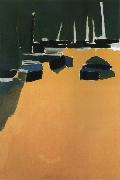
Russian Painter.1914-1955
was a painter known for his use of a thick impasto and his highly abstract landscape painting. He also worked with collage, illustration and textiles Nocolas de Stael was born in the family of a Russian Lieutenant General, Baron Vladimir Stael von Holstein, (a member of the Stael von Holstein family, and the last Commandant of the Peter and Paul Fortress) and his wife, Olga Sakhanskaya. De Stael's family was forced to emigrate to Poland in 1919 because of the Russian Revolution; Both, his father and stepmother, would die in Poland and the orphaned Nicolas de Stael would be sent with his older sister Marina to Brussels to live with a Russian family (1922). He eventually studied art at the Brussels Acad??mie royale des beaux-arts (1932). In the 1930s, he travelled throughout Europe, lived in Paris (1934) and in Morocco (1936) (where he first met his companion Jeannine Guillou, also a painter and who would appear in some of his paintings from 1941-1942) and Algeria. In 1936 he had his first exhibition of Byzantine style icons and watercolors at the Galerie Dietrich et Cie, Brussels. He joined the French Foreign Legion in 1939 and was demobilized in 1941. mk107
1952
Oil painting
54x72cm
Painting ID:: 35932
Landscape
Russian Painter.1914-1955
was a painter known for his use of a thick impasto and his highly abstract landscape painting. He also worked with collage, illustration and textiles Nocolas de Stael was born in the family of a Russian Lieutenant General, Baron Vladimir Stael von Holstein, (a member of the Stael von Holstein family, and the last Commandant of the Peter and Paul Fortress) and his wife, Olga Sakhanskaya. De Stael's family was forced to emigrate to Poland in 1919 because of the Russian Revolution; Both, his father and stepmother, would die in Poland and the orphaned Nicolas de Stael would be sent with his older sister Marina to Brussels to live with a Russian family (1922). He eventually studied art at the Brussels Acad??mie royale des beaux-arts (1932). In the 1930s, he travelled throughout Europe, lived in Paris (1934) and in Morocco (1936) (where he first met his companion Jeannine Guillou, also a painter and who would appear in some of his paintings from 1941-1942) and Algeria. In 1936 he had his first exhibition of Byzantine style icons and watercolors at the Galerie Dietrich et Cie, Brussels. He joined the French Foreign Legion in 1939 and was demobilized in 1941. mk107
1952
Oil painting
89x116cm
Painting ID:: 35933
Landscape
Russian Painter.1914-1955
was a painter known for his use of a thick impasto and his highly abstract landscape painting. He also worked with collage, illustration and textiles Nocolas de Stael was born in the family of a Russian Lieutenant General, Baron Vladimir Stael von Holstein, (a member of the Stael von Holstein family, and the last Commandant of the Peter and Paul Fortress) and his wife, Olga Sakhanskaya. De Stael's family was forced to emigrate to Poland in 1919 because of the Russian Revolution; Both, his father and stepmother, would die in Poland and the orphaned Nicolas de Stael would be sent with his older sister Marina to Brussels to live with a Russian family (1922). He eventually studied art at the Brussels Acad??mie royale des beaux-arts (1932). In the 1930s, he travelled throughout Europe, lived in Paris (1934) and in Morocco (1936) (where he first met his companion Jeannine Guillou, also a painter and who would appear in some of his paintings from 1941-1942) and Algeria. In 1936 he had his first exhibition of Byzantine style icons and watercolors at the Galerie Dietrich et Cie, Brussels. He joined the French Foreign Legion in 1939 and was demobilized in 1941. mk107
1953
Oil painting
65.5x81cm
Painting ID:: 35958
Landscape
Russian Painter.1914-1955
was a painter known for his use of a thick impasto and his highly abstract landscape painting. He also worked with collage, illustration and textiles Nocolas de Stael was born in the family of a Russian Lieutenant General, Baron Vladimir Stael von Holstein, (a member of the Stael von Holstein family, and the last Commandant of the Peter and Paul Fortress) and his wife, Olga Sakhanskaya. De Stael's family was forced to emigrate to Poland in 1919 because of the Russian Revolution; Both, his father and stepmother, would die in Poland and the orphaned Nicolas de Stael would be sent with his older sister Marina to Brussels to live with a Russian family (1922). He eventually studied art at the Brussels Acad??mie royale des beaux-arts (1932). In the 1930s, he travelled throughout Europe, lived in Paris (1934) and in Morocco (1936) (where he first met his companion Jeannine Guillou, also a painter and who would appear in some of his paintings from 1941-1942) and Algeria. In 1936 he had his first exhibition of Byzantine style icons and watercolors at the Galerie Dietrich et Cie, Brussels. He joined the French Foreign Legion in 1939 and was demobilized in 1941. mk107
1954
Oil painting
146x97cm
Painting ID:: 35966
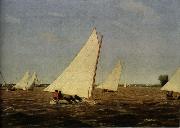
Landscape
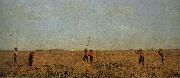
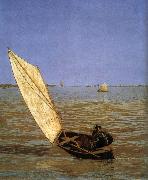
American Realist Painter, 1844-1916.
Thomas Cowperthwait Eakins (July 25, 1844 ?C June 25, 1916) was a realist painter, photographer, sculptor, and fine arts educator. He is widely acknowledged to be one of the most important artists in American art history.
For the length of his professional career, from the early 1870s until his health began to fail some forty years later, Eakins worked exactingly from life, choosing as his subject the people of his hometown of Philadelphia. He painted several hundred portraits, usually of friends, family members, or prominent people in the arts, sciences, medicine, and clergy. Taken en masse, the portraits offer an overview of the intellectual life of Philadelphia in the late 19th and early 20th centuries; individually, they are incisive depictions of thinking persons. As well, Eakins produced a number of large paintings which brought the portrait out of the drawing room and into the offices, streets, parks, rivers, arenas, and surgical amphitheaters of his city. These active outdoor venues allowed him to paint the subject which most inspired him: the nude or lightly clad figure in motion. In the process he could model the forms of the body in full sunlight, and create images of deep space utilizing his studies in perspective.
No less important in Eakins' life was his work as a teacher. As an instructor he was a highly influential presence in American art. The difficulties which beset him as an artist seeking to paint the portrait and figure realistically were paralleled and even amplified in his career as an educator, where behavioral and sexual scandals truncated his success and damaged his reputation.
Eakins also took a keen interest in the new technologies of motion photography, a field in which he is now seen as an innovator. Eakins was a controversial figure whose work received little by way of official recognition during his lifetime. Since his death, he has been celebrated by American art historians as "the strongest, most profound realist in nineteenth-and early-twentieth-century American art". mk108
1874
Oil painting
35.9x44.8cm
Painting ID:: 36001
Landscape
American Realist Painter, 1844-1916.
Thomas Cowperthwait Eakins (July 25, 1844 ?C June 25, 1916) was a realist painter, photographer, sculptor, and fine arts educator. He is widely acknowledged to be one of the most important artists in American art history.
For the length of his professional career, from the early 1870s until his health began to fail some forty years later, Eakins worked exactingly from life, choosing as his subject the people of his hometown of Philadelphia. He painted several hundred portraits, usually of friends, family members, or prominent people in the arts, sciences, medicine, and clergy. Taken en masse, the portraits offer an overview of the intellectual life of Philadelphia in the late 19th and early 20th centuries; individually, they are incisive depictions of thinking persons. As well, Eakins produced a number of large paintings which brought the portrait out of the drawing room and into the offices, streets, parks, rivers, arenas, and surgical amphitheaters of his city. These active outdoor venues allowed him to paint the subject which most inspired him: the nude or lightly clad figure in motion. In the process he could model the forms of the body in full sunlight, and create images of deep space utilizing his studies in perspective.
No less important in Eakins' life was his work as a teacher. As an instructor he was a highly influential presence in American art. The difficulties which beset him as an artist seeking to paint the portrait and figure realistically were paralleled and even amplified in his career as an educator, where behavioral and sexual scandals truncated his success and damaged his reputation.
Eakins also took a keen interest in the new technologies of motion photography, a field in which he is now seen as an innovator. Eakins was a controversial figure whose work received little by way of official recognition during his lifetime. Since his death, he has been celebrated by American art historians as "the strongest, most profound realist in nineteenth-and early-twentieth-century American art". MK108
1874
Oil painting
33x76cm
Painting ID:: 36002
Landscape
American Realist Painter, 1844-1916.
Thomas Cowperthwait Eakins (July 25, 1844 ?C June 25, 1916) was a realist painter, photographer, sculptor, and fine arts educator. He is widely acknowledged to be one of the most important artists in American art history.
For the length of his professional career, from the early 1870s until his health began to fail some forty years later, Eakins worked exactingly from life, choosing as his subject the people of his hometown of Philadelphia. He painted several hundred portraits, usually of friends, family members, or prominent people in the arts, sciences, medicine, and clergy. Taken en masse, the portraits offer an overview of the intellectual life of Philadelphia in the late 19th and early 20th centuries; individually, they are incisive depictions of thinking persons. As well, Eakins produced a number of large paintings which brought the portrait out of the drawing room and into the offices, streets, parks, rivers, arenas, and surgical amphitheaters of his city. These active outdoor venues allowed him to paint the subject which most inspired him: the nude or lightly clad figure in motion. In the process he could model the forms of the body in full sunlight, and create images of deep space utilizing his studies in perspective.
No less important in Eakins' life was his work as a teacher. As an instructor he was a highly influential presence in American art. The difficulties which beset him as an artist seeking to paint the portrait and figure realistically were paralleled and even amplified in his career as an educator, where behavioral and sexual scandals truncated his success and damaged his reputation.
Eakins also took a keen interest in the new technologies of motion photography, a field in which he is now seen as an innovator. Eakins was a controversial figure whose work received little by way of official recognition during his lifetime. Since his death, he has been celebrated by American art historians as "the strongest, most profound realist in nineteenth-and early-twentieth-century American art". mk108
1874
61.5x50cm
Painting ID:: 36003
Landscape
American Realist Painter, 1844-1916.
Thomas Cowperthwait Eakins (July 25, 1844 ?C June 25, 1916) was a realist painter, photographer, sculptor, and fine arts educator. He is widely acknowledged to be one of the most important artists in American art history.
For the length of his professional career, from the early 1870s until his health began to fail some forty years later, Eakins worked exactingly from life, choosing as his subject the people of his hometown of Philadelphia. He painted several hundred portraits, usually of friends, family members, or prominent people in the arts, sciences, medicine, and clergy. Taken en masse, the portraits offer an overview of the intellectual life of Philadelphia in the late 19th and early 20th centuries; individually, they are incisive depictions of thinking persons. As well, Eakins produced a number of large paintings which brought the portrait out of the drawing room and into the offices, streets, parks, rivers, arenas, and surgical amphitheaters of his city. These active outdoor venues allowed him to paint the subject which most inspired him: the nude or lightly clad figure in motion. In the process he could model the forms of the body in full sunlight, and create images of deep space utilizing his studies in perspective.
No less important in Eakins' life was his work as a teacher. As an instructor he was a highly influential presence in American art. The difficulties which beset him as an artist seeking to paint the portrait and figure realistically were paralleled and even amplified in his career as an educator, where behavioral and sexual scandals truncated his success and damaged his reputation.
Eakins also took a keen interest in the new technologies of motion photography, a field in which he is now seen as an innovator. Eakins was a controversial figure whose work received little by way of official recognition during his lifetime. Since his death, he has been celebrated by American art historians as "the strongest, most profound realist in nineteenth-and early-twentieth-century American art". mk108
1874
61x91.5cm
Painting ID:: 36004
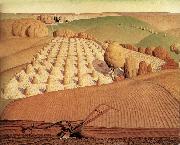
Landscape
1891-1942
Grant Wood Locations
His family moved to Cedar Rapids after his father died in 1901. Soon thereafter he began as an apprentice in a local metal shop. After graduating from Washington High School (Cedar Rapids, Iowa) , Wood enrolled in an art school in Minneapolis in 1910, and returned a year later to teach in a one-room schoolhouse. In 1913 he enrolled at the School of the Art Institute of Chicago and did some work as a silversmith.
From 1920 to 1928 he made four trips to Europe, where he studied many styles of painting, especially impressionism and post-impressionism. But it was the work of Jan Van Eyck that influenced him to take on the clarity of this new technique and to incorporate it in his new works. From 1924 to 1935 Wood lived in the loft of a carriage house that he turned into his personal studio at "5 Turner Alley" (the studio had no address until Wood made one up himself). In 1932, Wood helped found the Stone City Art Colony near his hometown to help artists get through the Great Depression. He became a great proponent of regionalism in the arts, lecturing throughout the country on the topic.
Wood taught painting at the University of Iowa's School of Art beginning in 1934. During that time, he supervised mural painting projects, mentored students, produced a variety of his own works, and became a key part of the University's cultural community. On February 12, 1942, one day before his 51st birthday, Wood died at the university hospital of liver cancer.
When Wood died, his estate went to his sister, Nan Wood Graham, the woman portrayed in American Gothic. When she died in 1990, her estate, along with Wood's personal effects and various works of art, became the property of the Figge Art Museum in Davenport, Iowa.
Wood was an active painter from an extremely young age until his death, and although he is best known for his paintings, he worked in a large number of media, including ink, charcoal, ceramics, metal, wood and found objects.
Throughout his life he hired out his talents to many Iowa-based businesses as a steady source of income. This included painting advertisements, sketching rooms of a mortuary house for promotional flyers and, in one case, designing the corn-themed decor (including chandelier) for the dining room of a hotel. In addition, his 1928 trip to Munich was to oversee the making of the stained-glass windows he had designed for a Veterans Memorial Building in Cedar Rapids. He again returned to Cedar Rapids to teach Junior High students after serving in the army as a camouflage painter. mk109
1931
Oil on palette
33x38cm
Painting ID:: 36166
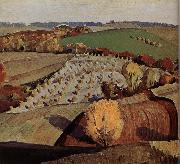
Landscape
1891-1942
Grant Wood Locations
His family moved to Cedar Rapids after his father died in 1901. Soon thereafter he began as an apprentice in a local metal shop. After graduating from Washington High School (Cedar Rapids, Iowa) , Wood enrolled in an art school in Minneapolis in 1910, and returned a year later to teach in a one-room schoolhouse. In 1913 he enrolled at the School of the Art Institute of Chicago and did some work as a silversmith.
From 1920 to 1928 he made four trips to Europe, where he studied many styles of painting, especially impressionism and post-impressionism. But it was the work of Jan Van Eyck that influenced him to take on the clarity of this new technique and to incorporate it in his new works. From 1924 to 1935 Wood lived in the loft of a carriage house that he turned into his personal studio at "5 Turner Alley" (the studio had no address until Wood made one up himself). In 1932, Wood helped found the Stone City Art Colony near his hometown to help artists get through the Great Depression. He became a great proponent of regionalism in the arts, lecturing throughout the country on the topic.
Wood taught painting at the University of Iowa's School of Art beginning in 1934. During that time, he supervised mural painting projects, mentored students, produced a variety of his own works, and became a key part of the University's cultural community. On February 12, 1942, one day before his 51st birthday, Wood died at the university hospital of liver cancer.
When Wood died, his estate went to his sister, Nan Wood Graham, the woman portrayed in American Gothic. When she died in 1990, her estate, along with Wood's personal effects and various works of art, became the property of the Figge Art Museum in Davenport, Iowa.
Wood was an active painter from an extremely young age until his death, and although he is best known for his paintings, he worked in a large number of media, including ink, charcoal, ceramics, metal, wood and found objects.
Throughout his life he hired out his talents to many Iowa-based businesses as a steady source of income. This included painting advertisements, sketching rooms of a mortuary house for promotional flyers and, in one case, designing the corn-themed decor (including chandelier) for the dining room of a hotel. In addition, his 1928 trip to Munich was to oversee the making of the stained-glass windows he had designed for a Veterans Memorial Building in Cedar Rapids. He again returned to Cedar Rapids to teach Junior High students after serving in the army as a camouflage painter. mk109
1931
Oil on canvas
76x103cm
Painting ID:: 36167
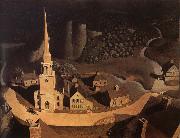
Landscape
1891-1942
Grant Wood Locations
His family moved to Cedar Rapids after his father died in 1901. Soon thereafter he began as an apprentice in a local metal shop. After graduating from Washington High School (Cedar Rapids, Iowa) , Wood enrolled in an art school in Minneapolis in 1910, and returned a year later to teach in a one-room schoolhouse. In 1913 he enrolled at the School of the Art Institute of Chicago and did some work as a silversmith.
From 1920 to 1928 he made four trips to Europe, where he studied many styles of painting, especially impressionism and post-impressionism. But it was the work of Jan Van Eyck that influenced him to take on the clarity of this new technique and to incorporate it in his new works. From 1924 to 1935 Wood lived in the loft of a carriage house that he turned into his personal studio at "5 Turner Alley" (the studio had no address until Wood made one up himself). In 1932, Wood helped found the Stone City Art Colony near his hometown to help artists get through the Great Depression. He became a great proponent of regionalism in the arts, lecturing throughout the country on the topic.
Wood taught painting at the University of Iowa's School of Art beginning in 1934. During that time, he supervised mural painting projects, mentored students, produced a variety of his own works, and became a key part of the University's cultural community. On February 12, 1942, one day before his 51st birthday, Wood died at the university hospital of liver cancer.
When Wood died, his estate went to his sister, Nan Wood Graham, the woman portrayed in American Gothic. When she died in 1990, her estate, along with Wood's personal effects and various works of art, became the property of the Figge Art Museum in Davenport, Iowa.
Wood was an active painter from an extremely young age until his death, and although he is best known for his paintings, he worked in a large number of media, including ink, charcoal, ceramics, metal, wood and found objects.
Throughout his life he hired out his talents to many Iowa-based businesses as a steady source of income. This included painting advertisements, sketching rooms of a mortuary house for promotional flyers and, in one case, designing the corn-themed decor (including chandelier) for the dining room of a hotel. In addition, his 1928 trip to Munich was to oversee the making of the stained-glass windows he had designed for a Veterans Memorial Building in Cedar Rapids. He again returned to Cedar Rapids to teach Junior High students after serving in the army as a camouflage painter. mk109
1931
Oil on palette
76x101cm
Painting ID:: 36169
Landscape
1878-1935
Kasimir Malevich Gallery
In 1904, after the death of his father, he moved to Moscow. He studied at the Moscow School of Painting, Sculpture and Architecture from 1904 to 1910 and in the studio of Fedor Rerberg in Moscow (1904?C1910). In 1911 he participated in the second exhibition of the group Soyuz Molodyozhi (Union of Youth) in St. Petersburg, together with Vladimir Tatlin and, in 1912, the group held its third exhibition, which included works by Aleksandra Ekster, Tatlin and others. In the same year he participated in an exhibition by the collective Donkey's Tail in Moscow. By that time his works were influenced by Natalia Goncharova and Mikhail Larionov, Russian avant-garde painters who were particularly interested in Russian folk art called lubok. In March 1913 a major exhibition of Aristarkh Lentulov's paintings opened in Moscow. The effect of this exhibition was comparable with that of Paul Cezanne in Paris in 1907, as all the main Russian avant-garde artists of the time (including Malevich) immediately absorbed the cubist principles and began using them in their works. Already in the same year the Cubo-Futurist opera Victory Over the Sun with Malevich's stage-set became a great success. In 1914 Malevich exhibited his works in the Salon des Independants in Paris together with Alexander Archipenko, Sonia Delaunay, Aleksandra Ekster and Vadim Meller, among others.
It remains one of the great mysteries of 20th century art, how, while leading a comfortable career, during which he just followed all the latest trends in art, in 1915 Malevich suddenly came up with the idea of Suprematism. The fact that Malevich throughout all his life was signing and re-signing his works using earlier dates makes this u-turn in his artistic career even more ambiguous. Be that as it may, in 1915 he published his manifesto From Cubism to Suprematism. In 1915-1916 he worked with other Suprematist artists in a peasant/artisan co-operative in Skoptsi and Verbovka village. In 1916-1917 he participated in exhibitions of the Jack of Diamonds group in Moscow together with Nathan Altman, David Burliuk and A. Ekster, among others. Famous examples of his Suprematist works include Black Square (1915) and White on White (1918).
In 1918 Malevich decorated a play Mystery Bouffe by Vladimir Mayakovskiy produced by Vsevolod Meyerhold.
Malevich also acknowledged that his fascination with aerial photography and aviation led him to abstractions inspired by or derived from aerial landscapes. Harvard doctoral candidate Julia Bekman Chadaga writes: ??In his later writings, Malevich defined the 'additional element' as the quality of any new visual environment bringing about a change in perception .... In a series of diagrams illustrating the ??environments' that influence various painterly styles, the Suprematist is associated with a series of aerial views rendering the familiar landscape into an abstraction..." (excerpted from Ms. Bekman Chadaga's paper delivered at Columbia University's 2000 symposium, "Art, Technology, and Modernity in Russia and Eastern Europe"). mk110
1905
Oil on canvas
19.2x31cm
Painting ID:: 36211
Landscape
1887-1927
Born in Madrid, he studied mechanical drawing at the Escuela de Artes y Manufacturas in Madrid from 1902 to 1904, during which time he contributed drawings to local periodicals. From 1904 to 1905 he studied painting with the academic artist Jose Maria Carbonero.
In 1906 he moved to Paris and became friends with Henri Matisse, Georges Braque, Fernand Leger, and in 1915 he was painted by his friend, Amedeo Modigliani. In Paris, Gris followed the lead of another friend and fellow countryman, Pablo Picasso. His portrait of Picasso in 1912 is a significant early Cubist painting done by a painter other than Picasso or Georges Braque. (Although he regarded Picasso as a teacher, Gertrude Stein acknowledged that Gris "was the one person that Picasso would have willingly wiped off the map.")
Portrait of Picasso, 1912, The Art Institute of Chicago.Although he submitted darkly humorous illustrations to journals such as Le Rire, L'assiette au beurre, Le Charivari, and Le Cri de Paris, Gris began to paint seriously in 1910. By 1912 he had developed a personal Cubist style.
At first Gris painted in the analytic style of Cubism, but after 1913 he began his conversion to synthetic Cubism, of which he became a steadfast interpreter, with extensive use of papier coll??. Unlike Picasso and Braque, whose Cubist works were monochromatic, Gris painted with bright harmonious colors in daring, novel combinations in the manner of his friend Matisse.
In 1924, he first designed ballet sets and costumes for Sergei Diaghilev and the famous Ballets Russes.
Gris articulated most of his aesthetic theories during 1924 and 1925. He delivered his definitive lecture, Des possibilit??s de la peinture, at the Sorbonne in 1924. Major Gris exhibitions took place at the Galerie Simon in Paris and the Galerie Flechtheim in Berlin in 1923, and at the Galerie Flechtheim in D??sseldorf in 1925.
He died in Boulogne-sur-Seine (Paris) in the spring of 1927 at the age of forty, leaving a wife, Josette, and a son, Georges. mk112
1916
Oil on canvas
55x38cm
Painting ID:: 36495
Landscape
1887-1927
Born in Madrid, he studied mechanical drawing at the Escuela de Artes y Manufacturas in Madrid from 1902 to 1904, during which time he contributed drawings to local periodicals. From 1904 to 1905 he studied painting with the academic artist Jose Maria Carbonero.
In 1906 he moved to Paris and became friends with Henri Matisse, Georges Braque, Fernand Leger, and in 1915 he was painted by his friend, Amedeo Modigliani. In Paris, Gris followed the lead of another friend and fellow countryman, Pablo Picasso. His portrait of Picasso in 1912 is a significant early Cubist painting done by a painter other than Picasso or Georges Braque. (Although he regarded Picasso as a teacher, Gertrude Stein acknowledged that Gris "was the one person that Picasso would have willingly wiped off the map.")
Portrait of Picasso, 1912, The Art Institute of Chicago.Although he submitted darkly humorous illustrations to journals such as Le Rire, L'assiette au beurre, Le Charivari, and Le Cri de Paris, Gris began to paint seriously in 1910. By 1912 he had developed a personal Cubist style.
At first Gris painted in the analytic style of Cubism, but after 1913 he began his conversion to synthetic Cubism, of which he became a steadfast interpreter, with extensive use of papier coll??. Unlike Picasso and Braque, whose Cubist works were monochromatic, Gris painted with bright harmonious colors in daring, novel combinations in the manner of his friend Matisse.
In 1924, he first designed ballet sets and costumes for Sergei Diaghilev and the famous Ballets Russes.
Gris articulated most of his aesthetic theories during 1924 and 1925. He delivered his definitive lecture, Des possibilit??s de la peinture, at the Sorbonne in 1924. Major Gris exhibitions took place at the Galerie Simon in Paris and the Galerie Flechtheim in Berlin in 1923, and at the Galerie Flechtheim in D??sseldorf in 1925.
He died in Boulogne-sur-Seine (Paris) in the spring of 1927 at the age of forty, leaving a wife, Josette, and a son, Georges. mk112
1913
Oil on canvas
92x60cm
Painting ID:: 36523
Landscape
1887-1927
Born in Madrid, he studied mechanical drawing at the Escuela de Artes y Manufacturas in Madrid from 1902 to 1904, during which time he contributed drawings to local periodicals. From 1904 to 1905 he studied painting with the academic artist Jose Maria Carbonero.
In 1906 he moved to Paris and became friends with Henri Matisse, Georges Braque, Fernand Leger, and in 1915 he was painted by his friend, Amedeo Modigliani. In Paris, Gris followed the lead of another friend and fellow countryman, Pablo Picasso. His portrait of Picasso in 1912 is a significant early Cubist painting done by a painter other than Picasso or Georges Braque. (Although he regarded Picasso as a teacher, Gertrude Stein acknowledged that Gris "was the one person that Picasso would have willingly wiped off the map.")
Portrait of Picasso, 1912, The Art Institute of Chicago.Although he submitted darkly humorous illustrations to journals such as Le Rire, L'assiette au beurre, Le Charivari, and Le Cri de Paris, Gris began to paint seriously in 1910. By 1912 he had developed a personal Cubist style.
At first Gris painted in the analytic style of Cubism, but after 1913 he began his conversion to synthetic Cubism, of which he became a steadfast interpreter, with extensive use of papier coll??. Unlike Picasso and Braque, whose Cubist works were monochromatic, Gris painted with bright harmonious colors in daring, novel combinations in the manner of his friend Matisse.
In 1924, he first designed ballet sets and costumes for Sergei Diaghilev and the famous Ballets Russes.
Gris articulated most of his aesthetic theories during 1924 and 1925. He delivered his definitive lecture, Des possibilit??s de la peinture, at the Sorbonne in 1924. Major Gris exhibitions took place at the Galerie Simon in Paris and the Galerie Flechtheim in Berlin in 1923, and at the Galerie Flechtheim in D??sseldorf in 1925.
He died in Boulogne-sur-Seine (Paris) in the spring of 1927 at the age of forty, leaving a wife, Josette, and a son, Georges. mk112
1918
Oil on canvas
90x64cm
Painting ID:: 36567
Landscape
1863-1935
French
Paul Signac Galleries
Paul Victor Jules Signac was born in Paris on November 11, 1863. He followed a course of training in architecture before deciding at the age of 18 to pursue a career as a painter. He sailed around the coasts of Europe, painting the landscapes he encountered. He also painted scenes of cities in France in his later years.
In 1884 he met Claude Monet and Georges Seurat. He was struck by the systematic working methods of Seurat and by his theory of colours and became Seurat's faithful supporter. Under his influence he abandoned the short brushstrokes of impressionism to experiment with scientifically juxtaposed small dots of pure colour, intended to combine and blend not on the canvas but in the viewer's eye, the defining feature of pointillism.
Many of Signac's paintings are of the French coast. He left the capital each summer, to stay in the south of France in the village of Collioure or at St. Tropez, where he bought a house and invited his friends. In March 1889, he visited Vincent van Gogh at Arles. The next year he made a short trip to Italy, seeing Genoa, Florence, and Naples.
The Port of Saint-Tropez, oil on canvas, 1901Signac loved sailing and began to travel in 1892, sailing a small boat to almost all the ports of France, to Holland, and around the Mediterranean as far as Constantinople, basing his boat at St. Tropez, which he "discovered". From his various ports of call, Signac brought back vibrant, colourful watercolors, sketched rapidly from nature. From these sketches, he painted large studio canvases that are carefully worked out in small, mosaic-like squares of color, quite different from the tiny, variegated dots previously used by Seurat.
Signac himself experimented with various media. As well as oil paintings and watercolours he made etchings, lithographs, and many pen-and-ink sketches composed of small, laborious dots. The neo-impressionists influenced the next generation: Signac inspired Henri Matisse and Andr?? Derain in particular, thus playing a decisive role in the evolution of Fauvism.
As president of the Societe des Artistes Ind??pendants from 1908 until his death, Signac encouraged younger artists (he was the first to buy a painting by Matisse) by exhibiting the controversial works of the Fauves and the Cubists. mk115
About 1925-1928
25.7x40.2cm
Painting ID:: 37001
Landscape
1863-1935
French
Paul Signac Galleries
Paul Victor Jules Signac was born in Paris on November 11, 1863. He followed a course of training in architecture before deciding at the age of 18 to pursue a career as a painter. He sailed around the coasts of Europe, painting the landscapes he encountered. He also painted scenes of cities in France in his later years.
In 1884 he met Claude Monet and Georges Seurat. He was struck by the systematic working methods of Seurat and by his theory of colours and became Seurat's faithful supporter. Under his influence he abandoned the short brushstrokes of impressionism to experiment with scientifically juxtaposed small dots of pure colour, intended to combine and blend not on the canvas but in the viewer's eye, the defining feature of pointillism.
Many of Signac's paintings are of the French coast. He left the capital each summer, to stay in the south of France in the village of Collioure or at St. Tropez, where he bought a house and invited his friends. In March 1889, he visited Vincent van Gogh at Arles. The next year he made a short trip to Italy, seeing Genoa, Florence, and Naples.
The Port of Saint-Tropez, oil on canvas, 1901Signac loved sailing and began to travel in 1892, sailing a small boat to almost all the ports of France, to Holland, and around the Mediterranean as far as Constantinople, basing his boat at St. Tropez, which he "discovered". From his various ports of call, Signac brought back vibrant, colourful watercolors, sketched rapidly from nature. From these sketches, he painted large studio canvases that are carefully worked out in small, mosaic-like squares of color, quite different from the tiny, variegated dots previously used by Seurat.
Signac himself experimented with various media. As well as oil paintings and watercolours he made etchings, lithographs, and many pen-and-ink sketches composed of small, laborious dots. The neo-impressionists influenced the next generation: Signac inspired Henri Matisse and Andr?? Derain in particular, thus playing a decisive role in the evolution of Fauvism.
As president of the Societe des Artistes Ind??pendants from 1908 until his death, Signac encouraged younger artists (he was the first to buy a painting by Matisse) by exhibiting the controversial works of the Fauves and the Cubists. mk115
1921
29.5x44cm
Painting ID:: 37003
Landscape
French Post-Impressionist Painter, 1839-1906
During the second half of the 19th century French impressionism created a dramatic break with the art of the past. In conception and appearance the style was radically new and, although it initially inspired public ridicule, it soon affected nearly every ambitious artist in western Europe. The new vision emerged during the 1870s, chiefly in the art of Claude Monet, Auguste Renoir, and Camille Pissarro. For each of these artists impressionism was an illusionistic style which differed from the tradition of Renaissance illusionism in its greater emphasis upon vibrant, natural color and on an immediate confrontation with the phenomena of the visible world.
As the style developed during the 1880s, however, it increasingly became characterized by paintings which were flat rather than illusionistic. In other words, the impressionists insistence upon a direct application of pigment to canvas resulted in surfaces which declared themselves first of all as surfaces - and, consequently, in paintings which declared themselves first of all as paintings rather than as windows which looked out upon the natural world.
The tendency toward flatness persisted into the last years of the 19th century, its pervasiveness giving the impression that illusionistic space - fought for, won, and defended since the very beginning of the Renaissance - had finally been sacrificed by the medium of painting. Paul C??zanne worked within and finally emerged from this trend. As a painter, he matured slowly, his greatest works coming during the last 25 years of his life. During this period he scored a remarkable and heroic achievement: he restored to painting the space and volume that had seemingly been lost to it. But he did it in a totally unprecedented way: not by return to the illusionism of the past but by the creation of a spatial illusionism that did not violate flatness.
C??zanne was born on Jan. 19, 1839, in Aix-en-Provence. His father, Philippe Auguste, was the cofounder of a banking firm which prospered throughout the artist life, affording him financial security that was unavailable to most of his contemporaries and eventually resulting in a large inheritance. In 1852 C??zanne entered the Coll??ge Bourbon, where he met and became friends with Émile Zola. This friendship was decisive for both men: with youthful romanticism they envisioned successful careers in the Paris art world, C??zanne as a painter and Zola as a writer. Consequently, C??zanne began to study painting and drawing at the École des Beaux-Arts in Aix in 1856. His father opposed the pursuit of an artistic career, and in 1858 he persuaded C??zanne to enter law school at the University of Aix. Although C??zanne continued his law studies for several years, he was simultaneously enrolled in the School of Design in Aix, where he remained until 1861.
In 1861 C??zanne finally convinced his father to allow him to go to Paris. He planned to join Zola there and to enroll in the École des Beaux-Arts. But his application was rejected and, although he had gained inspiration from visits to the Louvre, particularly from the study of Diego Vel??zquez and Caravaggio, C??zanne experienced self-doubt and returned to Aix within the year. He entered his father banking house but continued to study at the School of Design.
The remainder of the decade was a period of flux and uncertainty for C??zanne. His attempt to work in his father business was abortive, and he returned to Paris in 1862 and stayed for a year and a half. During this period he met Monet and Pissarro and became acquainted with the revolutionary work of Gustave Courbet and Édouard Manet. C??zanne also admired the fiery romanticism of Eug??ne Delacroix paintings. But he was never entirely comfortable with Parisian life and periodically returned to Aix, where he could work in relative isolation. He retreated there, for instance, during the Franco-Prussian War (1870-1871). mk115
About 1880
Oil on canvas
72x91cm
Painting ID:: 37020
Landscape
American Impressionist Painter, 1849-1916
American painter and printmaker. He received his early training in Indianapolis from the portrait painter Barton S. Hays (1826-75). In 1869 he went to New York to study at the National Academy of Design where he exhibited in 1871. That year he joined his family in St Louis, where John Mulvaney (1844-1906) encouraged him to study in Munich. With the support of several local patrons, enabling him to live abroad for the next six years, Chase entered the Kenigliche Akademie in Munich in 1872. Among his teachers were Alexander von Wagner (1838-1919), Karl Theodor von Piloty and Wilhelm von Diez (1839-1907). Chase also admired the work of Wilhelm Leibl. The school emphasized bravura brushwork, a technique that became integral to Chase's style, favoured a dark palette and encouraged the study of Old Master painters, particularly Diego Velezquez and Frans Hals. Among Chase's friends in Munich were the American artists Walter Shirlaw, J. Frank Currier and Frederick Dielman (1847-1935) mk124
88.9x101.6cm
About 1895
Painting ID:: 37368
Landscape
Italian Rococo Era Painter, 1697-1768
Italian painter, etcher and draughtsman. He was the most distinguished Italian view painter of the 18th century. Apart from ten years spent in England he lived in Venice, and his fame rests above all on his views (vedute) of that city; some of these are purely topographical, others include festivals or ceremonial events. He also painted imaginary views (capriccios), although the demarcation between the real and the invented is never quite clearcut: his imaginary views often include realistically depicted elements, though in unexpected surroundings, and in a sense even his Venetian vedute are imaginary. He never merely re-created reality. He was highly successful with the English, helped in this by the British connoisseur JOSEPH SMITH, whose own large collection of Canaletto works was sold to King George III in 1762. The British Royal Collection has the largest group of his paintings and drawings. mk129
Oil on canvas
Painting ID:: 37884
Landscape
Norwegian
1863-1944
Edvard Munch Locations
Edvard Munch (pronounced , December 12, 1863 ?C January 23, 1944) was a Norwegian Symbolist painter, printmaker, and an important forerunner of expressionistic art. His best-known composition, The Scream is one of the pieces in a series titled The Frieze of Life, in which Munch explored the themes of life, love, fear, death, and melancholy.
Edvard Munch was born in a rustic farmhouse in the village of Adalsbruk in Loten, Norway to Christian Munch, the son of a prominent priest. Christian was a doctor and medical officer, who married Laura Cathrine Bjølstad, a woman half his age, in 1861. Edvard had an older sister, Johanne Sophie (born 1862), and three younger siblings: Peter Andreas (born 1865), Laura Cathrine (born 1867), and Inger Marie (born 1868). Both Sophie and Edvard appear to have gotten their art talent from their mother. Edvard Munch was related to painter Jacob Munch (1776?C1839) and historian Peter Andreas Munch (1810?C1863).
The family moved to Kristiania (now Oslo) in 1864 when Christian Munch was appointed medical officer at Akershus Fortress. Edvard??s mother died of tuberculosis in 1868, as did Munch's favorite sister Johanne Sophie in 1877. After their mother's death, the Munch siblings were raised by their father and by their aunt Karen. Often ill for much of the winters and kept out of school, Edvard would draw to keep himself occupied. He also received tutoring from his school mates and his aunt. Christian Munch also instructed his son in history and literature, and entertained the children with vivid ghost stories and tales of Edgar Allan Poe.
Christian??s positive behavior toward his children, however, was overshadowed by his morbid pietism. Munch wrote, ??My father was temperamentally nervous and obsessively religious??to the point of psychoneurosis. From him I inherited the seeds of madness. The angles of fear, sorrow, and death stood by my side since the day I was born.?? Christian reprimanded his children by telling them that their mother was looking down from heaven and grieving over their misbehavior. The oppressive religious milieu, plus Edvard??s poor health and the vivid ghost stories, helped inspire macabre visions and nightmares in Edvard, who felt death constantly advancing on him. One of Munch's younger sisters was diagnosed with mental illness at an early age. Of the five siblings only Andreas married, but he died a few months after the wedding. Munch would later write, "I inherited two of mankind's most frightful enemies??the heritage of consumption and insanity."
Christian Munch??s military pay was very low, and his attempts at developing a private side practice failed, keeping his family in perrenial poverty. They moved frequently from one sordid flat to another. Munch??s early drawings and watercolors depicted these interiors, and the individual objects such as medicine bottles and drawing implements, plus some landscapes. By his teens, art dominated Munch??s interests. At thirteen, Munch has his first exposure to other artists at the newly formed Art Association, were he admired the work of the Norwegian landscape school, and where he returned to copy the paintings, and soon he began to paint in oils. mk130
1890
Oil on canvas
46.5x38cm
Painting ID:: 37940
Landscape
American Tonalist Painter, 1836-1892,American painter. He began as an itinerant painter of topographical landscapes along the banks of the Ohio River c. 1854, influenced by such landscape artists as Worthington Whittredge and George Inness. In 1863-4 Wyant moved to New York, where he was impressed by the paintings of the Norwegian artist Hans Gude in the Desseldorf Gallery. This led him to work with Gude in Karlsruhe, Germany, in 1865. On his way both there and back, he studied paintings by Constable and used a more painterly technique especially for views of Ireland. mk146
ca.1880-89
Oil on canvas
Painting ID:: 39287
Landscape
German Symbolist Painter, 1839-1924
German painter, printmaker and museum director. He was the son of a miller, craftsman and smallholder and studied briefly as a lithographer in Basle in 1854 before being apprenticed to a watchcase painter in Furtwangen. Returning home the same year, he started to draw and paint in his spare time. In 1859 he enrolled at the Kunstschule in Karlsruhe, where he studied until 1866 with Ludwig Des Coudres (1820-78) and the landscape painter Johann Wilhelm Schirmer, by whom he was especially influenced. He spent his summer vacations drawing and painting in Bernau, and his landscapes, portraits and genre pictures from this time record his transition from amateur painter to accomplished artist. His pictures of his mother and his sister Agathe mk156
1890
Oil on canvas
113x88.8cm
Painting ID:: 40809
Landscape
Swedish Realist Painter, 1853-1919
Swedish painter, illustrator and printmaker. He came from a poor family and studied (1866-76) at the Konstakademi in Stockholm, supporting himself throughout this period. From 1871 to 1878 he contributed illustrations to the comic journal Kaspar and the Ny illustrerad tidning. From 1875, for several decades, he was a prolific book illustrator, his most renowned work in this field being his drawings for Föltskärns beröttelser ('The Barber-surgeon's tales'; pubd 1883-4) by Zacharius Topelius, and the Rococo-inspired watercolours for the Samlade skaldeförsök ('Collected attempts at poetry'; pubd 1884) by the 18th-century Swedish author Anna Maria Lenngren. mk163
oil
1878
National museum
Painting ID:: 41573
Landscape
Russia-born Australian portrait painter
1873 - 1930
Australian painter, draughtsman and sculptor. He lived for a period in Europe and emigrated to Australia in 1887. He trained under Julian Rossi Ashton, gaining early recognition for his draughtsmanship. In 1901 he studied in Paris at the Acad?mie Colarossi under Auguste Del?cluse (b 1855). He was strongly influenced by the work of Diego Vel?zquez and Edouard Manet. The work of Sandro Botticelli later inspired him to paint in a high key and with an enhanced realism, as in Important People (1914; Sydney, A.G. NSW). He lived in England from 1902 to 1921 mk167
190
Oil
Painting ID:: 42199
Landscape
Mexican Social Realist Muralist, 1886-1957,Mexican muralist. After study in Mexico City and Spain, he settled in Paris from 1909 to 1919. He briefly espoused Cubism but abandoned it c. 1917 for a visual language of simplified forms and bold areas of colour. He returned to Mexico in 1921, seeking to create a new national art on revolutionary themes in the wake of the Mexican Revolution. He painted many public murals, the most ambitious of which is in the National Palace (1929 ?C 57). From 1930 to 1934 he worked in the U.S. His mural for New York's Rockefeller Center aroused a storm of controversy and was ultimately destroyed because it contained the figure of Vladimir Ilich Lenin; he later reproduced it at the Palace of Fine Arts in Mexico City. With Jose Clemente Orozco and David Alfaro Siqueiros, Rivera created a revival of fresco painting that became Mexico's most significant contribution to 20th-century art. His large-scale didactic murals contain scenes of Mexican history, culture, and industry, with Indians, peasants, conquistadores, and factory workers drawn as simplified figures in crowded, shallow spaces. Rivera was twice married to Frida Kahlo. mk117
1896-1897
Oil on canvas
55x70cm
Painting ID:: 44466
Landscape
Mexican Social Realist Muralist, 1886-1957,Mexican muralist. After study in Mexico City and Spain, he settled in Paris from 1909 to 1919. He briefly espoused Cubism but abandoned it c. 1917 for a visual language of simplified forms and bold areas of colour. He returned to Mexico in 1921, seeking to create a new national art on revolutionary themes in the wake of the Mexican Revolution. He painted many public murals, the most ambitious of which is in the National Palace (1929 ?C 57). From 1930 to 1934 he worked in the U.S. His mural for New York's Rockefeller Center aroused a storm of controversy and was ultimately destroyed because it contained the figure of Vladimir Ilich Lenin; he later reproduced it at the Palace of Fine Arts in Mexico City. With Jose Clemente Orozco and David Alfaro Siqueiros, Rivera created a revival of fresco painting that became Mexico's most significant contribution to 20th-century art. His large-scale didactic murals contain scenes of Mexican history, culture, and industry, with Indians, peasants, conquistadores, and factory workers drawn as simplified figures in crowded, shallow spaces. Rivera was twice married to Frida Kahlo. mk117
1912
300x200cm
Oil on canvas
Painting ID:: 44476
Landscape
Mexican Social Realist Muralist, 1886-1957,Mexican muralist. After study in Mexico City and Spain, he settled in Paris from 1909 to 1919. He briefly espoused Cubism but abandoned it c. 1917 for a visual language of simplified forms and bold areas of colour. He returned to Mexico in 1921, seeking to create a new national art on revolutionary themes in the wake of the Mexican Revolution. He painted many public murals, the most ambitious of which is in the National Palace (1929 ?C 57). From 1930 to 1934 he worked in the U.S. His mural for New York's Rockefeller Center aroused a storm of controversy and was ultimately destroyed because it contained the figure of Vladimir Ilich Lenin; he later reproduced it at the Palace of Fine Arts in Mexico City. With Jose Clemente Orozco and David Alfaro Siqueiros, Rivera created a revival of fresco painting that became Mexico's most significant contribution to 20th-century art. His large-scale didactic murals contain scenes of Mexican history, culture, and industry, with Indians, peasants, conquistadores, and factory workers drawn as simplified figures in crowded, shallow spaces. Rivera was twice married to Frida Kahlo. mk117
1915
Oil on canvas
144x123cm
Painting ID:: 44483
Landscape
French Fauvist Painter and Sculptor, 1869-1954
Henri Matisse is considered the most important French artist of the 20th century and, along with Pablo Picasso, one of the most influential modernist painters of the last century. Matisse began studying drawing and painting in the 1890s. A student of the masters of Post-Impressionism, Matisse later made a reputation for himself as the leader of a group of painters known as Les Fauves. An ironic label given to them by a critic, the name reflected Matisse's aggressive strokes and bold use of primary colors. In 1905 Matisse gained sudden fame with three paintings, including Woman with the Hat, purchased by the wealthy American ex-patriot Gertrude Stein. Beyond painting, he worked with lithographs and sculpture, and during World War II he did a series of book designs. Later in his career he experimented with paper cutouts and designed decorations for the Dominican chapel in Vence, France. Along with Picasso, mk191
Oil on canvas
Painting ID:: 48751
Landscape
French Realist/Impressionist Painter and Sculptor, 1834-1917
French painter, draughtsman, printmaker, sculptor, pastellist, photographer and collector. He was a founder-member of the Impressionist group and the leader within it of the Realist tendency. He organized several of the group exhibitions, but after 1886 he showed his works very rarely and largely withdrew from the Parisian art world. As he was sufficiently wealthy, he was not constricted by the need to sell his work, and even his late pieces retain a vigour and a power to shock that is lacking in the contemporary productions of his Impressionist colleagues. mk192
c.1890-92
46x54.6cm
Painting ID:: 48993
Landscape
French Realist/Impressionist Painter and Sculptor, 1834-1917
French painter, draughtsman, printmaker, sculptor, pastellist, photographer and collector. He was a founder-member of the Impressionist group and the leader within it of the Realist tendency. He organized several of the group exhibitions, but after 1886 he showed his works very rarely and largely withdrew from the Parisian art world. As he was sufficiently wealthy, he was not constricted by the need to sell his work, and even his late pieces retain a vigour and a power to shock that is lacking in the contemporary productions of his Impressionist colleagues. mk194
1892
Pastel over Monotype on paper
26.7x35.6cm
Painting ID:: 49168
Landscape
French Realist/Impressionist Painter and Sculptor, 1834-1917
French painter, draughtsman, printmaker, sculptor, pastellist, photographer and collector. He was a founder-member of the Impressionist group and the leader within it of the Realist tendency. He organized several of the group exhibitions, but after 1886 he showed his works very rarely and largely withdrew from the Parisian art world. As he was sufficiently wealthy, he was not constricted by the need to sell his work, and even his late pieces retain a vigour and a power to shock that is lacking in the contemporary productions of his Impressionist colleagues. mk194
1890-92
Painting ID:: 49173
Landscape
1878-1935
Kasimir Malevich Gallery
In 1904, after the death of his father, he moved to Moscow. He studied at the Moscow School of Painting, Sculpture and Architecture from 1904 to 1910 and in the studio of Fedor Rerberg in Moscow (1904?C1910). In 1911 he participated in the second exhibition of the group Soyuz Molodyozhi (Union of Youth) in St. Petersburg, together with Vladimir Tatlin and, in 1912, the group held its third exhibition, which included works by Aleksandra Ekster, Tatlin and others. In the same year he participated in an exhibition by the collective Donkey's Tail in Moscow. By that time his works were influenced by Natalia Goncharova and Mikhail Larionov, Russian avant-garde painters who were particularly interested in Russian folk art called lubok. In March 1913 a major exhibition of Aristarkh Lentulov's paintings opened in Moscow. The effect of this exhibition was comparable with that of Paul Cezanne in Paris in 1907, as all the main Russian avant-garde artists of the time (including Malevich) immediately absorbed the cubist principles and began using them in their works. Already in the same year the Cubo-Futurist opera Victory Over the Sun with Malevich's stage-set became a great success. In 1914 Malevich exhibited his works in the Salon des Independants in Paris together with Alexander Archipenko, Sonia Delaunay, Aleksandra Ekster and Vadim Meller, among others.
It remains one of the great mysteries of 20th century art, how, while leading a comfortable career, during which he just followed all the latest trends in art, in 1915 Malevich suddenly came up with the idea of Suprematism. The fact that Malevich throughout all his life was signing and re-signing his works using earlier dates makes this u-turn in his artistic career even more ambiguous. Be that as it may, in 1915 he published his manifesto From Cubism to Suprematism. In 1915-1916 he worked with other Suprematist artists in a peasant/artisan co-operative in Skoptsi and Verbovka village. In 1916-1917 he participated in exhibitions of the Jack of Diamonds group in Moscow together with Nathan Altman, David Burliuk and A. Ekster, among others. Famous examples of his Suprematist works include Black Square (1915) and White on White (1918).
In 1918 Malevich decorated a play Mystery Bouffe by Vladimir Mayakovskiy produced by Vsevolod Meyerhold.
Malevich also acknowledged that his fascination with aerial photography and aviation led him to abstractions inspired by or derived from aerial landscapes. Harvard doctoral candidate Julia Bekman Chadaga writes: ??In his later writings, Malevich defined the 'additional element' as the quality of any new visual environment bringing about a change in perception .... In a series of diagrams illustrating the ??environments' that influence various painterly styles, the Suprematist is associated with a series of aerial views rendering the familiar landscape into an abstraction..." (excerpted from Ms. Bekman Chadaga's paper delivered at Columbia University's 2000 symposium, "Art, Technology, and Modernity in Russia and Eastern Europe"). mk209
1909
19x21
Painting ID:: 50205
Landscape
American Painter, 1864-1926
American painter and sculptor. In 1880 he left his upper-class home in St Louis for Montana Territory. He worked briefly on a sheep ranch, spent two years as a hunter's and trapper's assistant and then became a cowboy. During his considerable spare daytime hours he painted, sketched and modelled small animal figures in clay (e.g. Antelope, 1915; Fort Worth, TX, Amon Carter Mus.). Although he painted a few exceptional oils and watercolours prior to 1900, the vast majority of his best work was done in the last two decades of his life. Typically the subject-matter centres around cowboy life (e.g. Wagon Boss, 1909; Tulsa, OK, Gilcrease Inst. Amer. Hist. & A.) and the Plains Indians, for whom he had great respect. The luminous Piegans (1918; Denver, CO, Mus. W. A.), with its depiction of the Plains Indians, is a reminder of the vastness of the American West. Russell's sense of humour and empathy for his subject-matter radiates from his paintings as pleasingly as do the clear colours of the high country. His bronze sculptures (e.g. Buffalo Hunt, 1905; Denver, CO, Mus. W. A.) depict the same dramatic and tension-packed themes as his paintings. mk212
1916
Oil on canvas
76.5x122.2cm
Painting ID:: 50551
Landscape
Dutch Post-Impressionist Painter, 1853-1890
Vincent Willem van Gogh (30 March 1853 ?C 29 July 1890) was a Dutch Post-Impressionist artist. Some of his paintings are now among the world's best known, most popular and expensive works of art.
Van Gogh spent his early adult life working for a firm of art dealers. After a brief spell as a teacher, he became a missionary worker in a very poor mining region. He did not embark upon a career as an artist until 1880. Initially, Van Gogh worked only with sombre colours, until he encountered Impressionism and Neo-Impressionism in Paris. He incorporated their brighter colours and style of painting into a uniquely recognizable style, which was fully developed during the time he spent at Arles, France. He produced more than 2,000 works, including around 900 paintings and 1,100 drawings and sketches, during the last ten years of his life. Most of his best-known works were produced in the final two years of his life, during which time he cut off part of his left ear following a breakdown in his friendship with Paul Gauguin. After this he suffered recurrent bouts of mental illness, which led to his suicide.
The central figure in Van Gogh's life was his brother Theo, who continually and selflessly provided financial support. Their lifelong friendship is documented in numerous letters they exchanged from August 1872 onwards. Van Gogh is a pioneer of what came to be known as Expressionism. He had an enormous influence on 20th century art, especially on the Fauves and German Expressionists. mk213
Oil on canvas
Painting ID:: 50629
Landscape
1796-1886
Asher Brown Durand Galleries
His interest shifted from engraving to oil painting around 1830 with the encouragement of his patron, Luman Reed. In 1837, he accompanied his friend Thomas Cole on a sketching expedition to Schroon Lake in the Adirondacks and soon after he began to concentrate on landscape painting. He spent summers sketching in the Catskills, Adirondacks, and the White Mountains of New Hampshire, making hundreds of drawings and oil sketches that were later incorporated into finished academy pieces which helped to define the Hudson River School.
Durand is particularly remembered for his detailed portrayals of trees, rocks, and foliage. He was an advocate for drawing directly from nature with as much realism as possible. Durand wrote, "Let [the artist] scrupulously accept whatever [nature] presents him until he shall, in a degree, have become intimate with her infinity...never let him profane her sacredness by a willful departure from truth."
Like other Hudson River School artists, Durand also believed that nature was an ineffable manifestation of God. He expressed this sentiment and his general views on art in his "Letters on Landscape Painting" in The Crayon, a mid-19th century New York art periodical. Wrote Durand, "[T]he true province of Landscape Art is the representation of the work of God in the visible creation..."
Durand is noted for his 1849 painting Kindred Spirits which shows fellow Hudson River School artist Thomas Cole and poet William Cullen Bryant in a Catskills landscape. This was painted as a tribute to Cole upon his death in 1848. The painting, donated by Bryant's daughter Julia to the New York Public Library in 1904, was sold by the library through Sotheby's at an auction in May 2005 to Alice Walton for a purported $35 million. The sale was conducted as a sealed, first bid auction, so the actual sales price is not known. At $35 million, however, it would be a record price paid for an American painting at the time. mk218
1850
Oil on canvas
100.3x154.9cm
Painting ID:: 51416
Landscape
Bulgarian-born French Expressionist Painter, 1885-1930,American painter, draughtsman and printmaker of Bulgarian birth, active in France. He attended secondary school in Vienna, returning in 1901 to Bucharest, where his family had settled, and working briefly in the office of his father's grain-merchandizing business. He was, however, already becoming passionately interested in drawing, for which he showed precocious talent. At the age of 16 he became the lover of a woman who ran a brothel and was allowed by her to draw the residents. In 1903 he moved to Munich, where he attended the art school run by Moritz Heymann. mk219
Oil on canvas
30x45cm
1907
Painting ID:: 51542
Landscape
French Painter, ca.1885-1956
French painter, stage designer and illustrator. After studying porcelain painting at the Sevres factory (1901) and drawing in Paris under the French flower painter Madelaine Lemaire (1845-1928), in 1903-4 she studied at the Academie Humbert in Paris, where she met Georges Braque and Francis Picabia. In 1907 she first exhibited paintings at the Salon des Independants, met Picasso at Clovis Sagot gallery and through Picasso was introduced to the poet Guillaume Apollinaire. Laurencin and Apollinaire were soon on intimate terms, their relationship lasting until 1912. mk224
board
26x40cm
1903
Painting ID:: 52820
Landscape
French Painter, ca.1885-1956
French painter, stage designer and illustrator. After studying porcelain painting at the Sevres factory (1901) and drawing in Paris under the French flower painter Madelaine Lemaire (1845-1928), in 1903-4 she studied at the Academie Humbert in Paris, where she met Georges Braque and Francis Picabia. In 1907 she first exhibited paintings at the Salon des Independants, met Picasso at Clovis Sagot gallery and through Picasso was introduced to the poet Guillaume Apollinaire. Laurencin and Apollinaire were soon on intimate terms, their relationship lasting until 1912. mk224
board
21x26cm
1940
Painting ID:: 52841
Landscape
French Painter, ca.1885-1956
French painter, stage designer and illustrator. After studying porcelain painting at the Sevres factory (1901) and drawing in Paris under the French flower painter Madelaine Lemaire (1845-1928), in 1903-4 she studied at the Academie Humbert in Paris, where she met Georges Braque and Francis Picabia. In 1907 she first exhibited paintings at the Salon des Independants, met Picasso at Clovis Sagot gallery and through Picasso was introduced to the poet Guillaume Apollinaire. Laurencin and Apollinaire were soon on intimate terms, their relationship lasting until 1912. mk224
21x26cm
1948
Painting ID:: 52869
Landscape
French Painter, ca.1885-1956
French painter, stage designer and illustrator. After studying porcelain painting at the Sevres factory (1901) and drawing in Paris under the French flower painter Madelaine Lemaire (1845-1928), in 1903-4 she studied at the Academie Humbert in Paris, where she met Georges Braque and Francis Picabia. In 1907 she first exhibited paintings at the Salon des Independants, met Picasso at Clovis Sagot gallery and through Picasso was introduced to the poet Guillaume Apollinaire. Laurencin and Apollinaire were soon on intimate terms, their relationship lasting until 1912. mk224
board
21x26cm
1940
Painting ID:: 52870
Landscape
Dutch
1872-1944
Piet Mondrian Location
was a Dutch painter.
He was an important contributor to the De Stijl art movement and group, which was founded by Theo van Doesburg. He evolved a non-representational form which he termed Neo-Plasticism. This consisted of a grid of vertical and horizontal black lines and the use of the three primary colours.
When 47-year-old Piet Mondrian left his artistically conservative native Holland for unfettered Paris for the second and last time in 1919, he set about at once to make his studio a nurturing environment for paintings he had in mind that would increasingly express the principles of Neo-Plasticism about which he had been writing for two years. To hide the studio's structural flaws quickly and inexpensively, he tacked up large rectangular placards, each in a single color or neutral hue. Smaller colored paper squares and rectangles, composed together, accented the walls. Then came an intense period of painting. Then again he addressed the walls, repositioning the colored cutouts, adding to their number, altering the dynamics of color and space, producing new tensions and equilibrium. Before long, he had established a creative schedule in which a period of painting took turns with a period of experimentally regrouping the smaller papers on the walls, a process that directly fed the next period of painting. It was a pattern he followed for the rest of his life, through wartime moves from Paris to London??s Hampstead in 1938 and 1940, across the Atlantic to Manhattan.
At 71 in the fall of 1943, Mondrian moved into his second and final New York studio at 15 East 59th Street, and set about again to create the environment he had learned over the years was most congenial to his modest way of life and most stimulating to his art. He painted the high walls the same off-white he used on his easel and on the seats, tables and storage cases he designed and fashioned meticulously from discarded orange and apple-crates. He glossed the top of a white metal stool in the same brilliant primary red he applied to the cardboard sheath he made for the radio-phonograph that spilled forth his beloved jazz from well-traveled records, Visitors to this last studio seldom saw more than one or two new canvases, but found, often to their astonishment, that eight large compositions of colored bits of paper he had tacked and re-tacked to the walls in ever-changing relationships constituted together an environment that, paradoxically and simultaneously, was both kinetic and serene, stimulating and restful. It was the best space, Mondrian said, that he had ever inhabited. Tragically, he was there for only a few months: he died of pneumonia in February 1944. mk226
Oil on canvas
63.5x76cm
1902-1903
Painting ID:: 53065
Landscape
Dutch
1872-1944
Piet Mondrian Location
was a Dutch painter.
He was an important contributor to the De Stijl art movement and group, which was founded by Theo van Doesburg. He evolved a non-representational form which he termed Neo-Plasticism. This consisted of a grid of vertical and horizontal black lines and the use of the three primary colours.
When 47-year-old Piet Mondrian left his artistically conservative native Holland for unfettered Paris for the second and last time in 1919, he set about at once to make his studio a nurturing environment for paintings he had in mind that would increasingly express the principles of Neo-Plasticism about which he had been writing for two years. To hide the studio's structural flaws quickly and inexpensively, he tacked up large rectangular placards, each in a single color or neutral hue. Smaller colored paper squares and rectangles, composed together, accented the walls. Then came an intense period of painting. Then again he addressed the walls, repositioning the colored cutouts, adding to their number, altering the dynamics of color and space, producing new tensions and equilibrium. Before long, he had established a creative schedule in which a period of painting took turns with a period of experimentally regrouping the smaller papers on the walls, a process that directly fed the next period of painting. It was a pattern he followed for the rest of his life, through wartime moves from Paris to London??s Hampstead in 1938 and 1940, across the Atlantic to Manhattan.
At 71 in the fall of 1943, Mondrian moved into his second and final New York studio at 15 East 59th Street, and set about again to create the environment he had learned over the years was most congenial to his modest way of life and most stimulating to his art. He painted the high walls the same off-white he used on his easel and on the seats, tables and storage cases he designed and fashioned meticulously from discarded orange and apple-crates. He glossed the top of a white metal stool in the same brilliant primary red he applied to the cardboard sheath he made for the radio-phonograph that spilled forth his beloved jazz from well-traveled records, Visitors to this last studio seldom saw more than one or two new canvases, but found, often to their astonishment, that eight large compositions of colored bits of paper he had tacked and re-tacked to the walls in ever-changing relationships constituted together an environment that, paradoxically and simultaneously, was both kinetic and serene, stimulating and restful. It was the best space, Mondrian said, that he had ever inhabited. Tragically, he was there for only a few months: he died of pneumonia in February 1944. mk225
33.5x45cm
Painting ID:: 53070
Landscape
English Romantic Painter, 1775-1851
Joseph Mallord William Turner (23 April 1775 ?C 19 December 1851) was an English Romantic landscape painter, watercolourist and printmaker, whose style is said to have laid the foundation for Impressionism. Although Turner was considered a controversial figure in his day, he is now regarded as the artist who elevated landscape painting to an eminence rivalling history painting.
Turner's talent was recognised early in his life. Financial independence allowed Turner to innovate freely; his mature work is characterised by a chromatic palette and broadly applied atmospheric washes of paint. According to David Piper's The Illustrated History of Art, his later pictures were called "fantastic puzzles." However, Turner was still recognised as an artistic genius: the influential English art critic John Ruskin described Turner as the artist who could most "stirringly and truthfully measure the moods of Nature." (Piper 321)
Suitable vehicles for Turner's imagination were to be found in the subjects of shipwrecks, fires (such as the burning of Parliament in 1834, an event which Turner rushed to witness first-hand, and which he transcribed in a series of watercolour sketches), natural catastrophes, and natural phenomena such as sunlight, storm, rain, and fog. He was fascinated by the violent power of the sea, as seen in Dawn after the Wreck (1840) and The Slave Ship (1840).
Turner placed human beings in many of his paintings to indicate his affection for humanity on the one hand (note the frequent scenes of people drinking and merry-making or working in the foreground), but its vulnerability and vulgarity amid the 'sublime' nature of the world on the other hand. 'Sublime' here means awe-inspiring, savage grandeur, a natural world unmastered by man, evidence of the power of God - a theme that artists and poets were exploring in this period. The significance of light was to Turner the emanation of God's spirit and this was why he refined the subject matter of his later paintings by leaving out solid objects and detail, concentrating on the play of light on water, the radiance of skies and fires. Although these late paintings appear to be 'impressionistic' and therefore a forerunner of the French school, Turner was striving for expression of spirituality in the world, rather than responding primarily to optical phenomena.
Rain, Steam and Speed - The Great Western Railway painted (1844).His early works, such as Tintern Abbey (1795), stayed true to the traditions of English landscape. However, in Hannibal Crossing the Alps (1812), an emphasis on the destructive power of nature had already come into play. His distinctive style of painting, in which he used watercolour technique with oil paints, created lightness, fluency, and ephemeral atmospheric effects. (Piper 321)
One popular story about Turner, though it likely has little basis in reality, states that he even had himself "tied to the mast of a ship in order to experience the drama" of the elements during a storm at sea.
In his later years he used oils ever more transparently, and turned to an evocation of almost pure light by use of shimmering colour. A prime example of his mature style can be seen in Rain, Steam and Speed - The Great Western Railway, where the objects are barely recognizable. The intensity of hue and interest in evanescent light not only placed Turner's work in the vanguard of English painting, but later exerted an influence upon art in France, as well; the Impressionists, particularly Claude Monet, carefully studied his techniques. mk238
1795-1796
30.4x43cm
Painting ID:: 54824
Landscape
English Romantic Painter, 1775-1851
Joseph Mallord William Turner (23 April 1775 ?C 19 December 1851) was an English Romantic landscape painter, watercolourist and printmaker, whose style is said to have laid the foundation for Impressionism. Although Turner was considered a controversial figure in his day, he is now regarded as the artist who elevated landscape painting to an eminence rivalling history painting.
Turner's talent was recognised early in his life. Financial independence allowed Turner to innovate freely; his mature work is characterised by a chromatic palette and broadly applied atmospheric washes of paint. According to David Piper's The Illustrated History of Art, his later pictures were called "fantastic puzzles." However, Turner was still recognised as an artistic genius: the influential English art critic John Ruskin described Turner as the artist who could most "stirringly and truthfully measure the moods of Nature." (Piper 321)
Suitable vehicles for Turner's imagination were to be found in the subjects of shipwrecks, fires (such as the burning of Parliament in 1834, an event which Turner rushed to witness first-hand, and which he transcribed in a series of watercolour sketches), natural catastrophes, and natural phenomena such as sunlight, storm, rain, and fog. He was fascinated by the violent power of the sea, as seen in Dawn after the Wreck (1840) and The Slave Ship (1840).
Turner placed human beings in many of his paintings to indicate his affection for humanity on the one hand (note the frequent scenes of people drinking and merry-making or working in the foreground), but its vulnerability and vulgarity amid the 'sublime' nature of the world on the other hand. 'Sublime' here means awe-inspiring, savage grandeur, a natural world unmastered by man, evidence of the power of God - a theme that artists and poets were exploring in this period. The significance of light was to Turner the emanation of God's spirit and this was why he refined the subject matter of his later paintings by leaving out solid objects and detail, concentrating on the play of light on water, the radiance of skies and fires. Although these late paintings appear to be 'impressionistic' and therefore a forerunner of the French school, Turner was striving for expression of spirituality in the world, rather than responding primarily to optical phenomena.
Rain, Steam and Speed - The Great Western Railway painted (1844).His early works, such as Tintern Abbey (1795), stayed true to the traditions of English landscape. However, in Hannibal Crossing the Alps (1812), an emphasis on the destructive power of nature had already come into play. His distinctive style of painting, in which he used watercolour technique with oil paints, created lightness, fluency, and ephemeral atmospheric effects. (Piper 321)
One popular story about Turner, though it likely has little basis in reality, states that he even had himself "tied to the mast of a ship in order to experience the drama" of the elements during a storm at sea.
In his later years he used oils ever more transparently, and turned to an evocation of almost pure light by use of shimmering colour. A prime example of his mature style can be seen in Rain, Steam and Speed - The Great Western Railway, where the objects are barely recognizable. The intensity of hue and interest in evanescent light not only placed Turner's work in the vanguard of English painting, but later exerted an influence upon art in France, as well; the Impressionists, particularly Claude Monet, carefully studied his techniques. mk238
1798
watercolour
28.9x41.6cm
Painting ID:: 54828
Landscape
English Romantic Painter, 1775-1851
Joseph Mallord William Turner (23 April 1775 ?C 19 December 1851) was an English Romantic landscape painter, watercolourist and printmaker, whose style is said to have laid the foundation for Impressionism. Although Turner was considered a controversial figure in his day, he is now regarded as the artist who elevated landscape painting to an eminence rivalling history painting.
Turner's talent was recognised early in his life. Financial independence allowed Turner to innovate freely; his mature work is characterised by a chromatic palette and broadly applied atmospheric washes of paint. According to David Piper's The Illustrated History of Art, his later pictures were called "fantastic puzzles." However, Turner was still recognised as an artistic genius: the influential English art critic John Ruskin described Turner as the artist who could most "stirringly and truthfully measure the moods of Nature." (Piper 321)
Suitable vehicles for Turner's imagination were to be found in the subjects of shipwrecks, fires (such as the burning of Parliament in 1834, an event which Turner rushed to witness first-hand, and which he transcribed in a series of watercolour sketches), natural catastrophes, and natural phenomena such as sunlight, storm, rain, and fog. He was fascinated by the violent power of the sea, as seen in Dawn after the Wreck (1840) and The Slave Ship (1840).
Turner placed human beings in many of his paintings to indicate his affection for humanity on the one hand (note the frequent scenes of people drinking and merry-making or working in the foreground), but its vulnerability and vulgarity amid the 'sublime' nature of the world on the other hand. 'Sublime' here means awe-inspiring, savage grandeur, a natural world unmastered by man, evidence of the power of God - a theme that artists and poets were exploring in this period. The significance of light was to Turner the emanation of God's spirit and this was why he refined the subject matter of his later paintings by leaving out solid objects and detail, concentrating on the play of light on water, the radiance of skies and fires. Although these late paintings appear to be 'impressionistic' and therefore a forerunner of the French school, Turner was striving for expression of spirituality in the world, rather than responding primarily to optical phenomena.
Rain, Steam and Speed - The Great Western Railway painted (1844).His early works, such as Tintern Abbey (1795), stayed true to the traditions of English landscape. However, in Hannibal Crossing the Alps (1812), an emphasis on the destructive power of nature had already come into play. His distinctive style of painting, in which he used watercolour technique with oil paints, created lightness, fluency, and ephemeral atmospheric effects. (Piper 321)
One popular story about Turner, though it likely has little basis in reality, states that he even had himself "tied to the mast of a ship in order to experience the drama" of the elements during a storm at sea.
In his later years he used oils ever more transparently, and turned to an evocation of almost pure light by use of shimmering colour. A prime example of his mature style can be seen in Rain, Steam and Speed - The Great Western Railway, where the objects are barely recognizable. The intensity of hue and interest in evanescent light not only placed Turner's work in the vanguard of English painting, but later exerted an influence upon art in France, as well; the Impressionists, particularly Claude Monet, carefully studied his techniques. mk238
1802-1805
watercolour
54.5x82.7cm
Painting ID:: 54841
Landscape
English Romantic Painter, 1775-1851
Joseph Mallord William Turner (23 April 1775 ?C 19 December 1851) was an English Romantic landscape painter, watercolourist and printmaker, whose style is said to have laid the foundation for Impressionism. Although Turner was considered a controversial figure in his day, he is now regarded as the artist who elevated landscape painting to an eminence rivalling history painting.
Turner's talent was recognised early in his life. Financial independence allowed Turner to innovate freely; his mature work is characterised by a chromatic palette and broadly applied atmospheric washes of paint. According to David Piper's The Illustrated History of Art, his later pictures were called "fantastic puzzles." However, Turner was still recognised as an artistic genius: the influential English art critic John Ruskin described Turner as the artist who could most "stirringly and truthfully measure the moods of Nature." (Piper 321)
Suitable vehicles for Turner's imagination were to be found in the subjects of shipwrecks, fires (such as the burning of Parliament in 1834, an event which Turner rushed to witness first-hand, and which he transcribed in a series of watercolour sketches), natural catastrophes, and natural phenomena such as sunlight, storm, rain, and fog. He was fascinated by the violent power of the sea, as seen in Dawn after the Wreck (1840) and The Slave Ship (1840).
Turner placed human beings in many of his paintings to indicate his affection for humanity on the one hand (note the frequent scenes of people drinking and merry-making or working in the foreground), but its vulnerability and vulgarity amid the 'sublime' nature of the world on the other hand. 'Sublime' here means awe-inspiring, savage grandeur, a natural world unmastered by man, evidence of the power of God - a theme that artists and poets were exploring in this period. The significance of light was to Turner the emanation of God's spirit and this was why he refined the subject matter of his later paintings by leaving out solid objects and detail, concentrating on the play of light on water, the radiance of skies and fires. Although these late paintings appear to be 'impressionistic' and therefore a forerunner of the French school, Turner was striving for expression of spirituality in the world, rather than responding primarily to optical phenomena.
Rain, Steam and Speed - The Great Western Railway painted (1844).His early works, such as Tintern Abbey (1795), stayed true to the traditions of English landscape. However, in Hannibal Crossing the Alps (1812), an emphasis on the destructive power of nature had already come into play. His distinctive style of painting, in which he used watercolour technique with oil paints, created lightness, fluency, and ephemeral atmospheric effects. (Piper 321)
One popular story about Turner, though it likely has little basis in reality, states that he even had himself "tied to the mast of a ship in order to experience the drama" of the elements during a storm at sea.
In his later years he used oils ever more transparently, and turned to an evocation of almost pure light by use of shimmering colour. A prime example of his mature style can be seen in Rain, Steam and Speed - The Great Western Railway, where the objects are barely recognizable. The intensity of hue and interest in evanescent light not only placed Turner's work in the vanguard of English painting, but later exerted an influence upon art in France, as well; the Impressionists, particularly Claude Monet, carefully studied his techniques. mk238
1802
Oil on canvas
90x119.5cm
Painting ID:: 54842
Landscape
English Romantic Painter, 1775-1851
Joseph Mallord William Turner (23 April 1775 ?C 19 December 1851) was an English Romantic landscape painter, watercolourist and printmaker, whose style is said to have laid the foundation for Impressionism. Although Turner was considered a controversial figure in his day, he is now regarded as the artist who elevated landscape painting to an eminence rivalling history painting.
Turner's talent was recognised early in his life. Financial independence allowed Turner to innovate freely; his mature work is characterised by a chromatic palette and broadly applied atmospheric washes of paint. According to David Piper's The Illustrated History of Art, his later pictures were called "fantastic puzzles." However, Turner was still recognised as an artistic genius: the influential English art critic John Ruskin described Turner as the artist who could most "stirringly and truthfully measure the moods of Nature." (Piper 321)
Suitable vehicles for Turner's imagination were to be found in the subjects of shipwrecks, fires (such as the burning of Parliament in 1834, an event which Turner rushed to witness first-hand, and which he transcribed in a series of watercolour sketches), natural catastrophes, and natural phenomena such as sunlight, storm, rain, and fog. He was fascinated by the violent power of the sea, as seen in Dawn after the Wreck (1840) and The Slave Ship (1840).
Turner placed human beings in many of his paintings to indicate his affection for humanity on the one hand (note the frequent scenes of people drinking and merry-making or working in the foreground), but its vulnerability and vulgarity amid the 'sublime' nature of the world on the other hand. 'Sublime' here means awe-inspiring, savage grandeur, a natural world unmastered by man, evidence of the power of God - a theme that artists and poets were exploring in this period. The significance of light was to Turner the emanation of God's spirit and this was why he refined the subject matter of his later paintings by leaving out solid objects and detail, concentrating on the play of light on water, the radiance of skies and fires. Although these late paintings appear to be 'impressionistic' and therefore a forerunner of the French school, Turner was striving for expression of spirituality in the world, rather than responding primarily to optical phenomena.
Rain, Steam and Speed - The Great Western Railway painted (1844).His early works, such as Tintern Abbey (1795), stayed true to the traditions of English landscape. However, in Hannibal Crossing the Alps (1812), an emphasis on the destructive power of nature had already come into play. His distinctive style of painting, in which he used watercolour technique with oil paints, created lightness, fluency, and ephemeral atmospheric effects. (Piper 321)
One popular story about Turner, though it likely has little basis in reality, states that he even had himself "tied to the mast of a ship in order to experience the drama" of the elements during a storm at sea.
In his later years he used oils ever more transparently, and turned to an evocation of almost pure light by use of shimmering colour. A prime example of his mature style can be seen in Rain, Steam and Speed - The Great Western Railway, where the objects are barely recognizable. The intensity of hue and interest in evanescent light not only placed Turner's work in the vanguard of English painting, but later exerted an influence upon art in France, as well; the Impressionists, particularly Claude Monet, carefully studied his techniques. mk238
1805
Oil on canvas
90.5x116.5cm
Painting ID:: 54851
Landscape
English Romantic Painter, 1775-1851
Joseph Mallord William Turner (23 April 1775 ?C 19 December 1851) was an English Romantic landscape painter, watercolourist and printmaker, whose style is said to have laid the foundation for Impressionism. Although Turner was considered a controversial figure in his day, he is now regarded as the artist who elevated landscape painting to an eminence rivalling history painting.
Turner's talent was recognised early in his life. Financial independence allowed Turner to innovate freely; his mature work is characterised by a chromatic palette and broadly applied atmospheric washes of paint. According to David Piper's The Illustrated History of Art, his later pictures were called "fantastic puzzles." However, Turner was still recognised as an artistic genius: the influential English art critic John Ruskin described Turner as the artist who could most "stirringly and truthfully measure the moods of Nature." (Piper 321)
Suitable vehicles for Turner's imagination were to be found in the subjects of shipwrecks, fires (such as the burning of Parliament in 1834, an event which Turner rushed to witness first-hand, and which he transcribed in a series of watercolour sketches), natural catastrophes, and natural phenomena such as sunlight, storm, rain, and fog. He was fascinated by the violent power of the sea, as seen in Dawn after the Wreck (1840) and The Slave Ship (1840).
Turner placed human beings in many of his paintings to indicate his affection for humanity on the one hand (note the frequent scenes of people drinking and merry-making or working in the foreground), but its vulnerability and vulgarity amid the 'sublime' nature of the world on the other hand. 'Sublime' here means awe-inspiring, savage grandeur, a natural world unmastered by man, evidence of the power of God - a theme that artists and poets were exploring in this period. The significance of light was to Turner the emanation of God's spirit and this was why he refined the subject matter of his later paintings by leaving out solid objects and detail, concentrating on the play of light on water, the radiance of skies and fires. Although these late paintings appear to be 'impressionistic' and therefore a forerunner of the French school, Turner was striving for expression of spirituality in the world, rather than responding primarily to optical phenomena.
Rain, Steam and Speed - The Great Western Railway painted (1844).His early works, such as Tintern Abbey (1795), stayed true to the traditions of English landscape. However, in Hannibal Crossing the Alps (1812), an emphasis on the destructive power of nature had already come into play. His distinctive style of painting, in which he used watercolour technique with oil paints, created lightness, fluency, and ephemeral atmospheric effects. (Piper 321)
One popular story about Turner, though it likely has little basis in reality, states that he even had himself "tied to the mast of a ship in order to experience the drama" of the elements during a storm at sea.
In his later years he used oils ever more transparently, and turned to an evocation of almost pure light by use of shimmering colour. A prime example of his mature style can be seen in Rain, Steam and Speed - The Great Western Railway, where the objects are barely recognizable. The intensity of hue and interest in evanescent light not only placed Turner's work in the vanguard of English painting, but later exerted an influence upon art in France, as well; the Impressionists, particularly Claude Monet, carefully studied his techniques. mk238
1806
Watercolour
27.5x37cm
Painting ID:: 54853
Landscape
English Romantic Painter, 1775-1851
Joseph Mallord William Turner (23 April 1775 ?C 19 December 1851) was an English Romantic landscape painter, watercolourist and printmaker, whose style is said to have laid the foundation for Impressionism. Although Turner was considered a controversial figure in his day, he is now regarded as the artist who elevated landscape painting to an eminence rivalling history painting.
Turner's talent was recognised early in his life. Financial independence allowed Turner to innovate freely; his mature work is characterised by a chromatic palette and broadly applied atmospheric washes of paint. According to David Piper's The Illustrated History of Art, his later pictures were called "fantastic puzzles." However, Turner was still recognised as an artistic genius: the influential English art critic John Ruskin described Turner as the artist who could most "stirringly and truthfully measure the moods of Nature." (Piper 321)
Suitable vehicles for Turner's imagination were to be found in the subjects of shipwrecks, fires (such as the burning of Parliament in 1834, an event which Turner rushed to witness first-hand, and which he transcribed in a series of watercolour sketches), natural catastrophes, and natural phenomena such as sunlight, storm, rain, and fog. He was fascinated by the violent power of the sea, as seen in Dawn after the Wreck (1840) and The Slave Ship (1840).
Turner placed human beings in many of his paintings to indicate his affection for humanity on the one hand (note the frequent scenes of people drinking and merry-making or working in the foreground), but its vulnerability and vulgarity amid the 'sublime' nature of the world on the other hand. 'Sublime' here means awe-inspiring, savage grandeur, a natural world unmastered by man, evidence of the power of God - a theme that artists and poets were exploring in this period. The significance of light was to Turner the emanation of God's spirit and this was why he refined the subject matter of his later paintings by leaving out solid objects and detail, concentrating on the play of light on water, the radiance of skies and fires. Although these late paintings appear to be 'impressionistic' and therefore a forerunner of the French school, Turner was striving for expression of spirituality in the world, rather than responding primarily to optical phenomena.
Rain, Steam and Speed - The Great Western Railway painted (1844).His early works, such as Tintern Abbey (1795), stayed true to the traditions of English landscape. However, in Hannibal Crossing the Alps (1812), an emphasis on the destructive power of nature had already come into play. His distinctive style of painting, in which he used watercolour technique with oil paints, created lightness, fluency, and ephemeral atmospheric effects. (Piper 321)
One popular story about Turner, though it likely has little basis in reality, states that he even had himself "tied to the mast of a ship in order to experience the drama" of the elements during a storm at sea.
In his later years he used oils ever more transparently, and turned to an evocation of almost pure light by use of shimmering colour. A prime example of his mature style can be seen in Rain, Steam and Speed - The Great Western Railway, where the objects are barely recognizable. The intensity of hue and interest in evanescent light not only placed Turner's work in the vanguard of English painting, but later exerted an influence upon art in France, as well; the Impressionists, particularly Claude Monet, carefully studied his techniques. mk238
1802
Painting ID:: 54854
Landscape
English Romantic Painter, 1775-1851
Joseph Mallord William Turner (23 April 1775 ?C 19 December 1851) was an English Romantic landscape painter, watercolourist and printmaker, whose style is said to have laid the foundation for Impressionism. Although Turner was considered a controversial figure in his day, he is now regarded as the artist who elevated landscape painting to an eminence rivalling history painting.
Turner's talent was recognised early in his life. Financial independence allowed Turner to innovate freely; his mature work is characterised by a chromatic palette and broadly applied atmospheric washes of paint. According to David Piper's The Illustrated History of Art, his later pictures were called "fantastic puzzles." However, Turner was still recognised as an artistic genius: the influential English art critic John Ruskin described Turner as the artist who could most "stirringly and truthfully measure the moods of Nature." (Piper 321)
Suitable vehicles for Turner's imagination were to be found in the subjects of shipwrecks, fires (such as the burning of Parliament in 1834, an event which Turner rushed to witness first-hand, and which he transcribed in a series of watercolour sketches), natural catastrophes, and natural phenomena such as sunlight, storm, rain, and fog. He was fascinated by the violent power of the sea, as seen in Dawn after the Wreck (1840) and The Slave Ship (1840).
Turner placed human beings in many of his paintings to indicate his affection for humanity on the one hand (note the frequent scenes of people drinking and merry-making or working in the foreground), but its vulnerability and vulgarity amid the 'sublime' nature of the world on the other hand. 'Sublime' here means awe-inspiring, savage grandeur, a natural world unmastered by man, evidence of the power of God - a theme that artists and poets were exploring in this period. The significance of light was to Turner the emanation of God's spirit and this was why he refined the subject matter of his later paintings by leaving out solid objects and detail, concentrating on the play of light on water, the radiance of skies and fires. Although these late paintings appear to be 'impressionistic' and therefore a forerunner of the French school, Turner was striving for expression of spirituality in the world, rather than responding primarily to optical phenomena.
Rain, Steam and Speed - The Great Western Railway painted (1844).His early works, such as Tintern Abbey (1795), stayed true to the traditions of English landscape. However, in Hannibal Crossing the Alps (1812), an emphasis on the destructive power of nature had already come into play. His distinctive style of painting, in which he used watercolour technique with oil paints, created lightness, fluency, and ephemeral atmospheric effects. (Piper 321)
One popular story about Turner, though it likely has little basis in reality, states that he even had himself "tied to the mast of a ship in order to experience the drama" of the elements during a storm at sea.
In his later years he used oils ever more transparently, and turned to an evocation of almost pure light by use of shimmering colour. A prime example of his mature style can be seen in Rain, Steam and Speed - The Great Western Railway, where the objects are barely recognizable. The intensity of hue and interest in evanescent light not only placed Turner's work in the vanguard of English painting, but later exerted an influence upon art in France, as well; the Impressionists, particularly Claude Monet, carefully studied his techniques. mk238
1812
Watercolour
13.9x21.9cm
Painting ID:: 54858
Landscape
English Romantic Painter, 1775-1851
Joseph Mallord William Turner (23 April 1775 ?C 19 December 1851) was an English Romantic landscape painter, watercolourist and printmaker, whose style is said to have laid the foundation for Impressionism. Although Turner was considered a controversial figure in his day, he is now regarded as the artist who elevated landscape painting to an eminence rivalling history painting.
Turner's talent was recognised early in his life. Financial independence allowed Turner to innovate freely; his mature work is characterised by a chromatic palette and broadly applied atmospheric washes of paint. According to David Piper's The Illustrated History of Art, his later pictures were called "fantastic puzzles." However, Turner was still recognised as an artistic genius: the influential English art critic John Ruskin described Turner as the artist who could most "stirringly and truthfully measure the moods of Nature." (Piper 321)
Suitable vehicles for Turner's imagination were to be found in the subjects of shipwrecks, fires (such as the burning of Parliament in 1834, an event which Turner rushed to witness first-hand, and which he transcribed in a series of watercolour sketches), natural catastrophes, and natural phenomena such as sunlight, storm, rain, and fog. He was fascinated by the violent power of the sea, as seen in Dawn after the Wreck (1840) and The Slave Ship (1840).
Turner placed human beings in many of his paintings to indicate his affection for humanity on the one hand (note the frequent scenes of people drinking and merry-making or working in the foreground), but its vulnerability and vulgarity amid the 'sublime' nature of the world on the other hand. 'Sublime' here means awe-inspiring, savage grandeur, a natural world unmastered by man, evidence of the power of God - a theme that artists and poets were exploring in this period. The significance of light was to Turner the emanation of God's spirit and this was why he refined the subject matter of his later paintings by leaving out solid objects and detail, concentrating on the play of light on water, the radiance of skies and fires. Although these late paintings appear to be 'impressionistic' and therefore a forerunner of the French school, Turner was striving for expression of spirituality in the world, rather than responding primarily to optical phenomena.
Rain, Steam and Speed - The Great Western Railway painted (1844).His early works, such as Tintern Abbey (1795), stayed true to the traditions of English landscape. However, in Hannibal Crossing the Alps (1812), an emphasis on the destructive power of nature had already come into play. His distinctive style of painting, in which he used watercolour technique with oil paints, created lightness, fluency, and ephemeral atmospheric effects. (Piper 321)
One popular story about Turner, though it likely has little basis in reality, states that he even had himself "tied to the mast of a ship in order to experience the drama" of the elements during a storm at sea.
In his later years he used oils ever more transparently, and turned to an evocation of almost pure light by use of shimmering colour. A prime example of his mature style can be seen in Rain, Steam and Speed - The Great Western Railway, where the objects are barely recognizable. The intensity of hue and interest in evanescent light not only placed Turner's work in the vanguard of English painting, but later exerted an influence upon art in France, as well; the Impressionists, particularly Claude Monet, carefully studied his techniques. mk238
1810
Oil on canvas
92x122cm
Painting ID:: 54861
Landscape
English Romantic Painter, 1775-1851
Joseph Mallord William Turner (23 April 1775 ?C 19 December 1851) was an English Romantic landscape painter, watercolourist and printmaker, whose style is said to have laid the foundation for Impressionism. Although Turner was considered a controversial figure in his day, he is now regarded as the artist who elevated landscape painting to an eminence rivalling history painting.
Turner's talent was recognised early in his life. Financial independence allowed Turner to innovate freely; his mature work is characterised by a chromatic palette and broadly applied atmospheric washes of paint. According to David Piper's The Illustrated History of Art, his later pictures were called "fantastic puzzles." However, Turner was still recognised as an artistic genius: the influential English art critic John Ruskin described Turner as the artist who could most "stirringly and truthfully measure the moods of Nature." (Piper 321)
Suitable vehicles for Turner's imagination were to be found in the subjects of shipwrecks, fires (such as the burning of Parliament in 1834, an event which Turner rushed to witness first-hand, and which he transcribed in a series of watercolour sketches), natural catastrophes, and natural phenomena such as sunlight, storm, rain, and fog. He was fascinated by the violent power of the sea, as seen in Dawn after the Wreck (1840) and The Slave Ship (1840).
Turner placed human beings in many of his paintings to indicate his affection for humanity on the one hand (note the frequent scenes of people drinking and merry-making or working in the foreground), but its vulnerability and vulgarity amid the 'sublime' nature of the world on the other hand. 'Sublime' here means awe-inspiring, savage grandeur, a natural world unmastered by man, evidence of the power of God - a theme that artists and poets were exploring in this period. The significance of light was to Turner the emanation of God's spirit and this was why he refined the subject matter of his later paintings by leaving out solid objects and detail, concentrating on the play of light on water, the radiance of skies and fires. Although these late paintings appear to be 'impressionistic' and therefore a forerunner of the French school, Turner was striving for expression of spirituality in the world, rather than responding primarily to optical phenomena.
Rain, Steam and Speed - The Great Western Railway painted (1844).His early works, such as Tintern Abbey (1795), stayed true to the traditions of English landscape. However, in Hannibal Crossing the Alps (1812), an emphasis on the destructive power of nature had already come into play. His distinctive style of painting, in which he used watercolour technique with oil paints, created lightness, fluency, and ephemeral atmospheric effects. (Piper 321)
One popular story about Turner, though it likely has little basis in reality, states that he even had himself "tied to the mast of a ship in order to experience the drama" of the elements during a storm at sea.
In his later years he used oils ever more transparently, and turned to an evocation of almost pure light by use of shimmering colour. A prime example of his mature style can be seen in Rain, Steam and Speed - The Great Western Railway, where the objects are barely recognizable. The intensity of hue and interest in evanescent light not only placed Turner's work in the vanguard of English painting, but later exerted an influence upon art in France, as well; the Impressionists, particularly Claude Monet, carefully studied his techniques. mk238
1819
waterclour
22.8x36.9cm
Painting ID:: 54881
Landscape
English Romantic Painter, 1775-1851
Joseph Mallord William Turner (23 April 1775 ?C 19 December 1851) was an English Romantic landscape painter, watercolourist and printmaker, whose style is said to have laid the foundation for Impressionism. Although Turner was considered a controversial figure in his day, he is now regarded as the artist who elevated landscape painting to an eminence rivalling history painting.
Turner's talent was recognised early in his life. Financial independence allowed Turner to innovate freely; his mature work is characterised by a chromatic palette and broadly applied atmospheric washes of paint. According to David Piper's The Illustrated History of Art, his later pictures were called "fantastic puzzles." However, Turner was still recognised as an artistic genius: the influential English art critic John Ruskin described Turner as the artist who could most "stirringly and truthfully measure the moods of Nature." (Piper 321)
Suitable vehicles for Turner's imagination were to be found in the subjects of shipwrecks, fires (such as the burning of Parliament in 1834, an event which Turner rushed to witness first-hand, and which he transcribed in a series of watercolour sketches), natural catastrophes, and natural phenomena such as sunlight, storm, rain, and fog. He was fascinated by the violent power of the sea, as seen in Dawn after the Wreck (1840) and The Slave Ship (1840).
Turner placed human beings in many of his paintings to indicate his affection for humanity on the one hand (note the frequent scenes of people drinking and merry-making or working in the foreground), but its vulnerability and vulgarity amid the 'sublime' nature of the world on the other hand. 'Sublime' here means awe-inspiring, savage grandeur, a natural world unmastered by man, evidence of the power of God - a theme that artists and poets were exploring in this period. The significance of light was to Turner the emanation of God's spirit and this was why he refined the subject matter of his later paintings by leaving out solid objects and detail, concentrating on the play of light on water, the radiance of skies and fires. Although these late paintings appear to be 'impressionistic' and therefore a forerunner of the French school, Turner was striving for expression of spirituality in the world, rather than responding primarily to optical phenomena.
Rain, Steam and Speed - The Great Western Railway painted (1844).His early works, such as Tintern Abbey (1795), stayed true to the traditions of English landscape. However, in Hannibal Crossing the Alps (1812), an emphasis on the destructive power of nature had already come into play. His distinctive style of painting, in which he used watercolour technique with oil paints, created lightness, fluency, and ephemeral atmospheric effects. (Piper 321)
One popular story about Turner, though it likely has little basis in reality, states that he even had himself "tied to the mast of a ship in order to experience the drama" of the elements during a storm at sea.
In his later years he used oils ever more transparently, and turned to an evocation of almost pure light by use of shimmering colour. A prime example of his mature style can be seen in Rain, Steam and Speed - The Great Western Railway, where the objects are barely recognizable. The intensity of hue and interest in evanescent light not only placed Turner's work in the vanguard of English painting, but later exerted an influence upon art in France, as well; the Impressionists, particularly Claude Monet, carefully studied his techniques. mk238
1828
Oil on canvas
60x92.5cm
Painting ID:: 54917
Landscape
English Romantic Painter, 1775-1851
Joseph Mallord William Turner (23 April 1775 ?C 19 December 1851) was an English Romantic landscape painter, watercolourist and printmaker, whose style is said to have laid the foundation for Impressionism. Although Turner was considered a controversial figure in his day, he is now regarded as the artist who elevated landscape painting to an eminence rivalling history painting.
Turner's talent was recognised early in his life. Financial independence allowed Turner to innovate freely; his mature work is characterised by a chromatic palette and broadly applied atmospheric washes of paint. According to David Piper's The Illustrated History of Art, his later pictures were called "fantastic puzzles." However, Turner was still recognised as an artistic genius: the influential English art critic John Ruskin described Turner as the artist who could most "stirringly and truthfully measure the moods of Nature." (Piper 321)
Suitable vehicles for Turner's imagination were to be found in the subjects of shipwrecks, fires (such as the burning of Parliament in 1834, an event which Turner rushed to witness first-hand, and which he transcribed in a series of watercolour sketches), natural catastrophes, and natural phenomena such as sunlight, storm, rain, and fog. He was fascinated by the violent power of the sea, as seen in Dawn after the Wreck (1840) and The Slave Ship (1840).
Turner placed human beings in many of his paintings to indicate his affection for humanity on the one hand (note the frequent scenes of people drinking and merry-making or working in the foreground), but its vulnerability and vulgarity amid the 'sublime' nature of the world on the other hand. 'Sublime' here means awe-inspiring, savage grandeur, a natural world unmastered by man, evidence of the power of God - a theme that artists and poets were exploring in this period. The significance of light was to Turner the emanation of God's spirit and this was why he refined the subject matter of his later paintings by leaving out solid objects and detail, concentrating on the play of light on water, the radiance of skies and fires. Although these late paintings appear to be 'impressionistic' and therefore a forerunner of the French school, Turner was striving for expression of spirituality in the world, rather than responding primarily to optical phenomena.
Rain, Steam and Speed - The Great Western Railway painted (1844).His early works, such as Tintern Abbey (1795), stayed true to the traditions of English landscape. However, in Hannibal Crossing the Alps (1812), an emphasis on the destructive power of nature had already come into play. His distinctive style of painting, in which he used watercolour technique with oil paints, created lightness, fluency, and ephemeral atmospheric effects. (Piper 321)
One popular story about Turner, though it likely has little basis in reality, states that he even had himself "tied to the mast of a ship in order to experience the drama" of the elements during a storm at sea.
In his later years he used oils ever more transparently, and turned to an evocation of almost pure light by use of shimmering colour. A prime example of his mature style can be seen in Rain, Steam and Speed - The Great Western Railway, where the objects are barely recognizable. The intensity of hue and interest in evanescent light not only placed Turner's work in the vanguard of English painting, but later exerted an influence upon art in France, as well; the Impressionists, particularly Claude Monet, carefully studied his techniques. mk238
1828
Oil on canvas
60.3x101.9cm
Painting ID:: 54920
Landscape
English Romantic Painter, 1775-1851
Joseph Mallord William Turner (23 April 1775 ?C 19 December 1851) was an English Romantic landscape painter, watercolourist and printmaker, whose style is said to have laid the foundation for Impressionism. Although Turner was considered a controversial figure in his day, he is now regarded as the artist who elevated landscape painting to an eminence rivalling history painting.
Turner's talent was recognised early in his life. Financial independence allowed Turner to innovate freely; his mature work is characterised by a chromatic palette and broadly applied atmospheric washes of paint. According to David Piper's The Illustrated History of Art, his later pictures were called "fantastic puzzles." However, Turner was still recognised as an artistic genius: the influential English art critic John Ruskin described Turner as the artist who could most "stirringly and truthfully measure the moods of Nature." (Piper 321)
Suitable vehicles for Turner's imagination were to be found in the subjects of shipwrecks, fires (such as the burning of Parliament in 1834, an event which Turner rushed to witness first-hand, and which he transcribed in a series of watercolour sketches), natural catastrophes, and natural phenomena such as sunlight, storm, rain, and fog. He was fascinated by the violent power of the sea, as seen in Dawn after the Wreck (1840) and The Slave Ship (1840).
Turner placed human beings in many of his paintings to indicate his affection for humanity on the one hand (note the frequent scenes of people drinking and merry-making or working in the foreground), but its vulnerability and vulgarity amid the 'sublime' nature of the world on the other hand. 'Sublime' here means awe-inspiring, savage grandeur, a natural world unmastered by man, evidence of the power of God - a theme that artists and poets were exploring in this period. The significance of light was to Turner the emanation of God's spirit and this was why he refined the subject matter of his later paintings by leaving out solid objects and detail, concentrating on the play of light on water, the radiance of skies and fires. Although these late paintings appear to be 'impressionistic' and therefore a forerunner of the French school, Turner was striving for expression of spirituality in the world, rather than responding primarily to optical phenomena.
Rain, Steam and Speed - The Great Western Railway painted (1844).His early works, such as Tintern Abbey (1795), stayed true to the traditions of English landscape. However, in Hannibal Crossing the Alps (1812), an emphasis on the destructive power of nature had already come into play. His distinctive style of painting, in which he used watercolour technique with oil paints, created lightness, fluency, and ephemeral atmospheric effects. (Piper 321)
One popular story about Turner, though it likely has little basis in reality, states that he even had himself "tied to the mast of a ship in order to experience the drama" of the elements during a storm at sea.
In his later years he used oils ever more transparently, and turned to an evocation of almost pure light by use of shimmering colour. A prime example of his mature style can be seen in Rain, Steam and Speed - The Great Western Railway, where the objects are barely recognizable. The intensity of hue and interest in evanescent light not only placed Turner's work in the vanguard of English painting, but later exerted an influence upon art in France, as well; the Impressionists, particularly Claude Monet, carefully studied his techniques. mk238
1840
Watercolour
24.4x36.8cm
Painting ID:: 54947
Landscape
English Romantic Painter, 1775-1851
Joseph Mallord William Turner (23 April 1775 ?C 19 December 1851) was an English Romantic landscape painter, watercolourist and printmaker, whose style is said to have laid the foundation for Impressionism. Although Turner was considered a controversial figure in his day, he is now regarded as the artist who elevated landscape painting to an eminence rivalling history painting.
Turner's talent was recognised early in his life. Financial independence allowed Turner to innovate freely; his mature work is characterised by a chromatic palette and broadly applied atmospheric washes of paint. According to David Piper's The Illustrated History of Art, his later pictures were called "fantastic puzzles." However, Turner was still recognised as an artistic genius: the influential English art critic John Ruskin described Turner as the artist who could most "stirringly and truthfully measure the moods of Nature." (Piper 321)
Suitable vehicles for Turner's imagination were to be found in the subjects of shipwrecks, fires (such as the burning of Parliament in 1834, an event which Turner rushed to witness first-hand, and which he transcribed in a series of watercolour sketches), natural catastrophes, and natural phenomena such as sunlight, storm, rain, and fog. He was fascinated by the violent power of the sea, as seen in Dawn after the Wreck (1840) and The Slave Ship (1840).
Turner placed human beings in many of his paintings to indicate his affection for humanity on the one hand (note the frequent scenes of people drinking and merry-making or working in the foreground), but its vulnerability and vulgarity amid the 'sublime' nature of the world on the other hand. 'Sublime' here means awe-inspiring, savage grandeur, a natural world unmastered by man, evidence of the power of God - a theme that artists and poets were exploring in this period. The significance of light was to Turner the emanation of God's spirit and this was why he refined the subject matter of his later paintings by leaving out solid objects and detail, concentrating on the play of light on water, the radiance of skies and fires. Although these late paintings appear to be 'impressionistic' and therefore a forerunner of the French school, Turner was striving for expression of spirituality in the world, rather than responding primarily to optical phenomena.
Rain, Steam and Speed - The Great Western Railway painted (1844).His early works, such as Tintern Abbey (1795), stayed true to the traditions of English landscape. However, in Hannibal Crossing the Alps (1812), an emphasis on the destructive power of nature had already come into play. His distinctive style of painting, in which he used watercolour technique with oil paints, created lightness, fluency, and ephemeral atmospheric effects. (Piper 321)
One popular story about Turner, though it likely has little basis in reality, states that he even had himself "tied to the mast of a ship in order to experience the drama" of the elements during a storm at sea.
In his later years he used oils ever more transparently, and turned to an evocation of almost pure light by use of shimmering colour. A prime example of his mature style can be seen in Rain, Steam and Speed - The Great Western Railway, where the objects are barely recognizable. The intensity of hue and interest in evanescent light not only placed Turner's work in the vanguard of English painting, but later exerted an influence upon art in France, as well; the Impressionists, particularly Claude Monet, carefully studied his techniques. mk238
1840
Oil on canvas
31.1x48.3cm
Painting ID:: 54948
Landscape
English Romantic Painter, 1775-1851
Joseph Mallord William Turner (23 April 1775 ?C 19 December 1851) was an English Romantic landscape painter, watercolourist and printmaker, whose style is said to have laid the foundation for Impressionism. Although Turner was considered a controversial figure in his day, he is now regarded as the artist who elevated landscape painting to an eminence rivalling history painting.
Turner's talent was recognised early in his life. Financial independence allowed Turner to innovate freely; his mature work is characterised by a chromatic palette and broadly applied atmospheric washes of paint. According to David Piper's The Illustrated History of Art, his later pictures were called "fantastic puzzles." However, Turner was still recognised as an artistic genius: the influential English art critic John Ruskin described Turner as the artist who could most "stirringly and truthfully measure the moods of Nature." (Piper 321)
Suitable vehicles for Turner's imagination were to be found in the subjects of shipwrecks, fires (such as the burning of Parliament in 1834, an event which Turner rushed to witness first-hand, and which he transcribed in a series of watercolour sketches), natural catastrophes, and natural phenomena such as sunlight, storm, rain, and fog. He was fascinated by the violent power of the sea, as seen in Dawn after the Wreck (1840) and The Slave Ship (1840).
Turner placed human beings in many of his paintings to indicate his affection for humanity on the one hand (note the frequent scenes of people drinking and merry-making or working in the foreground), but its vulnerability and vulgarity amid the 'sublime' nature of the world on the other hand. 'Sublime' here means awe-inspiring, savage grandeur, a natural world unmastered by man, evidence of the power of God - a theme that artists and poets were exploring in this period. The significance of light was to Turner the emanation of God's spirit and this was why he refined the subject matter of his later paintings by leaving out solid objects and detail, concentrating on the play of light on water, the radiance of skies and fires. Although these late paintings appear to be 'impressionistic' and therefore a forerunner of the French school, Turner was striving for expression of spirituality in the world, rather than responding primarily to optical phenomena.
Rain, Steam and Speed - The Great Western Railway painted (1844).His early works, such as Tintern Abbey (1795), stayed true to the traditions of English landscape. However, in Hannibal Crossing the Alps (1812), an emphasis on the destructive power of nature had already come into play. His distinctive style of painting, in which he used watercolour technique with oil paints, created lightness, fluency, and ephemeral atmospheric effects. (Piper 321)
One popular story about Turner, though it likely has little basis in reality, states that he even had himself "tied to the mast of a ship in order to experience the drama" of the elements during a storm at sea.
In his later years he used oils ever more transparently, and turned to an evocation of almost pure light by use of shimmering colour. A prime example of his mature style can be seen in Rain, Steam and Speed - The Great Western Railway, where the objects are barely recognizable. The intensity of hue and interest in evanescent light not only placed Turner's work in the vanguard of English painting, but later exerted an influence upon art in France, as well; the Impressionists, particularly Claude Monet, carefully studied his techniques. mk238
121.9x182.2cm
Painting ID:: 54952
Landscape
English Romantic Painter, 1775-1851
Joseph Mallord William Turner (23 April 1775 ?C 19 December 1851) was an English Romantic landscape painter, watercolourist and printmaker, whose style is said to have laid the foundation for Impressionism. Although Turner was considered a controversial figure in his day, he is now regarded as the artist who elevated landscape painting to an eminence rivalling history painting.
Turner's talent was recognised early in his life. Financial independence allowed Turner to innovate freely; his mature work is characterised by a chromatic palette and broadly applied atmospheric washes of paint. According to David Piper's The Illustrated History of Art, his later pictures were called "fantastic puzzles." However, Turner was still recognised as an artistic genius: the influential English art critic John Ruskin described Turner as the artist who could most "stirringly and truthfully measure the moods of Nature." (Piper 321)
Suitable vehicles for Turner's imagination were to be found in the subjects of shipwrecks, fires (such as the burning of Parliament in 1834, an event which Turner rushed to witness first-hand, and which he transcribed in a series of watercolour sketches), natural catastrophes, and natural phenomena such as sunlight, storm, rain, and fog. He was fascinated by the violent power of the sea, as seen in Dawn after the Wreck (1840) and The Slave Ship (1840).
Turner placed human beings in many of his paintings to indicate his affection for humanity on the one hand (note the frequent scenes of people drinking and merry-making or working in the foreground), but its vulnerability and vulgarity amid the 'sublime' nature of the world on the other hand. 'Sublime' here means awe-inspiring, savage grandeur, a natural world unmastered by man, evidence of the power of God - a theme that artists and poets were exploring in this period. The significance of light was to Turner the emanation of God's spirit and this was why he refined the subject matter of his later paintings by leaving out solid objects and detail, concentrating on the play of light on water, the radiance of skies and fires. Although these late paintings appear to be 'impressionistic' and therefore a forerunner of the French school, Turner was striving for expression of spirituality in the world, rather than responding primarily to optical phenomena.
Rain, Steam and Speed - The Great Western Railway painted (1844).His early works, such as Tintern Abbey (1795), stayed true to the traditions of English landscape. However, in Hannibal Crossing the Alps (1812), an emphasis on the destructive power of nature had already come into play. His distinctive style of painting, in which he used watercolour technique with oil paints, created lightness, fluency, and ephemeral atmospheric effects. (Piper 321)
One popular story about Turner, though it likely has little basis in reality, states that he even had himself "tied to the mast of a ship in order to experience the drama" of the elements during a storm at sea.
In his later years he used oils ever more transparently, and turned to an evocation of almost pure light by use of shimmering colour. A prime example of his mature style can be seen in Rain, Steam and Speed - The Great Western Railway, where the objects are barely recognizable. The intensity of hue and interest in evanescent light not only placed Turner's work in the vanguard of English painting, but later exerted an influence upon art in France, as well; the Impressionists, particularly Claude Monet, carefully studied his techniques. mk238
Oil on canvas
1844
Watercolour
22.8x32.8cm
Painting ID:: 54986
Landscape
English Romantic Painter, 1775-1851
Joseph Mallord William Turner (23 April 1775 ?C 19 December 1851) was an English Romantic landscape painter, watercolourist and printmaker, whose style is said to have laid the foundation for Impressionism. Although Turner was considered a controversial figure in his day, he is now regarded as the artist who elevated landscape painting to an eminence rivalling history painting.
Turner's talent was recognised early in his life. Financial independence allowed Turner to innovate freely; his mature work is characterised by a chromatic palette and broadly applied atmospheric washes of paint. According to David Piper's The Illustrated History of Art, his later pictures were called "fantastic puzzles." However, Turner was still recognised as an artistic genius: the influential English art critic John Ruskin described Turner as the artist who could most "stirringly and truthfully measure the moods of Nature." (Piper 321)
Suitable vehicles for Turner's imagination were to be found in the subjects of shipwrecks, fires (such as the burning of Parliament in 1834, an event which Turner rushed to witness first-hand, and which he transcribed in a series of watercolour sketches), natural catastrophes, and natural phenomena such as sunlight, storm, rain, and fog. He was fascinated by the violent power of the sea, as seen in Dawn after the Wreck (1840) and The Slave Ship (1840).
Turner placed human beings in many of his paintings to indicate his affection for humanity on the one hand (note the frequent scenes of people drinking and merry-making or working in the foreground), but its vulnerability and vulgarity amid the 'sublime' nature of the world on the other hand. 'Sublime' here means awe-inspiring, savage grandeur, a natural world unmastered by man, evidence of the power of God - a theme that artists and poets were exploring in this period. The significance of light was to Turner the emanation of God's spirit and this was why he refined the subject matter of his later paintings by leaving out solid objects and detail, concentrating on the play of light on water, the radiance of skies and fires. Although these late paintings appear to be 'impressionistic' and therefore a forerunner of the French school, Turner was striving for expression of spirituality in the world, rather than responding primarily to optical phenomena.
Rain, Steam and Speed - The Great Western Railway painted (1844).His early works, such as Tintern Abbey (1795), stayed true to the traditions of English landscape. However, in Hannibal Crossing the Alps (1812), an emphasis on the destructive power of nature had already come into play. His distinctive style of painting, in which he used watercolour technique with oil paints, created lightness, fluency, and ephemeral atmospheric effects. (Piper 321)
One popular story about Turner, though it likely has little basis in reality, states that he even had himself "tied to the mast of a ship in order to experience the drama" of the elements during a storm at sea.
In his later years he used oils ever more transparently, and turned to an evocation of almost pure light by use of shimmering colour. A prime example of his mature style can be seen in Rain, Steam and Speed - The Great Western Railway, where the objects are barely recognizable. The intensity of hue and interest in evanescent light not only placed Turner's work in the vanguard of English painting, but later exerted an influence upon art in France, as well; the Impressionists, particularly Claude Monet, carefully studied his techniques. mk238
1843-1845
Watercolour
24.2x29.6cm
Painting ID:: 54988
Landscape
English Romantic Painter, 1775-1851
Joseph Mallord William Turner (23 April 1775 ?C 19 December 1851) was an English Romantic landscape painter, watercolourist and printmaker, whose style is said to have laid the foundation for Impressionism. Although Turner was considered a controversial figure in his day, he is now regarded as the artist who elevated landscape painting to an eminence rivalling history painting.
Turner's talent was recognised early in his life. Financial independence allowed Turner to innovate freely; his mature work is characterised by a chromatic palette and broadly applied atmospheric washes of paint. According to David Piper's The Illustrated History of Art, his later pictures were called "fantastic puzzles." However, Turner was still recognised as an artistic genius: the influential English art critic John Ruskin described Turner as the artist who could most "stirringly and truthfully measure the moods of Nature." (Piper 321)
Suitable vehicles for Turner's imagination were to be found in the subjects of shipwrecks, fires (such as the burning of Parliament in 1834, an event which Turner rushed to witness first-hand, and which he transcribed in a series of watercolour sketches), natural catastrophes, and natural phenomena such as sunlight, storm, rain, and fog. He was fascinated by the violent power of the sea, as seen in Dawn after the Wreck (1840) and The Slave Ship (1840).
Turner placed human beings in many of his paintings to indicate his affection for humanity on the one hand (note the frequent scenes of people drinking and merry-making or working in the foreground), but its vulnerability and vulgarity amid the 'sublime' nature of the world on the other hand. 'Sublime' here means awe-inspiring, savage grandeur, a natural world unmastered by man, evidence of the power of God - a theme that artists and poets were exploring in this period. The significance of light was to Turner the emanation of God's spirit and this was why he refined the subject matter of his later paintings by leaving out solid objects and detail, concentrating on the play of light on water, the radiance of skies and fires. Although these late paintings appear to be 'impressionistic' and therefore a forerunner of the French school, Turner was striving for expression of spirituality in the world, rather than responding primarily to optical phenomena.
Rain, Steam and Speed - The Great Western Railway painted (1844).His early works, such as Tintern Abbey (1795), stayed true to the traditions of English landscape. However, in Hannibal Crossing the Alps (1812), an emphasis on the destructive power of nature had already come into play. His distinctive style of painting, in which he used watercolour technique with oil paints, created lightness, fluency, and ephemeral atmospheric effects. (Piper 321)
One popular story about Turner, though it likely has little basis in reality, states that he even had himself "tied to the mast of a ship in order to experience the drama" of the elements during a storm at sea.
In his later years he used oils ever more transparently, and turned to an evocation of almost pure light by use of shimmering colour. A prime example of his mature style can be seen in Rain, Steam and Speed - The Great Western Railway, where the objects are barely recognizable. The intensity of hue and interest in evanescent light not only placed Turner's work in the vanguard of English painting, but later exerted an influence upon art in France, as well; the Impressionists, particularly Claude Monet, carefully studied his techniques. mk238
1845
Watercolour
23.2x32.6cm
Painting ID:: 54990
Landscape
1866-1944
Wassily Kandinsky Galleries
was a Russian painter, printmaker and art theorist. One of the most famous 20th-century artists, he is credited with painting the first modern abstract works.
Born in Moscow, Kandinsky spent his childhood in Odessa. He enrolled at the University of Moscow and chose to study law and economics. Quite successful in his profession??he was offered a professorship (chair of Roman Law) at the University of Dorpat??he started painting studies (life-drawing, sketching and anatomy) at the age of 30.
In 1896 he settled in Munich and studied first in the private school of Anton Azbe and then at the Academy of Fine Arts, Munich. He went back to Moscow in 1914 after World War I started. He was unsympathetic to the official theories on art in Moscow and returned to Germany in 1921. There he taught at the Bauhaus school of art and architecture from 1922 until the Nazis closed it in 1933. He then moved to France where he lived the rest of his life, and became a French citizen in 1939. He died at Neuilly-sur-Seine in 1944.
mk239
1902-1903
Oil on canvas
23x32cm
Painting ID:: 54998
Landscape
English Romantic Painter, 1775-1851
Joseph Mallord William Turner (23 April 1775 ?C 19 December 1851) was an English Romantic landscape painter, watercolourist and printmaker, whose style is said to have laid the foundation for Impressionism. Although Turner was considered a controversial figure in his day, he is now regarded as the artist who elevated landscape painting to an eminence rivalling history painting.
Turner's talent was recognised early in his life. Financial independence allowed Turner to innovate freely; his mature work is characterised by a chromatic palette and broadly applied atmospheric washes of paint. According to David Piper's The Illustrated History of Art, his later pictures were called "fantastic puzzles." However, Turner was still recognised as an artistic genius: the influential English art critic John Ruskin described Turner as the artist who could most "stirringly and truthfully measure the moods of Nature." (Piper 321)
Suitable vehicles for Turner's imagination were to be found in the subjects of shipwrecks, fires (such as the burning of Parliament in 1834, an event which Turner rushed to witness first-hand, and which he transcribed in a series of watercolour sketches), natural catastrophes, and natural phenomena such as sunlight, storm, rain, and fog. He was fascinated by the violent power of the sea, as seen in Dawn after the Wreck (1840) and The Slave Ship (1840).
Turner placed human beings in many of his paintings to indicate his affection for humanity on the one hand (note the frequent scenes of people drinking and merry-making or working in the foreground), but its vulnerability and vulgarity amid the 'sublime' nature of the world on the other hand. 'Sublime' here means awe-inspiring, savage grandeur, a natural world unmastered by man, evidence of the power of God - a theme that artists and poets were exploring in this period. The significance of light was to Turner the emanation of God's spirit and this was why he refined the subject matter of his later paintings by leaving out solid objects and detail, concentrating on the play of light on water, the radiance of skies and fires. Although these late paintings appear to be 'impressionistic' and therefore a forerunner of the French school, Turner was striving for expression of spirituality in the world, rather than responding primarily to optical phenomena.
Rain, Steam and Speed - The Great Western Railway painted (1844).His early works, such as Tintern Abbey (1795), stayed true to the traditions of English landscape. However, in Hannibal Crossing the Alps (1812), an emphasis on the destructive power of nature had already come into play. His distinctive style of painting, in which he used watercolour technique with oil paints, created lightness, fluency, and ephemeral atmospheric effects. (Piper 321)
One popular story about Turner, though it likely has little basis in reality, states that he even had himself "tied to the mast of a ship in order to experience the drama" of the elements during a storm at sea.
In his later years he used oils ever more transparently, and turned to an evocation of almost pure light by use of shimmering colour. A prime example of his mature style can be seen in Rain, Steam and Speed - The Great Western Railway, where the objects are barely recognizable. The intensity of hue and interest in evanescent light not only placed Turner's work in the vanguard of English painting, but later exerted an influence upon art in France, as well; the Impressionists, particularly Claude Monet, carefully studied his techniques. mk239
1912
Oil on canvas
77.8x100cm
Painting ID:: 55035
Landscape
English Romantic Painter, 1775-1851
Joseph Mallord William Turner (23 April 1775 ?C 19 December 1851) was an English Romantic landscape painter, watercolourist and printmaker, whose style is said to have laid the foundation for Impressionism. Although Turner was considered a controversial figure in his day, he is now regarded as the artist who elevated landscape painting to an eminence rivalling history painting.
Turner's talent was recognised early in his life. Financial independence allowed Turner to innovate freely; his mature work is characterised by a chromatic palette and broadly applied atmospheric washes of paint. According to David Piper's The Illustrated History of Art, his later pictures were called "fantastic puzzles." However, Turner was still recognised as an artistic genius: the influential English art critic John Ruskin described Turner as the artist who could most "stirringly and truthfully measure the moods of Nature." (Piper 321)
Suitable vehicles for Turner's imagination were to be found in the subjects of shipwrecks, fires (such as the burning of Parliament in 1834, an event which Turner rushed to witness first-hand, and which he transcribed in a series of watercolour sketches), natural catastrophes, and natural phenomena such as sunlight, storm, rain, and fog. He was fascinated by the violent power of the sea, as seen in Dawn after the Wreck (1840) and The Slave Ship (1840).
Turner placed human beings in many of his paintings to indicate his affection for humanity on the one hand (note the frequent scenes of people drinking and merry-making or working in the foreground), but its vulnerability and vulgarity amid the 'sublime' nature of the world on the other hand. 'Sublime' here means awe-inspiring, savage grandeur, a natural world unmastered by man, evidence of the power of God - a theme that artists and poets were exploring in this period. The significance of light was to Turner the emanation of God's spirit and this was why he refined the subject matter of his later paintings by leaving out solid objects and detail, concentrating on the play of light on water, the radiance of skies and fires. Although these late paintings appear to be 'impressionistic' and therefore a forerunner of the French school, Turner was striving for expression of spirituality in the world, rather than responding primarily to optical phenomena.
Rain, Steam and Speed - The Great Western Railway painted (1844).His early works, such as Tintern Abbey (1795), stayed true to the traditions of English landscape. However, in Hannibal Crossing the Alps (1812), an emphasis on the destructive power of nature had already come into play. His distinctive style of painting, in which he used watercolour technique with oil paints, created lightness, fluency, and ephemeral atmospheric effects. (Piper 321)
One popular story about Turner, though it likely has little basis in reality, states that he even had himself "tied to the mast of a ship in order to experience the drama" of the elements during a storm at sea.
In his later years he used oils ever more transparently, and turned to an evocation of almost pure light by use of shimmering colour. A prime example of his mature style can be seen in Rain, Steam and Speed - The Great Western Railway, where the objects are barely recognizable. The intensity of hue and interest in evanescent light not only placed Turner's work in the vanguard of English painting, but later exerted an influence upon art in France, as well; the Impressionists, particularly Claude Monet, carefully studied his techniques. mk239
1911
Oil on canvas
94.3x129cm
Painting ID:: 55052
Landscape
Norwegian
1863-1944
Edvard Munch Locations
Edvard Munch (pronounced , December 12, 1863 ?C January 23, 1944) was a Norwegian Symbolist painter, printmaker, and an important forerunner of expressionistic art. His best-known composition, The Scream is one of the pieces in a series titled The Frieze of Life, in which Munch explored the themes of life, love, fear, death, and melancholy.
Edvard Munch was born in a rustic farmhouse in the village of Adalsbruk in Loten, Norway to Christian Munch, the son of a prominent priest. Christian was a doctor and medical officer, who married Laura Cathrine Bjølstad, a woman half his age, in 1861. Edvard had an older sister, Johanne Sophie (born 1862), and three younger siblings: Peter Andreas (born 1865), Laura Cathrine (born 1867), and Inger Marie (born 1868). Both Sophie and Edvard appear to have gotten their art talent from their mother. Edvard Munch was related to painter Jacob Munch (1776?C1839) and historian Peter Andreas Munch (1810?C1863).
The family moved to Kristiania (now Oslo) in 1864 when Christian Munch was appointed medical officer at Akershus Fortress. Edvard??s mother died of tuberculosis in 1868, as did Munch's favorite sister Johanne Sophie in 1877. After their mother's death, the Munch siblings were raised by their father and by their aunt Karen. Often ill for much of the winters and kept out of school, Edvard would draw to keep himself occupied. He also received tutoring from his school mates and his aunt. Christian Munch also instructed his son in history and literature, and entertained the children with vivid ghost stories and tales of Edgar Allan Poe.
Christian??s positive behavior toward his children, however, was overshadowed by his morbid pietism. Munch wrote, ??My father was temperamentally nervous and obsessively religious??to the point of psychoneurosis. From him I inherited the seeds of madness. The angles of fear, sorrow, and death stood by my side since the day I was born.?? Christian reprimanded his children by telling them that their mother was looking down from heaven and grieving over their misbehavior. The oppressive religious milieu, plus Edvard??s poor health and the vivid ghost stories, helped inspire macabre visions and nightmares in Edvard, who felt death constantly advancing on him. One of Munch's younger sisters was diagnosed with mental illness at an early age. Of the five siblings only Andreas married, but he died a few months after the wedding. Munch would later write, "I inherited two of mankind's most frightful enemies??the heritage of consumption and insanity."
Christian Munch??s military pay was very low, and his attempts at developing a private side practice failed, keeping his family in perrenial poverty. They moved frequently from one sordid flat to another. Munch??s early drawings and watercolors depicted these interiors, and the individual objects such as medicine bottles and drawing implements, plus some landscapes. By his teens, art dominated Munch??s interests. At thirteen, Munch has his first exposure to other artists at the newly formed Art Association, were he admired the work of the Norwegian landscape school, and where he returned to copy the paintings, and soon he began to paint in oils. mk241
1890
Oil on canvas
46.5x38cm
Painting ID:: 55299
Landscape
Norwegian
1863-1944
Edvard Munch Locations
Edvard Munch (pronounced , December 12, 1863 ?C January 23, 1944) was a Norwegian Symbolist painter, printmaker, and an important forerunner of expressionistic art. His best-known composition, The Scream is one of the pieces in a series titled The Frieze of Life, in which Munch explored the themes of life, love, fear, death, and melancholy.
Edvard Munch was born in a rustic farmhouse in the village of Adalsbruk in Loten, Norway to Christian Munch, the son of a prominent priest. Christian was a doctor and medical officer, who married Laura Cathrine Bjølstad, a woman half his age, in 1861. Edvard had an older sister, Johanne Sophie (born 1862), and three younger siblings: Peter Andreas (born 1865), Laura Cathrine (born 1867), and Inger Marie (born 1868). Both Sophie and Edvard appear to have gotten their art talent from their mother. Edvard Munch was related to painter Jacob Munch (1776?C1839) and historian Peter Andreas Munch (1810?C1863).
The family moved to Kristiania (now Oslo) in 1864 when Christian Munch was appointed medical officer at Akershus Fortress. Edvard??s mother died of tuberculosis in 1868, as did Munch's favorite sister Johanne Sophie in 1877. After their mother's death, the Munch siblings were raised by their father and by their aunt Karen. Often ill for much of the winters and kept out of school, Edvard would draw to keep himself occupied. He also received tutoring from his school mates and his aunt. Christian Munch also instructed his son in history and literature, and entertained the children with vivid ghost stories and tales of Edgar Allan Poe.
Christian??s positive behavior toward his children, however, was overshadowed by his morbid pietism. Munch wrote, ??My father was temperamentally nervous and obsessively religious??to the point of psychoneurosis. From him I inherited the seeds of madness. The angles of fear, sorrow, and death stood by my side since the day I was born.?? Christian reprimanded his children by telling them that their mother was looking down from heaven and grieving over their misbehavior. The oppressive religious milieu, plus Edvard??s poor health and the vivid ghost stories, helped inspire macabre visions and nightmares in Edvard, who felt death constantly advancing on him. One of Munch's younger sisters was diagnosed with mental illness at an early age. Of the five siblings only Andreas married, but he died a few months after the wedding. Munch would later write, "I inherited two of mankind's most frightful enemies??the heritage of consumption and insanity."
Christian Munch??s military pay was very low, and his attempts at developing a private side practice failed, keeping his family in perrenial poverty. They moved frequently from one sordid flat to another. Munch??s early drawings and watercolors depicted these interiors, and the individual objects such as medicine bottles and drawing implements, plus some landscapes. By his teens, art dominated Munch??s interests. At thirteen, Munch has his first exposure to other artists at the newly formed Art Association, were he admired the work of the Norwegian landscape school, and where he returned to copy the paintings, and soon he began to paint in oils. mk241
1891
Oil on canvas
92x73cm
Painting ID:: 55303
Landscape
Norwegian
1863-1944
Edvard Munch Locations
Edvard Munch (pronounced , December 12, 1863 ?C January 23, 1944) was a Norwegian Symbolist painter, printmaker, and an important forerunner of expressionistic art. His best-known composition, The Scream is one of the pieces in a series titled The Frieze of Life, in which Munch explored the themes of life, love, fear, death, and melancholy.
Edvard Munch was born in a rustic farmhouse in the village of Adalsbruk in Loten, Norway to Christian Munch, the son of a prominent priest. Christian was a doctor and medical officer, who married Laura Cathrine Bjølstad, a woman half his age, in 1861. Edvard had an older sister, Johanne Sophie (born 1862), and three younger siblings: Peter Andreas (born 1865), Laura Cathrine (born 1867), and Inger Marie (born 1868). Both Sophie and Edvard appear to have gotten their art talent from their mother. Edvard Munch was related to painter Jacob Munch (1776?C1839) and historian Peter Andreas Munch (1810?C1863).
The family moved to Kristiania (now Oslo) in 1864 when Christian Munch was appointed medical officer at Akershus Fortress. Edvard??s mother died of tuberculosis in 1868, as did Munch's favorite sister Johanne Sophie in 1877. After their mother's death, the Munch siblings were raised by their father and by their aunt Karen. Often ill for much of the winters and kept out of school, Edvard would draw to keep himself occupied. He also received tutoring from his school mates and his aunt. Christian Munch also instructed his son in history and literature, and entertained the children with vivid ghost stories and tales of Edgar Allan Poe.
Christian??s positive behavior toward his children, however, was overshadowed by his morbid pietism. Munch wrote, ??My father was temperamentally nervous and obsessively religious??to the point of psychoneurosis. From him I inherited the seeds of madness. The angles of fear, sorrow, and death stood by my side since the day I was born.?? Christian reprimanded his children by telling them that their mother was looking down from heaven and grieving over their misbehavior. The oppressive religious milieu, plus Edvard??s poor health and the vivid ghost stories, helped inspire macabre visions and nightmares in Edvard, who felt death constantly advancing on him. One of Munch's younger sisters was diagnosed with mental illness at an early age. Of the five siblings only Andreas married, but he died a few months after the wedding. Munch would later write, "I inherited two of mankind's most frightful enemies??the heritage of consumption and insanity."
Christian Munch??s military pay was very low, and his attempts at developing a private side practice failed, keeping his family in perrenial poverty. They moved frequently from one sordid flat to another. Munch??s early drawings and watercolors depicted these interiors, and the individual objects such as medicine bottles and drawing implements, plus some landscapes. By his teens, art dominated Munch??s interests. At thirteen, Munch has his first exposure to other artists at the newly formed Art Association, were he admired the work of the Norwegian landscape school, and where he returned to copy the paintings, and soon he began to paint in oils. mk241
1904
Oil on canvas
74x99cm
Painting ID:: 55383
Landscape
Norwegian
1863-1944
Edvard Munch Locations
Edvard Munch (pronounced , December 12, 1863 ?C January 23, 1944) was a Norwegian Symbolist painter, printmaker, and an important forerunner of expressionistic art. His best-known composition, The Scream is one of the pieces in a series titled The Frieze of Life, in which Munch explored the themes of life, love, fear, death, and melancholy.
Edvard Munch was born in a rustic farmhouse in the village of Adalsbruk in Loten, Norway to Christian Munch, the son of a prominent priest. Christian was a doctor and medical officer, who married Laura Cathrine Bjølstad, a woman half his age, in 1861. Edvard had an older sister, Johanne Sophie (born 1862), and three younger siblings: Peter Andreas (born 1865), Laura Cathrine (born 1867), and Inger Marie (born 1868). Both Sophie and Edvard appear to have gotten their art talent from their mother. Edvard Munch was related to painter Jacob Munch (1776?C1839) and historian Peter Andreas Munch (1810?C1863).
The family moved to Kristiania (now Oslo) in 1864 when Christian Munch was appointed medical officer at Akershus Fortress. Edvard??s mother died of tuberculosis in 1868, as did Munch's favorite sister Johanne Sophie in 1877. After their mother's death, the Munch siblings were raised by their father and by their aunt Karen. Often ill for much of the winters and kept out of school, Edvard would draw to keep himself occupied. He also received tutoring from his school mates and his aunt. Christian Munch also instructed his son in history and literature, and entertained the children with vivid ghost stories and tales of Edgar Allan Poe.
Christian??s positive behavior toward his children, however, was overshadowed by his morbid pietism. Munch wrote, ??My father was temperamentally nervous and obsessively religious??to the point of psychoneurosis. From him I inherited the seeds of madness. The angles of fear, sorrow, and death stood by my side since the day I was born.?? Christian reprimanded his children by telling them that their mother was looking down from heaven and grieving over their misbehavior. The oppressive religious milieu, plus Edvard??s poor health and the vivid ghost stories, helped inspire macabre visions and nightmares in Edvard, who felt death constantly advancing on him. One of Munch's younger sisters was diagnosed with mental illness at an early age. Of the five siblings only Andreas married, but he died a few months after the wedding. Munch would later write, "I inherited two of mankind's most frightful enemies??the heritage of consumption and insanity."
Christian Munch??s military pay was very low, and his attempts at developing a private side practice failed, keeping his family in perrenial poverty. They moved frequently from one sordid flat to another. Munch??s early drawings and watercolors depicted these interiors, and the individual objects such as medicine bottles and drawing implements, plus some landscapes. By his teens, art dominated Munch??s interests. At thirteen, Munch has his first exposure to other artists at the newly formed Art Association, were he admired the work of the Norwegian landscape school, and where he returned to copy the paintings, and soon he began to paint in oils. mk241
1921
100x120cm
Painting ID:: 55428
Landscape
1819-1877
French
Gustave Courbet Locations
was a French painter whose powerful pictures of peasants and scenes of everyday life established him as the leading figure of the realist movement of the mid-19th century.
Gustave Courbet was born at Ornans on June 10, 1819. He appears to have inherited his vigorous temperament from his father, a landowner and prominent personality in the Franche-Comte region. At the age of 18 Gustave went to the College Royal at Besancon. There he openly expressed his dissatisfaction with the traditional classical subjects he was obliged to study, going so far as to lead a revolt among the students. In 1838 he was enrolled as an externe and could simultaneously attend the classes of Charles Flajoulot, director of the ecole des Beaux-Arts. At the college in Besançon, Courbet became fast friends with Max Buchon, whose Essais Poetiques (1839) he illustrated with four lithographs.
In 1840 Courbet went to Paris to study law, but he decided to become a painter and spent much time copying in the Louvre. In 1844 his Self-Portrait with Black Dog was exhibited at the Salon. The following year he submitted five pictures; only one, Le Guitarrero, was accepted. After a complete rejection in 1847, the Liberal Jury of 1848 accepted all 10 of his entries, and the critic Champfleury, who was to become Courbet first staunch apologist, highly praised the Walpurgis Night. mk242
1865
39.5x54.5cm
Oil on canvas
Painting ID:: 55575
Landscape
1819-1877
French
Gustave Courbet Locations
was a French painter whose powerful pictures of peasants and scenes of everyday life established him as the leading figure of the realist movement of the mid-19th century.
Gustave Courbet was born at Ornans on June 10, 1819. He appears to have inherited his vigorous temperament from his father, a landowner and prominent personality in the Franche-Comte region. At the age of 18 Gustave went to the College Royal at Besancon. There he openly expressed his dissatisfaction with the traditional classical subjects he was obliged to study, going so far as to lead a revolt among the students. In 1838 he was enrolled as an externe and could simultaneously attend the classes of Charles Flajoulot, director of the ecole des Beaux-Arts. At the college in Besançon, Courbet became fast friends with Max Buchon, whose Essais Poetiques (1839) he illustrated with four lithographs.
In 1840 Courbet went to Paris to study law, but he decided to become a painter and spent much time copying in the Louvre. In 1844 his Self-Portrait with Black Dog was exhibited at the Salon. The following year he submitted five pictures; only one, Le Guitarrero, was accepted. After a complete rejection in 1847, the Liberal Jury of 1848 accepted all 10 of his entries, and the critic Champfleury, who was to become Courbet first staunch apologist, highly praised the Walpurgis Night. mk242
1872
38x46cm
Painting ID:: 55586
Landscape
1819-1877
French
Gustave Courbet Locations
was a French painter whose powerful pictures of peasants and scenes of everyday life established him as the leading figure of the realist movement of the mid-19th century.
Gustave Courbet was born at Ornans on June 10, 1819. He appears to have inherited his vigorous temperament from his father, a landowner and prominent personality in the Franche-Comte region. At the age of 18 Gustave went to the College Royal at Besancon. There he openly expressed his dissatisfaction with the traditional classical subjects he was obliged to study, going so far as to lead a revolt among the students. In 1838 he was enrolled as an externe and could simultaneously attend the classes of Charles Flajoulot, director of the ecole des Beaux-Arts. At the college in Besançon, Courbet became fast friends with Max Buchon, whose Essais Poetiques (1839) he illustrated with four lithographs.
In 1840 Courbet went to Paris to study law, but he decided to become a painter and spent much time copying in the Louvre. In 1844 his Self-Portrait with Black Dog was exhibited at the Salon. The following year he submitted five pictures; only one, Le Guitarrero, was accepted. After a complete rejection in 1847, the Liberal Jury of 1848 accepted all 10 of his entries, and the critic Champfleury, who was to become Courbet first staunch apologist, highly praised the Walpurgis Night. mk242
1843
14x22cm
Painting ID:: 55614
Landscape
English Romantic Painter, 1775-1851
Joseph Mallord William Turner (23 April 1775 ?C 19 December 1851) was an English Romantic landscape painter, watercolourist and printmaker, whose style is said to have laid the foundation for Impressionism. Although Turner was considered a controversial figure in his day, he is now regarded as the artist who elevated landscape painting to an eminence rivalling history painting.
Turner's talent was recognised early in his life. Financial independence allowed Turner to innovate freely; his mature work is characterised by a chromatic palette and broadly applied atmospheric washes of paint. According to David Piper's The Illustrated History of Art, his later pictures were called "fantastic puzzles." However, Turner was still recognised as an artistic genius: the influential English art critic John Ruskin described Turner as the artist who could most "stirringly and truthfully measure the moods of Nature." (Piper 321)
Suitable vehicles for Turner's imagination were to be found in the subjects of shipwrecks, fires (such as the burning of Parliament in 1834, an event which Turner rushed to witness first-hand, and which he transcribed in a series of watercolour sketches), natural catastrophes, and natural phenomena such as sunlight, storm, rain, and fog. He was fascinated by the violent power of the sea, as seen in Dawn after the Wreck (1840) and The Slave Ship (1840).
Turner placed human beings in many of his paintings to indicate his affection for humanity on the one hand (note the frequent scenes of people drinking and merry-making or working in the foreground), but its vulnerability and vulgarity amid the 'sublime' nature of the world on the other hand. 'Sublime' here means awe-inspiring, savage grandeur, a natural world unmastered by man, evidence of the power of God - a theme that artists and poets were exploring in this period. The significance of light was to Turner the emanation of God's spirit and this was why he refined the subject matter of his later paintings by leaving out solid objects and detail, concentrating on the play of light on water, the radiance of skies and fires. Although these late paintings appear to be 'impressionistic' and therefore a forerunner of the French school, Turner was striving for expression of spirituality in the world, rather than responding primarily to optical phenomena.
Rain, Steam and Speed - The Great Western Railway painted (1844).His early works, such as Tintern Abbey (1795), stayed true to the traditions of English landscape. However, in Hannibal Crossing the Alps (1812), an emphasis on the destructive power of nature had already come into play. His distinctive style of painting, in which he used watercolour technique with oil paints, created lightness, fluency, and ephemeral atmospheric effects. (Piper 321)
One popular story about Turner, though it likely has little basis in reality, states that he even had himself "tied to the mast of a ship in order to experience the drama" of the elements during a storm at sea.
In his later years he used oils ever more transparently, and turned to an evocation of almost pure light by use of shimmering colour. A prime example of his mature style can be seen in Rain, Steam and Speed - The Great Western Railway, where the objects are barely recognizable. The intensity of hue and interest in evanescent light not only placed Turner's work in the vanguard of English painting, but later exerted an influence upon art in France, as well; the Impressionists, particularly Claude Monet, carefully studied his techniques. mk255 for in 1835. 0.94 x 1.24 meters canvas. Paris, the Louvre
Painting ID:: 57303
Landscape
Caribbean-born French Pointillist/Impressionist Painter, ca.1830-1903
.Painter and printmaker. He was the only painter to exhibit in all eight of the Impressionist exhibitions held between 1874 and 1886, and he is often regarded as the 'father' of the movement. He was by no means narrow in outlook, however, and throughout his life remained as radical in artistic matters as he was in politics. Thad?e Natanson wrote in 1948: 'Nothing of novelty or of excellence appeared that Pissarro had not been among the first, if not the very first, to discern and to defend.' The significance of Pissarro's work is in the balance maintained between tradition and the avant-garde. Octave Mirbeau commented: 'M. Camille Pissarro has shown himself to be a revolutionary by renewing the art of painting in a purely working sense; mk259 1876 Oil on canvas years 45.8 x 55 cm
Painting ID:: 57801
Landscape
Caribbean-born French Pointillist/Impressionist Painter, ca.1830-1903
.Painter and printmaker. He was the only painter to exhibit in all eight of the Impressionist exhibitions held between 1874 and 1886, and he is often regarded as the 'father' of the movement. He was by no means narrow in outlook, however, and throughout his life remained as radical in artistic matters as he was in politics. Thad?e Natanson wrote in 1948: 'Nothing of novelty or of excellence appeared that Pissarro had not been among the first, if not the very first, to discern and to defend.' The significance of Pissarro's work is in the balance maintained between tradition and the avant-garde. Octave Mirbeau commented: 'M. Camille Pissarro has shown himself to be a revolutionary by renewing the art of painting in a purely working sense; mk259 1879 Oil on canvas years 54 x 65 cm
Painting ID:: 57816
Landscape
Caribbean-born French Pointillist/Impressionist Painter, ca.1830-1903
.Painter and printmaker. He was the only painter to exhibit in all eight of the Impressionist exhibitions held between 1874 and 1886, and he is often regarded as the 'father' of the movement. He was by no means narrow in outlook, however, and throughout his life remained as radical in artistic matters as he was in politics. Thad?e Natanson wrote in 1948: 'Nothing of novelty or of excellence appeared that Pissarro had not been among the first, if not the very first, to discern and to defend.' The significance of Pissarro's work is in the balance maintained between tradition and the avant-garde. Octave Mirbeau commented: 'M. Camille Pissarro has shown himself to be a revolutionary by renewing the art of painting in a purely working sense; mk259 1865 Oil on canvas 28.4 x 44.1 cm
Painting ID:: 60521
landscape
Caribbean-born French Pointillist/Impressionist Painter, ca.1830-1903
.Painter and printmaker. He was the only painter to exhibit in all eight of the Impressionist exhibitions held between 1874 and 1886, and he is often regarded as the 'father' of the movement. He was by no means narrow in outlook, however, and throughout his life remained as radical in artistic matters as he was in politics. Thad?e Natanson wrote in 1948: 'Nothing of novelty or of excellence appeared that Pissarro had not been among the first, if not the very first, to discern and to defend.' The significance of Pissarro's work is in the balance maintained between tradition and the avant-garde. Octave Mirbeau commented: 'M. Camille Pissarro has shown himself to be a revolutionary by renewing the art of painting in a purely working sense; mk259 1874 Oil on canvas years
Painting ID:: 60579
landscape
Caribbean-born French Pointillist/Impressionist Painter, ca.1830-1903
.Painter and printmaker. He was the only painter to exhibit in all eight of the Impressionist exhibitions held between 1874 and 1886, and he is often regarded as the 'father' of the movement. He was by no means narrow in outlook, however, and throughout his life remained as radical in artistic matters as he was in politics. Thad?e Natanson wrote in 1948: 'Nothing of novelty or of excellence appeared that Pissarro had not been among the first, if not the very first, to discern and to defend.' The significance of Pissarro's work is in the balance maintained between tradition and the avant-garde. Octave Mirbeau commented: 'M. Camille Pissarro has shown himself to be a revolutionary by renewing the art of painting in a purely working sense; mk259 1884 Oil on canvas 45.7 x 55.6 cm
Painting ID:: 60670
landscape
Caribbean-born French Pointillist/Impressionist Painter, ca.1830-1903
.Painter and printmaker. He was the only painter to exhibit in all eight of the Impressionist exhibitions held between 1874 and 1886, and he is often regarded as the 'father' of the movement. He was by no means narrow in outlook, however, and throughout his life remained as radical in artistic matters as he was in politics. Thad?e Natanson wrote in 1948: 'Nothing of novelty or of excellence appeared that Pissarro had not been among the first, if not the very first, to discern and to defend.' The significance of Pissarro's work is in the balance maintained between tradition and the avant-garde. Octave Mirbeau commented: 'M. Camille Pissarro has shown himself to be a revolutionary by renewing the art of painting in a purely working sense; mk259 1885 Oil on canvas 50 x 61 cm
Painting ID:: 60672
Landscape
Italian Rococo Era Painter, 1712-ca.1793
The records of his parish in Venice show that Francesco Guardi was baptized on Oct. 5, 1712. His father, Domenico, who died when Francesco was 4, had a workshop. Francesco and his elder brother, Gian Antonio, worked in a small studio, carrying out such orders as they could get for almost anything the client wanted:mythological pictures, genre, flower pieces, battle scenes, altarpieces, and even, on rare occasions, frescoes. They did not hesitate to copy compositions by other artists, but what they borrowed they always transformed into something more capricious, less stable, more fragmentary in the refraction of light. Francesco did not emerge as an independent personality until 1760, when his brother died. Then, 48 years old, he married, established his own studio, and devoted himself chiefly to painting views of Venice. For the most part he worked in obscurity, ignored by his contemporaries. He was not even admitted to the Venetian Academy until he was 72 years old. Guardi and Canaletto have always been compared to one another because the buildings they chose to paint were often the same. But the way each artist painted them is very different. Canaletto's world is constructed out of line. It provides solid, carefully drawn, three-dimensional objects that exist within logically constructed three-dimensional space. Guardi's world is constructed out of color and light. The objects in it become weightless in the light's shimmer and dissolve in a welter of brushstrokes; the space, like the forms in space, is suggested rather than described. Canaletto belonged essentially to the Renaissance tradition that began with Giotto and, as it grew progressively tighter and more controlled, pointed the way to neoclassicism. Guardi belonged to the new baroque tradition that grew out of the late style of Titian and, as it became progressively looser and freer, pointed the way toward impressionism. Such differences appear even in Guardi's early view paintings, where he was obviously trying to copy Canaletto, such as the Basin of San Marco. The famous buildings are there, but they are far in the background, insubstantial, seeming to float. In front is a fleet of fishing boats, their curving spars seeming to dance across the surface of the canvas. What is important for Guardi is not perspective but the changing clouds and the way the light falls on the lagoon. Guardi became increasingly fascinated by the water that surrounds Venice. In late works, such as the famous Lagoon with Gondola, buildings and people have been stripped away until there is nothing but the suggestion of a thin line of distant wharfs, a few strokes to indicate one man on a gondola, a long unbroken stretch of still water, and a cloudless sky. Guardi also painted the festivals that so delighted visitors to the city, such as the Marriage of Venice to the Sea. This was a symbolic ceremony in which the doge, in the great gilded galley of the head of state, surrounded by a thousand gondolas, appeared before all Venice, in Goethe's image, "raised up like the Host in a monstrance." Of all Guardi's paintings the most evocative are his caprices, the landscapes born out of his imagination though suggested by the ruined buildings on the lonely islands of the Venetian lagoon. A gentle melancholy clings to such scenes.
120 x 152 cm The Hermitage, St. Petersburg One of the rare compositions of the artist not containing archtectural elements. Artist: GUARDI, Francesco Painting Title: Landscape , 1751-1800 Painting Style: Italian , , landscape
Painting ID:: 63059
Landscape
1873-1939
Ernest Lawson Galleries
Ernest Lawson (March 22, 1873 ?C December 18, 1939) was a Canadian-American painter and a member of The Eight, a group of artists which included the group's leader Robert Henri, Everett Shinn, John Sloan, Arthur B. Davies, Maurice Prendergast, George Luks, and William J. Glackens.
Lawson was born in Halifax, Nova Scotia. Though Lawson mostly painted landscapes, he also did some realistic urban scenes which were shown at the 1908 exihibition of The Eight. His painting style is heavily influenced by Impressionism, especially the style of John Henry Twachtman, Alfred Sisley, and J. Alden Weir.
Lawson exhibited as a member of the Canadian Art Club from 1911 to 1915. He died in Miami Beach, Florida in 1939. ca. 1915(1915)
Oil on canvas
50.7 x 60.8 cm (19.96 x 23.94 in)
Painting ID:: 71183
landscape
1774-1840 Caspar David Friedrich Locations German painter, studied art at Copenhagen, and in 1798 settled in Dresden. Friedrich painted chiefly landscapes and seascapes, with and without figures, architectural pictures, including a few of Dresden, and some religious subjects. Religious feeling and symbolism permeate his œuvre, of which the seascape with figures, Die Lebensstufen, is a characteristic example. He possessed considerable power to convey mood in landscape. Almost forgotten in the 19th c. and early 20th c., interest in his work increased considerably in the mid-20th c. He is hardly represented in Britain, but an exhibition of 112 of his pictures at the Tate Gallery in 1972 attracted much attention. F. G. Kersting was a friend of Friedrich. oil on canvas
Painting ID:: 71241
Landscape
(February 4, 1864 - December 29, 1941) was an American painter, primarily of landscapes and nudes. Although he was academically trained, much of his work has the unself-aware character of naive art. Eilshemius was a grandson of Swiss painter Louis-Leopold Robert.
Born near Newark, New Jersey into a wealthy family, his earliest education was in Europe, after which he spent two years at Cornell University before his art studies began at the Art Students League of New York. He subsequently studied under Bouguereau at the Academie Julian in Paris, and traveled widely in Europe, Africa and the South Seas, returning to the family brownstone in New York City where he was to live for the rest of his life. ca. 1917(1917)
Oil on board
38 x 77.3 cm (14.96 x 30.43 in)
Painting ID:: 71281
Landscape
1796-1886
Asher Brown Durand Galleries
His interest shifted from engraving to oil painting around 1830 with the encouragement of his patron, Luman Reed. In 1837, he accompanied his friend Thomas Cole on a sketching expedition to Schroon Lake in the Adirondacks and soon after he began to concentrate on landscape painting. He spent summers sketching in the Catskills, Adirondacks, and the White Mountains of New Hampshire, making hundreds of drawings and oil sketches that were later incorporated into finished academy pieces which helped to define the Hudson River School.
Durand is particularly remembered for his detailed portrayals of trees, rocks, and foliage. He was an advocate for drawing directly from nature with as much realism as possible. Durand wrote, "Let [the artist] scrupulously accept whatever [nature] presents him until he shall, in a degree, have become intimate with her infinity...never let him profane her sacredness by a willful departure from truth."
Like other Hudson River School artists, Durand also believed that nature was an ineffable manifestation of God. He expressed this sentiment and his general views on art in his "Letters on Landscape Painting" in The Crayon, a mid-19th century New York art periodical. Wrote Durand, "[T]he true province of Landscape Art is the representation of the work of God in the visible creation..."
Durand is noted for his 1849 painting Kindred Spirits which shows fellow Hudson River School artist Thomas Cole and poet William Cullen Bryant in a Catskills landscape. This was painted as a tribute to Cole upon his death in 1848. The painting, donated by Bryant's daughter Julia to the New York Public Library in 1904, was sold by the library through Sotheby's at an auction in May 2005 to Alice Walton for a purported $35 million. The sale was conducted as a sealed, first bid auction, so the actual sales price is not known. At $35 million, however, it would be a record price paid for an American painting at the time. ca. 1867(1867)
Oil on canvas
38.2 x 61.1 cm (15.04 x 24.06 in)
Painting ID:: 71301
Landscape
(1831 - 1901) was a Polish painter and professor.
Born in Warsaw, Gerson enrolled at the Warsaw Fine Arts Academy and graduated with honorable mention and a scholarship to St. Petersburg Academy of Arts where he studied historical painting under A. T. Markov. He graduated from St. Petersburg with a silver medal and returned to Warsaw. He left for Paris in 1850 and studied under Leon Cogniet.
He travelled back to Warsaw in 1858, where he would live for the rest of his life. Gerson began to teach art in his own workshop in 1865. He trained many future Polish artists such as J??zef Chełmo??ski, Leon Wycz??łkowski, Władysław Podkowi??ski, and J??zef Pankiewicz. He was made a professor for the St. Petersburg Fine Arts Academy in 1878.
Gerson also worked as an architect and art critic. He is known for his paintings of patriotism, country life, and mountain landscapes. Gerson died in Warsaw, aged 70. Landscape, oil on canvas, 41,7 x 47,7 cm. Offered on auction by DESA 11.12.2004 for 50000zł.
Painting ID:: 71578
Landscape
Flemish Baroque Era Painter, 1576-ca.1632
was a Dutch painter of Flemish origin. Vinckboons was one of the most prolific and popular painters and print designers in the Netherlands. Himself influenced by Pieter Bruegel the Elder, he was instrumental together with "Hans Bol and Roelant Savery" in the development of genre painting in the northern Netherlands. The family moved to Antwerp around 1580, and then to Middelburg after the Spanish occupation of Antwerp in 1585. It is not likely they moved for religious reasons to Amsterdam. His father became a citizen in 1591, but none of his grandchildren were baptized in a Calvinist church. In 1602 David married in Leeuwarden to Agneta van Loon, the daughter of a notary. Then he lived in Sint Antoniesbreestraat like many other artists and painters. According to Karel van Mander he did not have any teacher other than his father Phillipe, a painter on canvas with watercolors, an art form practised mainly in his birthplace of Mechelen. David specialized in elegant figures in park-like landscapes (Outdoor Merry Company, 1610; Vienna, Akademie der Bildenden Kenste) as well as Kermis and other village festivals. His landscapes reflect his contact with Gillis van Coninxloo. Vinckboons attracted a number of students; among them were Gillis d'Hondecoeter, Claes Janszoon Visscher and probably Esaias van de Velde. between 1618(1618) and 1622(1622)
Oil on panel
104.1 X 78.7 cm (40.98 X 30.98 in)
Painting ID:: 72184
Landscape
konrad magi(1878 to 1925),was an Estonian landscape painter. He was one of the most colour-sensitive Estonian painters of the first decades of the 20th century, and Magi works on motives of the island of Saaremaa are the first modern Estonian nature paintings.
Magi received his elementary art education from the drawing courses of the German Artisans Society of Tartu (1899?C1902.) At the same time, he was keenly engaged in theater, violin, and various sports.
Magi continued his art education as an unattached student in Saint Petersburg (1903?C1905.) In the autumn of 1907, he went to Paris. There Magi studied at a free academy. From 1908 to 1910, he lived in Norway. In 1912, Magi returned to Tartu, where he worked as an art teacher.
In Åland, he created delicate plant vignettes in the style of Art Nouveau: Kahekesi (Two together; 1908; China ink drawing). In Paris, Magi was influenced by Impressionism and Fauvism, which had a significant impact on his colours: Lilleline vali majakesega (A flower field with a little house; 1908?C1909), Norra maastik manniga (A Norwegian landscape with a pine; 1910).
From 1918, the influence of Expressionism is manifest, fostered by Mägi extreme sensitivity and emotional response to the anxious times: Puhajarv (Lake Puha); 1918?C1920), Otepaa maastik (Landscape of Otepaa; 1918?C1920). Also influenced by Expressionism are his big figure compositions Piet?? (1919), Kolgata (Golgatha; 1921).
Konrad Magi - Rannamaastik (Beach landscape)Magi new artistic period, begun on a trip to Italy, brought calmer tempers: Varemed Capril (Ruins in Capri; 1922?C1923). Along with nature pictures, he painted flowers and portraits. Magi mostly beautiful female models express the Art Nouveau ideal of beauty: Holsti (1916). In his later portraits from the 1920s, a more serious temper is expressed: Madonna (1923?C1924).
Konrad Mägi "Landscape", 1920-1921, oil on cardboard, 46,8 x 60
cjr
Painting ID:: 72278
Landscape
1873-1939
Ernest Lawson Galleries
Ernest Lawson (March 22, 1873 ?C December 18, 1939) was a Canadian-American painter and a member of The Eight, a group of artists which included the group's leader Robert Henri, Everett Shinn, John Sloan, Arthur B. Davies, Maurice Prendergast, George Luks, and William J. Glackens.
Lawson was born in Halifax, Nova Scotia. Though Lawson mostly painted landscapes, he also did some realistic urban scenes which were shown at the 1908 exihibition of The Eight. His painting style is heavily influenced by Impressionism, especially the style of John Henry Twachtman, Alfred Sisley, and J. Alden Weir.
Lawson exhibited as a member of the Canadian Art Club from 1911 to 1915. He died in Miami Beach, Florida in 1939. Date ca. 1915(1915)
Medium Oil on canvas
Dimensions 50.7 X 60.8 cm (19.96 X 23.94 in)
cyf
Painting ID:: 72318
Landscape
1796-1886
Asher Brown Durand Galleries
His interest shifted from engraving to oil painting around 1830 with the encouragement of his patron, Luman Reed. In 1837, he accompanied his friend Thomas Cole on a sketching expedition to Schroon Lake in the Adirondacks and soon after he began to concentrate on landscape painting. He spent summers sketching in the Catskills, Adirondacks, and the White Mountains of New Hampshire, making hundreds of drawings and oil sketches that were later incorporated into finished academy pieces which helped to define the Hudson River School.
Durand is particularly remembered for his detailed portrayals of trees, rocks, and foliage. He was an advocate for drawing directly from nature with as much realism as possible. Durand wrote, "Let [the artist] scrupulously accept whatever [nature] presents him until he shall, in a degree, have become intimate with her infinity...never let him profane her sacredness by a willful departure from truth."
Like other Hudson River School artists, Durand also believed that nature was an ineffable manifestation of God. He expressed this sentiment and his general views on art in his "Letters on Landscape Painting" in The Crayon, a mid-19th century New York art periodical. Wrote Durand, "[T]he true province of Landscape Art is the representation of the work of God in the visible creation..."
Durand is noted for his 1849 painting Kindred Spirits which shows fellow Hudson River School artist Thomas Cole and poet William Cullen Bryant in a Catskills landscape. This was painted as a tribute to Cole upon his death in 1848. The painting, donated by Bryant's daughter Julia to the New York Public Library in 1904, was sold by the library through Sotheby's at an auction in May 2005 to Alice Walton for a purported $35 million. The sale was conducted as a sealed, first bid auction, so the actual sales price is not known. At $35 million, however, it would be a record price paid for an American painting at the time. Date ca. 1867(1867)
Medium Oil on canvas
Dimensions 38.2 X 61.1 cm (15.04 X 24.06 in)
cyf
Painting ID:: 72425
Landscape
1796-1886
Asher Brown Durand Galleries
His interest shifted from engraving to oil painting around 1830 with the encouragement of his patron, Luman Reed. In 1837, he accompanied his friend Thomas Cole on a sketching expedition to Schroon Lake in the Adirondacks and soon after he began to concentrate on landscape painting. He spent summers sketching in the Catskills, Adirondacks, and the White Mountains of New Hampshire, making hundreds of drawings and oil sketches that were later incorporated into finished academy pieces which helped to define the Hudson River School.
Durand is particularly remembered for his detailed portrayals of trees, rocks, and foliage. He was an advocate for drawing directly from nature with as much realism as possible. Durand wrote, "Let [the artist] scrupulously accept whatever [nature] presents him until he shall, in a degree, have become intimate with her infinity...never let him profane her sacredness by a willful departure from truth."
Like other Hudson River School artists, Durand also believed that nature was an ineffable manifestation of God. He expressed this sentiment and his general views on art in his "Letters on Landscape Painting" in The Crayon, a mid-19th century New York art periodical. Wrote Durand, "[T]he true province of Landscape Art is the representation of the work of God in the visible creation..."
Durand is noted for his 1849 painting Kindred Spirits which shows fellow Hudson River School artist Thomas Cole and poet William Cullen Bryant in a Catskills landscape. This was painted as a tribute to Cole upon his death in 1848. The painting, donated by Bryant's daughter Julia to the New York Public Library in 1904, was sold by the library through Sotheby's at an auction in May 2005 to Alice Walton for a purported $35 million. The sale was conducted as a sealed, first bid auction, so the actual sales price is not known. At $35 million, however, it would be a record price paid for an American painting at the time. Date between 1855(1855) and 1857(1857)
Medium Oil on canvas
Dimensions 60.8 X 45.4 cm (23.94 X 17.87 in)
cyf
Painting ID:: 72861
Landscape
1823-1880
Sanford Robinson Gifford (July 10, 1823 ?C August 29, 1880) was an American landscape painter and one of the leading members of the Hudson River School. Gifford's landscapes are known for their emphasis on light and soft atmospheric effects, and he is regarded as a practitioner of Luminism, an offshoot style of the Hudson River School.
Returning to his studio in New York City, Gifford painted numerous major landscapes from scenes he recorded on his travels. Gifford's method of creating a work of art was similar to other Hudson River School artists. He would first sketch rough, small works in oil paint from his sketchbook pencil drawings. Those scenes he most favored he then developed into small, finished paintings, then into larger, finished paintings. "Landscape," oil on canvas, by the American artist Sanford Robinson Gifford. 9 3/4 in. x 15 5/8 in. Yale University Art Gallery, gift of Teresa Heinz in memory of her husband H. John Heinz III, B.A. 1960. Courtesy of Yale University, New Haven, Conn.
cjr
Painting ID:: 72996
Landscape
b Feb. 15, 1817, Paris, France
d.Feb. 19, 1878, Paris French
78, French landscape painter. He went to Italy early in life and later studied in Paris with Paul Delaroche. Although usually classed with the Barbizon school, he never lived in Barbizon. His last 30 years were spent largely in his houseboat on the Seine and the Oise, and he is best known for his pictures of the banks of those rivers. He was particularly successful in his atmospheric depiction of dawn, twilight, and moonlight. His later pictures are handled with great breadth. Monet and Boudin were especially attentive to his work. Daubigny is well represented in the Louvre, the Mesdag Museum (The Hague), the National Gallery (London), and the Metropolitan Museum. Characteristic are his Return of the Flock??Moonlight, Banks of the Oise, and Moonlight. His son Karl Pierre Daubigny, 1846?C86, painted in his father manner. "Landscape," oil on panel, by the French artist Charles-François Daubigny. 7 15/16 in. x 13 5/16 in. x 3/16 in. Yale University Art Gallery, gift of Miss Jessie M. Tilney, in memory of her grandparents, John William and Hannah M. Mason. Courtesy of Yale University, New Haven, Conn.
cjr
Painting ID:: 73016
Landscape
(27 March 1839 Slateford, Water of Leith - 28 January 1911 London) was a Scottish landscape painter.
John was the third of four children. He attended a school in Colinton, and after his father's death was apprenticed to Oliver & Boyd, booksellers in Edinburgh. He stayed there for only a few months and then in 1851 enrolled at the Trustees Academy under Robert Scott Lauder and John Ballantyne (1815-97). He spent long periods sketching and studying nature outdoors. His first painting to be exhibited at the Royal Scottish Academy at age 14, was 'Old Cottage at Braid'. In 1880, he was made an Honorary Member of the Royal Scottish Academy. Exploring and painting abroad he visited Italy, Sicily, Switzerland, Austria, Turkey, Norway and the U.S.A. - the Alps being a great inspiration. He moved to London in 1867 and on 4 May 1893 was elected a Royal Academician.
MacWhirter specialised in romantic landscapes with a great fondness for trees, spending much time in the hilly countryside of Perthshire. Initially, under the influence of John Everett Millais, he experimented with the detailed images of the Pre-Raphaelites, but later adopted a more sweeping style. With John Pettie he illustrated The Postman's Bag (Strahan, 1862), and Wordsworth's Poetry for the Young (Strahan, 1863). Landscape
1880(1880)
cjr
Painting ID:: 73737
Landscape
Flemish Baroque Era Painter, 1576-ca.1632
was a Dutch painter of Flemish origin. Vinckboons was one of the most prolific and popular painters and print designers in the Netherlands. Himself influenced by Pieter Bruegel the Elder, he was instrumental ?? together with Hans Bol and Roelant Savery ?? in the development of genre painting in the northern Netherlands. The family moved to Antwerp around 1580, and then to Middelburg after the Spanish occupation of Antwerp in 1585. It is not likely they moved for religious reasons to Amsterdam. His father became a citizen in 1591, but none of his grandchildren were baptized in a Calvinist church. In 1602 David married in Leeuwarden to Agneta van Loon, the daughter of a notary. Then he lived in Sint Antoniesbreestraat like many other artists and painters. According to Karel van Mander he did not have any teacher other than his father Phillipe, a painter on canvas with watercolors, an art form practised mainly in his birthplace of Mechelen. David specialized in elegant figures in park-like landscapes (Outdoor Merry Company, 1610; Vienna, Akademie der Bildenden K??nste) as well as Kermis and other village festivals. His landscapes reflect his contact with Gillis van Coninxloo. Vinckboons attracted a number of students; among them were Gillis d'Hondecoeter, Claes Janszoon Visscher and probably Esaias van de Velde. Vingboons, as his name is often spelled, Date between 1618(1618) and 1622(1622)
Medium Oil on panel
Dimensions 104.1 X 78.7 cm (40.98 X 30.98 in)
cyf
Painting ID:: 73806
landscape
1774-1840 Caspar David Friedrich Locations German painter, studied art at Copenhagen, and in 1798 settled in Dresden. Friedrich painted chiefly landscapes and seascapes, with and without figures, architectural pictures, including a few of Dresden, and some religious subjects. Religious feeling and symbolism permeate his œuvre, of which the seascape with figures, Die Lebensstufen, is a characteristic example. He possessed considerable power to convey mood in landscape. Almost forgotten in the 19th c. and early 20th c., interest in his work increased considerably in the mid-20th c. He is hardly represented in Britain, but an exhibition of 112 of his pictures at the Tate Gallery in 1972 attracted much attention. F. G. Kersting was a friend of Friedrich. landscape
cjr
Painting ID:: 73989
Landscape
1823-1880
Sanford Robinson Gifford (July 10, 1823 ?C August 29, 1880) was an American landscape painter and one of the leading members of the Hudson River School. Gifford's landscapes are known for their emphasis on light and soft atmospheric effects, and he is regarded as a practitioner of Luminism, an offshoot style of the Hudson River School.
Returning to his studio in New York City, Gifford painted numerous major landscapes from scenes he recorded on his travels. Gifford's method of creating a work of art was similar to other Hudson River School artists. He would first sketch rough, small works in oil paint from his sketchbook pencil drawings. Those scenes he most favored he then developed into small, finished paintings, then into larger, finished paintings. English: "Landscape," oil on canvas, by the American artist Sanford Robinson Gifford. 9 3/4 in. x 15 5/8 in. Yale University Art Gallery, gift of Teresa Heinz in memory of her husband H. John Heinz III, B.A. 1960. Courtesy of Yale University, New Haven, Conn.
Date 1865
cyf
Painting ID:: 74813
Landscape
(16 June 1858 -22 April 1930) was an Australian impressionist painter.
John Peter Russell was born at the Sydney suburb of Darlinghurst, the eldest of four children of John Russell, a Scottish engineer, his wife Charlotte Elizabeth, nee Nicholl, from London. J. P. Russell was a nephew of Sir Peter Nicol Russell. After his father's death J. P. Russell enrolled at the Slade School of Fine Art, University College, London, on 5 January 1881 and studied under Alphonse Legros for three years.Russell then went to Paris to study painting under Fernand Cormon. (His fellow students there included Henri de Toulouse-Lautrec and Émile Bernard.) Russell was a man of means and having married a beautiful Italian, Mariana Antoinetta Matiocco, he settled at Belle Île off the coast of Brittany, where he established an artists' colony. He would have 11 children with Matiocco, of whom six survived.
John Peter Russell: Vincent van Gogh, 1886, Van Gogh Museum, AmsterdamRussell had met Vincent van Gogh in Paris and formed a friendship with him. Van Gogh spoke highly of Russell's work, and after his first summer in Arles in 1888 he sent twelve drawings of his paintings to Russell, to inform him about the progress of his work. Claude Monet often worked with Russell at Belle Île and influenced his style, though it has been said that Monet preferred some of Russell's Belle Île seascapes to his own. oil on canvas, 81.0 x 100.0 cm) by John Peter Russell (1858?C1930
cyf
Painting ID:: 77413
Landscape
French Barbizon School Painter, 1817-1878
was one of the painters of the Barbizon school, and is considered an important precursor of Impressionism. Daubigny was born into a family of painters and was taught the art by his father Edmond François Daubigny and his uncle, miniaturist Pierre Daubigny. Initially Daubigny painted in a traditional style, but this changed after 1843 when he settled in Barbizon to work outside in nature. Even more important was his meeting with Camille Corot in 1852 in Optevoz (Is??re). On his famous boat Botin, which he had turned into a studio, he painted along the Seine and Oise, often in the region around Auvers. From 1852 onward he came under the influence of Gustave Courbet. In 1866 Daubigny visited England, eventually returning because of the Franco-Prussian war in 1870. In London he met Claude Monet, and together they left for the Netherlands. Back in Auvers, he met Paul Cezanne, another important impressionist. Date 19th century
Medium Oil on canvas
Dimensions 93.7 x 151 cm (36.9 x 59.4 in)
cjr
Painting ID:: 81267
Landscape
Australian Painter, 1864-1939
Australian painter. He trained at the Ballarat School of Design, the National Gallery School, Melbourne, and the Acad?mie Julien, Paris. He was associated with the Heidelberg school in the 1890s, when he specialized in poetic evocations of evening, for example Moonrise. In 1897 he moved permanently to Europe, working in St Ives, Cornwall, England; the Conway Valley, Wales; and Dieppe, France, for 25 years and finally settling in Looe, Cornwall. He produced oils and watercolours of all these localities, as well as, portraits and flowerpieces. Among his more important European work in oil was St Ives Bay, oil on wood panel, 26.5 x 34.0 cm, by David Davies
Date 1895(1895)
cyf
Painting ID:: 82341
Landscape
painted Landscape in 1920 Date from 1920(1920) until 1926(1926)
Medium Oil on canvas
Dimensions 26 x 38 cm (10.2 x 15 in)
cjr
Painting ID:: 82532
Landscape
1591-1630
Dutch
Esaias Van de Velde Gallery
Painter, draughtsman and etcher. He probably received his earliest training from his father. It is also possible that he studied with the Antwerp painter Gillis van Coninxloo, who moved to Amsterdam in 1595 (ten years after Esaias father). He may also have trained with David Vinckboons, whose work shows similarities with that of Esaias. Esaias became a member of the Haarlem Guild of St Luke in 1612, the same year as Willem Buytewech and the landscape painter Hercules Segers. During this Haarlem period Esaias had two pupils, Jan van Goyen and Pieter de Neijn (1597-1639), but by 1618 he had moved with his family to The Hague, where he joined the Guild of St Luke in October of that year. Date 1622(1622)
Medium Oil on oak panel
Dimensions Height: 28 cm (11 in). Width: 34 cm (13.4 in).
cjr
Painting ID:: 83214
Landscape
1796-1886
Asher Brown Durand Galleries
His interest shifted from engraving to oil painting around 1830 with the encouragement of his patron, Luman Reed. In 1837, he accompanied his friend Thomas Cole on a sketching expedition to Schroon Lake in the Adirondacks and soon after he began to concentrate on landscape painting. He spent summers sketching in the Catskills, Adirondacks, and the White Mountains of New Hampshire, making hundreds of drawings and oil sketches that were later incorporated into finished academy pieces which helped to define the Hudson River School.
Durand is particularly remembered for his detailed portrayals of trees, rocks, and foliage. He was an advocate for drawing directly from nature with as much realism as possible. Durand wrote, "Let [the artist] scrupulously accept whatever [nature] presents him until he shall, in a degree, have become intimate with her infinity...never let him profane her sacredness by a willful departure from truth."
Like other Hudson River School artists, Durand also believed that nature was an ineffable manifestation of God. He expressed this sentiment and his general views on art in his "Letters on Landscape Painting" in The Crayon, a mid-19th century New York art periodical. Wrote Durand, "[T]he true province of Landscape Art is the representation of the work of God in the visible creation..."
Durand is noted for his 1849 painting Kindred Spirits which shows fellow Hudson River School artist Thomas Cole and poet William Cullen Bryant in a Catskills landscape. This was painted as a tribute to Cole upon his death in 1848. The painting, donated by Bryant's daughter Julia to the New York Public Library in 1904, was sold by the library through Sotheby's at an auction in May 2005 to Alice Walton for a purported $35 million. The sale was conducted as a sealed, first bid auction, so the actual sales price is not known. At $35 million, however, it would be a record price paid for an American painting at the time. Landscape, oil on canvas, 15 1/16 x 24 1/16 in. (38.2 x 61.1 cm)
Date 1867(1867)
cjr
Painting ID:: 83707
Landscape
1824- 1879
William Morris Hunt Gallery
Hunt's father's family were among Vermont's founders and largest landowners; his mother's a family of wealth and prominence in Connecticut. Hunt attended Harvard but withdrew in his junior year.
Following the untimely death of his Congressman father from cholera, Hunt's mother Jane took him and his brothers to Switzerland, the South of France and to Rome, where Hunt studied with Couture in Paris and then came under the influence of Jean-François Millet, from whom he learned the principles of the Barbizon school. The Hunt family remained in Europe for a dozen years.
Afterwards, leaving Paris, he painted and established art schools at Newport, Rhode Island, where he had relatives, Brattleboro, Vermont, Faial Island in the Azores, where he had family connections and finally at Boston, where he painted, taught art and became a popular portrait painter.
The companionship of Millet had a lasting influence on Hunt's character and style, and his work grew in strength, in beauty and in seriousness. He was among the biggest proponents of the Barbizon school in America, and he more than any other turned the rising generation of American painters towards Paris.
On his return in 1855 he painted some of his most handsome canvases, all reminiscent of his life in France and of Millet's influence. Such are The Belated Kid, Girl at the Fountain, Hurdy-Gurdy Boy, and others ?C but the public called for portraits, and it became the fashion to sit for Hunt; among his best paintings of this genre are those of William M. Evarts, Mrs Charles Francis Adams, the Rev. James Freeman Clarke, William H. Gardner, Chief Justice Shaw and Judge Horace Gray.
Sadly, many of Hunt's paintings and sketches, together with five large Millets and other art treasures collected by him in Europe, were destroyed in the Great Boston Fire of 1872. Date circa 1852 - 1853
cyf
Painting ID:: 84448
Landscape
Dutch Baroque Era Painter, 1615-1660
was a Dutch painter of the Dutch Golden Age. Born at Cleves, he was apprenticed by his father to a silk mercer, but having secretly acquired a passion for drawing, was sent to Leeuwarden, where he boarded in the house of Lambert Jacobszon, a Mennonite, better known as an itinerant preacher than as a painter. Here Flinck was joined by Jacob Backer, and the companionship of a youth determined like himself to be an artist only confirmed his passion for painting. Amongst the neighbours of Jacobszon at Leeuwarden were the sons and relations of Rombertus van Uylenburgh, whose daughter Saske married Rembrandt in 1634. Other members of the same family lived at Amsterdam, cultivating the arts either professionally or as amateurs. The pupils of Lambert probably gained some knowledge of Rembrandt by intercourse with the Ulenburgs. Certainly Joachim von Sandrart, who visited Holland in 1637, found Flinck acknowledged as one of Rembrandt's best pupils, and living habitually in the house of the dealer Hendrik Uylenburg at Amsterdam. For many years Flinck laboured on the lines of Rembrandt, following that master's style in all the works which he executed between 1636 and 1648. With aspirations as a history painter, however, he looked to the swelling forms and grand action of Peter Paul Rubens, which led to many commissions for official and diplomatic painting. Flinck's relations with Cleves became in time very important. He was introduced to the court of the Great Elector, Friedrich Wilhelm I of Brandenburg, who married in 1646 Louisa of Orange. He obtained the patronage of John Maurice of Nassau, who was made stadtholder of Cleves in 1649. In 1652 a citizen of Amsterdam, Flinck married in 1656 an heiress, daughter of Ver Hoeven, a director of the Dutch East India Company. Date 1637(1637)
Medium Oil on wood
Dimensions Height: 49 cm (19.3 in). Width: 75 cm (29.5 in).
cjr
Painting ID:: 84584
Landscape
(ca. 1526-1590) was a Flemish Renaissance landscape painter.
Grimmer was born and died in Antwerp. According to Karel van Mander he first learned to paint landscapes from Matthys Cock and later from Christiaen Queburgh, both of Antwerp. He was a very skilled painter of houses, sky, and foreground views. He was a member of the Guild of St. Luke who was active as a rederijker and acted in many plays.
According to the RKD his earliest dated work is from 1546 and his latest dated work was 1589. Most of his works are landscapes and he worked together with Gillis Mostaert. Abel Grimmer was his son and pupil.
Date second half of 16th century
Medium Oil on oak panel
Dimensions Height: 61 cm (24 in). Width: 82 cm (32.3 in).
cjr
Painting ID:: 85184
Landscape
b Feb. 15, 1817, Paris, France
d.Feb. 19, 1878, Paris French
78, French landscape painter. He went to Italy early in life and later studied in Paris with Paul Delaroche. Although usually classed with the Barbizon school, he never lived in Barbizon. His last 30 years were spent largely in his houseboat on the Seine and the Oise, and he is best known for his pictures of the banks of those rivers. He was particularly successful in his atmospheric depiction of dawn, twilight, and moonlight. His later pictures are handled with great breadth. Monet and Boudin were especially attentive to his work. Daubigny is well represented in the Louvre, the Mesdag Museum (The Hague), the National Gallery (London), and the Metropolitan Museum. Characteristic are his Return of the Flock??Moonlight, Banks of the Oise, and Moonlight. His son Karl Pierre Daubigny, 1846?C86, painted in his father manner. 19th century
Medium Oil on canvas
Dimensions 93.7 x 151 cm (36.9 x 59.4 in)
cyf
Painting ID:: 85343
Landscape
1591-1630
Dutch
Esaias Van de Velde Gallery
Painter, draughtsman and etcher. He probably received his earliest training from his father. It is also possible that he studied with the Antwerp painter Gillis van Coninxloo, who moved to Amsterdam in 1595 (ten years after Esaias father). He may also have trained with David Vinckboons, whose work shows similarities with that of Esaias. Esaias became a member of the Haarlem Guild of St Luke in 1612, the same year as Willem Buytewech and the landscape painter Hercules Segers. During this Haarlem period Esaias had two pupils, Jan van Goyen and Pieter de Neijn (1597-1639), but by 1618 he had moved with his family to The Hague, where he joined the Guild of St Luke in October of that year. 1622(1622)
Medium Oil on oak panel
cyf
Painting ID:: 87304
Landscape
1796-1886
Asher Brown Durand Galleries
His interest shifted from engraving to oil painting around 1830 with the encouragement of his patron, Luman Reed. In 1837, he accompanied his friend Thomas Cole on a sketching expedition to Schroon Lake in the Adirondacks and soon after he began to concentrate on landscape painting. He spent summers sketching in the Catskills, Adirondacks, and the White Mountains of New Hampshire, making hundreds of drawings and oil sketches that were later incorporated into finished academy pieces which helped to define the Hudson River School.
Durand is particularly remembered for his detailed portrayals of trees, rocks, and foliage. He was an advocate for drawing directly from nature with as much realism as possible. Durand wrote, "Let [the artist] scrupulously accept whatever [nature] presents him until he shall, in a degree, have become intimate with her infinity...never let him profane her sacredness by a willful departure from truth."
Like other Hudson River School artists, Durand also believed that nature was an ineffable manifestation of God. He expressed this sentiment and his general views on art in his "Letters on Landscape Painting" in The Crayon, a mid-19th century New York art periodical. Wrote Durand, "[T]he true province of Landscape Art is the representation of the work of God in the visible creation..."
Durand is noted for his 1849 painting Kindred Spirits which shows fellow Hudson River School artist Thomas Cole and poet William Cullen Bryant in a Catskills landscape. This was painted as a tribute to Cole upon his death in 1848. The painting, donated by Bryant's daughter Julia to the New York Public Library in 1904, was sold by the library through Sotheby's at an auction in May 2005 to Alice Walton for a purported $35 million. The sale was conducted as a sealed, first bid auction, so the actual sales price is not known. At $35 million, however, it would be a record price paid for an American painting at the time. oil on canvas, 15 1/16 x 24 1/16 in. (38.2 x 61.1 cm)
Date 1867(1867)
cyf
Painting ID:: 87629
Landscape
Dutch Baroque Era Painter, 1615-1660
was a Dutch painter of the Dutch Golden Age. Born at Cleves, he was apprenticed by his father to a silk mercer, but having secretly acquired a passion for drawing, was sent to Leeuwarden, where he boarded in the house of Lambert Jacobszon, a Mennonite, better known as an itinerant preacher than as a painter. Here Flinck was joined by Jacob Backer, and the companionship of a youth determined like himself to be an artist only confirmed his passion for painting. Amongst the neighbours of Jacobszon at Leeuwarden were the sons and relations of Rombertus van Uylenburgh, whose daughter Saske married Rembrandt in 1634. Other members of the same family lived at Amsterdam, cultivating the arts either professionally or as amateurs. The pupils of Lambert probably gained some knowledge of Rembrandt by intercourse with the Ulenburgs. Certainly Joachim von Sandrart, who visited Holland in 1637, found Flinck acknowledged as one of Rembrandt's best pupils, and living habitually in the house of the dealer Hendrik Uylenburg at Amsterdam. For many years Flinck laboured on the lines of Rembrandt, following that master's style in all the works which he executed between 1636 and 1648. With aspirations as a history painter, however, he looked to the swelling forms and grand action of Peter Paul Rubens, which led to many commissions for official and diplomatic painting. Flinck's relations with Cleves became in time very important. He was introduced to the court of the Great Elector, Friedrich Wilhelm I of Brandenburg, who married in 1646 Louisa of Orange. He obtained the patronage of John Maurice of Nassau, who was made stadtholder of Cleves in 1649. In 1652 a citizen of Amsterdam, Flinck married in 1656 an heiress, daughter of Ver Hoeven, a director of the Dutch East India Company. 1637(1637)
Medium Oil on wood
cyf
Painting ID:: 88447
Landscape
(August 5, 1844 - December 14, 1926) was a Polish painter.
1886(1886)
Medium oil on canvas
Dimensions 88 x 113 cm (34.6 x 44.5 in)
cyf
Painting ID:: 90174
Landscape
(May 20, 1856 - May 16, 1910) was a French pointillist painter.
Cross was born in Douai and grew up in Lille. He studied at the École des Beaux-Arts. His early works, portraits and still lifes, were in the dark colors of realism, but after meeting with Claude Monet in 1883, he painted in the brighter colors of Impressionism. In 1884, Cross co-founded the Societe des Artistes Independants with Georges Seurat. He went on to become one of the principal exponents of Neo-Impressionism. He began his Pointillist period after spending time with Paul Signac in 1904. His later works are Fauvist, perhaps influenced by his acquaintance with Henri Matisse.
His final years, plagued by rheumatism, were spent in Saint-Clair[disambiguation needed ], where he died in 1910. His pieces include The Church of Santa Maria degli Angely Near Assisi (1909) and Landscape with Stars.
The Allen Memorial Art Museum (Oberlin College, Ohio), the Block Museum of Art (Northwestern University, Illinois), The Art Institute of Chicago, the Fine Arts Museums of San Francisco, Harvard University Art Museums, the Hermitage Museum, the Honolulu Academy of Arts, Kröller-Meller Museum, the Los Angeles County Museum of Art, the Metropolitan Museum of Art, Museum of Grenoble (Grenoble, France), Musee d'Orsay (Paris), Musee Malraux (Le Havre, France), Musee Richard Anacreon (Granville, France), the Museum of Modern Art (New York City), the National Gallery of Art (Washington D.C.), New Art Gallery (Walsall, England), the Tel Aviv Museum of Art and the Thyssen-Bornemisza Museum (Madrid), are among the public collections holding works by Henri-Edmond Cross.
1896-99
Medium oil on canvas
cyf
Painting ID:: 90731
Landscape
(Porto Alegre, 1853 - 1929) was an important Academic painter of Brazil, and the first artist born in Rio Grande do Sul to win international praise for his work.
Born to a family of German immigrants, he began his artistic career as an amateur, helped by his brother Inecio, who was a lithographer, and possibly also by painter Delfim da Câmara. Anyway, in 1878 he moved to Germany in order to study in the Grossherrzoglisch Badische Kunstschule, in Karlsruhe. There he became a pupil of Ferdinand Keller, Theodor Poeckh and Ernst Hildebrand. In 1880 Keller moved to Berlin, being followed by Weingärtner, who then enrolled in the local Academy.
In 1882 he left Germany for France, studying in the Academie Julian under Tony Robert-Fleury and William Adolphe Bouguereau. Wrecked by financial issues, he thought of abandoning his studies, but such situation was reverted by supportive friends, including Baron of Itajube, who got for him a special scholarship from emperor Peter II upon Bouguereau's advice. Then he could further his education in Rome.
Thereafter for many years he divided his time between Rio de Janeiro, Porto Alegre and Rome, traveling very often and being celebrated as one of the most important Brazilian painters of his generation. In Rio Grande do Sul he was a star. In 1920 he was back in Porto Alegre, where the remained until death. His fame declined from 1925 on, facing competition from new painters and changing tastes in local art. 1918(1918)
Medium oil on canvas
Dimensions 28 X 48.2 cm (11 X 19 in)
cyf
Painting ID:: 92085
Landscape
(August 5, 1844 - December 14, 1926) was a Polish painter.
1886(1886)
Medium oil on canvas
Dimensions 88 X 113 cm (34.6 X 44.5 in)
cyf
Painting ID:: 92086
Landscape
Dutch
1883-1931
Dutch painter, architect, designer and writer. He was officially registered as the son of Wilhelm Kepper and Henrietta Catharina Margadant, but he was so convinced that his mother second husband, Theodorus Doesburg, was his father that he took his name. Little is known of his early life, but he began painting naturalistic subjects c. 1899. In 1903 he began his military service, and around the same time he met his first wife, Agnita Feis, a Theosophist and poet. Between about 1908 and 1910, much influenced by the work of Honor Daumier, he produced caricatures, some of which were later published in his first book De maskers af! (1916). Also during this period he painted some Impressionist-inspired landscapes and portraits in the manner of George Hendrik Breitner. Between 1914 and 1915 the influence of Kandinsky became clear in such drawings as Streetmusic I and Streetmusic II (The Hague, Rijksdienst Beeld. Kst) and other abstract works. 1915
pastel on paper. 25.5 X 35.5 cm (10 X 14 in).
TTD
Painting ID:: 93015
Landscape
Dutch
1883-1931
Dutch painter, architect, designer and writer. He was officially registered as the son of Wilhelm Kepper and Henrietta Catharina Margadant, but he was so convinced that his mother second husband, Theodorus Doesburg, was his father that he took his name. Little is known of his early life, but he began painting naturalistic subjects c. 1899. In 1903 he began his military service, and around the same time he met his first wife, Agnita Feis, a Theosophist and poet. Between about 1908 and 1910, much influenced by the work of Honor Daumier, he produced caricatures, some of which were later published in his first book De maskers af! (1916). Also during this period he painted some Impressionist-inspired landscapes and portraits in the manner of George Hendrik Breitner. Between 1914 and 1915 the influence of Kandinsky became clear in such drawings as Streetmusic I and Streetmusic II (The Hague, Rijksdienst Beeld. Kst) and other abstract works. Date 1916
Medium oil on canvas
Dimensions 31.5 X 26.5 cm (12.4 X 10.4 in)
Current location Unknown
TTD
Painting ID:: 93035
Landscape
(July 17, 1796 - February 22, 1875) was a French landscape painter and printmaker in etching. Corot was the leading painter of the Barbizon school of France in the mid-nineteenth century. He is a pivotal figure in landscape painting and his vast output simultaneously references the Neo-Classical tradition and anticipates the plein-air innovations of Impressionism. circa 1872(1872)
Medium oil on canvas
Dimensions 38 x 56.5 cm (15 x 22.2 in)
cjr
Painting ID:: 93357
landscape
(12 December 1750-6 May 1825), nee Anne Lindsay, eldest daughter of James Lindsay, 5th Earl of Balcarres was born at Balcarres House, Fife, Scotland. She was author of the ballad Auld Robin Gray and an accomplished travel writer, artist and socialite of the period. Her five year residence in Cape Town, South Africa, although brief, had a significant impact on the cultural and social life of the time. Oil painting by Lady Anne Barnard 1750-1825. Lady Anne was an accomplished travel-writer, artist and socialite of the time. The picture is believed to be of Raby Castle, the seat of Lord Barnard's family since 1626.
cjr
Painting ID:: 95779
Landscape
was a French landscape painter and printmaker in etching. Corot was the leading painter of the Barbizon school of France in the mid-nineteenth century. He is a pivotal figure in landscape painting and his vast output simultaneously references the Neo-Classical tradition and anticipates the plein-air innovations of Impressionism.
Oil on canvas
Dimensions 38,5 x 56 cm
cyf
Painting ID:: 96541
Landscape
Maurice Galbraith Cullen (1866-1934) was a Canadian artist.
Cullen was born June 6, 1866 in St. John's, Newfoundland.
Beginning in January 1918, Cullen served with Canadian forces in the First World War. He came to the attention of Lord Beaverbrook, who arranged for him to be commissioned as an "official war artist" along with Frederick Varley, J.W. Beatty and C. W. Simpson. circa 1922(1922)
Medium oil on canvas
Dimensions 55.9 x 70.8 cm
cyf
Painting ID:: 97740
Landscape
1856-1910
French
Henri Edmond Cross Locations
French painter and printmaker. The only surviving child of Alcide Delacroix, a French adventurer and failed businessman, and the British-born Fanny Woollett, he was encouraged as a youth to develop his artistic talent by his father cousin, Dr Auguste Soins. He enrolled in 1878 at the Ecoles Academiques de Dessin et d Architecture in Lille, where he remained for three years under the guidance of Alphonse Colas (1818-87). He then moved to Paris and studied with Emile Dupont-Zipcy (1822-65), also from Douai, whom he listed as his teacher when exhibiting at Salons of the early 1880s. His few extant works from this period are Realist portraits and still-lifes, painted with a heavy touch and sombre palette (example in Douai, Mus. Mun.). . 1896-99
Medium oil on canvas
cyf
Painting ID:: 97822